AI Programmatic Display Marketing: Agency Guide to Everything You Need to Know in 2026 – Benefits, Strategies, Platforms, and Trends

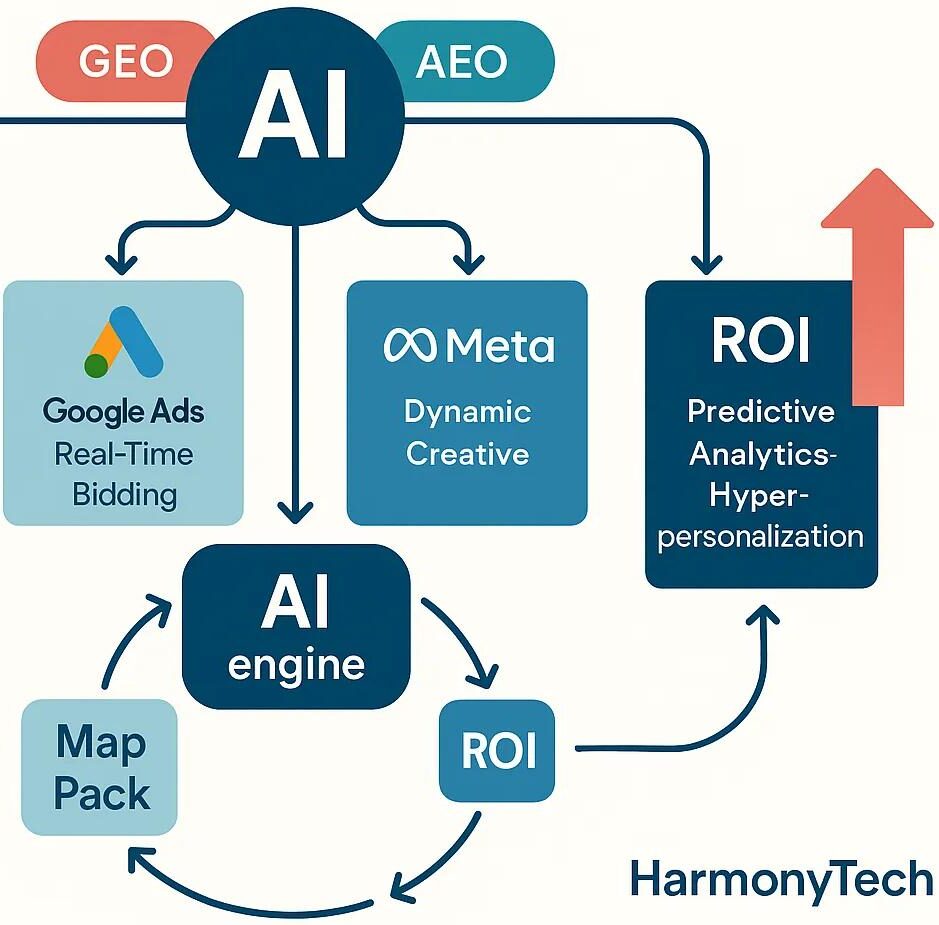
AI programmatic display marketing agencies are revolutionizing the way businesses approach digital advertising. By leveraging artificial intelligence, agency marketers can automate ad buying, optimize targeting, and enhance personalization, leading to improved campaign performance. This agency comprehensive guide will delve into the intricacies of AI programmatic display marketing, exploring its benefits, strategies, and the agency and platforms that are shaping the future of advertising in 2026. As businesses strive to maximize their return on investment (ROI) and engage their target audiences more effectively, understanding the mechanisms behind AI-driven marketing becomes essential. We will cover key topics, including the workings of AI programmatic advertising, its benefits, the best platforms for small to medium-sized businesses (SMBs), implementation strategies, challenges, and emerging trends.
What is AI Programmatic Display Marketing and How Does It Work?
AI programmatic display marketing refers to the automated buying and selling of online advertising space using artificial intelligence technologies. This approach streamlines the ad buying process, allowing marketers to target specific audiences with precision and efficiency. By utilizing data-driven insights, AI-driven agencies can analyze vast amounts of information to determine the best times and places to display ads, ensuring that marketing messages reach the right people at the right moment.
Defining AI Programmatic Advertising and Core Concepts
At its core, AI programmatic advertising combines traditional programmatic advertising methods with advanced AI technologies. Programmatic advertising involves the agency’s use of software to purchase digital advertising space, while AI enhances this process by enabling real-time data analysis and decision-making. Key concepts include Demand-Side Platforms (DSPs), which allow advertisers to buy ad space, and Supply-Side Platforms (SSPs), which help publishers sell their inventory. Together, these technologies create a seamless ecosystem for ad transactions.
How Machine Learning and Real-Time Bidding Enable Automated Ad Buying
Machine learning plays a crucial role in AI programmatic display marketing in agencies by continuously improving ad targeting and performance. Through real-time bidding (RTB), advertisers can bid on ad impressions as they become available, ensuring that their ads are displayed to the most relevant audiences. This process not only increases efficiency but also maximizes the effectiveness of ad spend, as AI algorithms learn from past performance to optimize future campaigns.
Further research highlights how advanced AI and reinforcement learning techniques are pushing the boundaries of RTB optimization, leading to significant improvements in campaign performance.
AI & Reinforcement Learning for Programmatic RTB Optimization
Real-time bidding ecosystems demand sophisticated algorithmic frameworks capable of navigating complex multi-objective optimization landscapes while maintaining computational efficiency. This paper presents a comprehensive methodology integrating Lagrangian dual decomposition with policy gradient reinforcement learning for dynamic bid optimization under heterogeneous constraints. Our approach transforms the traditionally discrete auction participation problem into a continuous optimization framework, enabling gradient-based learning while preserving budget and performance constraints. Experimental validation across industrial-scale datasets demonstrates substantial improvements in campaign performance metrics, achieving 34.7% higher conversion rates compared to baseline methods while maintaining strict budget compliance. The proposed framework addresses critical challenges in modern programmatic advertising, including budget pacing, conversion optimization, and real-time
Multi-Constraint Optimization for Real-Time Bidding: A Reinforcement Learning Approach, H Weng, 2024
What Are the Key Benefits of AI in Programmatic Display Ads?
The integration of AI into programmatic display advertising offers numerous advantages that can significantly enhance marketing efforts. These benefits include improved efficiency, enhanced targeting, and optimized ROI.
How Does AI Improve Efficiency, Targeting, and Personalization?
AI enhances efficiency by automating repetitive tasks, allowing marketers to focus on strategy and creative development. Additionally, AI-driven algorithms analyze user behavior and preferences, enabling more precise targeting. This level of personalization ensures that ads resonate with audiences, leading to higher engagement rates and conversions.
In What Ways Does Agency AI Optimize ROI and Budget Allocation?
AI optimizes ROI by analyzing data to identify the most effective ad placements and strategies. By reallocating budgets to high-performing campaigns and minimizing spend on underperforming ones, businesses can achieve better results. For instance, AI can determine the optimal times to run ads, ensuring that marketing dollars are spent where they will have the greatest impact.
Indeed, the core strength of programmatic advertising lies in its ability to leverage AI for precise targeting and enhanced ROI, as evidenced by recent studies.
Programmatic Advertising for Enhanced Targeting & ROI
The primary advantage of programmatic advertising is its capacity to facilitate advertisers in effectively reaching their target demographics and enhancing customer profiling through the automated analysis of vast datasets. This allows for precise audience segmentation and the delivery of highly relevant advertisements, leading to improved campaign performance and a higher return on investment.
AN INNOVATIVE APPROACH WITHIN THE DIGITAL MARKETING SPECTRUM: PROGRAMMATIC ADVERTISING AS AN OUTPUT OF ARTIFICIAL INTELLIGENCE, G KÖSE, 2024
| Benefit | Description | Impact Level |
|---|---|---|
| Efficiency | Automates ad buying processes | High |
| Targeting | Enhances audience segmentation | High |
| ROI Optimization | Improves budget allocation strategies | High |
Top AI-Driven Programmatic Advertising Platforms for SMBs

For small to medium-sized businesses, selecting the right AI-driven programmatic advertising platform is crucial for success. Several platforms stand out for their user-friendly interfaces and robust features tailored to the needs of SMBs.
What Features Should SMBs Look for in AI Programmatic Agency Platforms?
When evaluating AI programmatic platforms, SMBs should prioritize features such as user-friendliness, cost-effectiveness, and comprehensive analytics. A platform that offers intuitive navigation and clear reporting can significantly enhance the user experience, making it easier for businesses to manage their campaigns effectively.
How Do Platforms Like Google DV360 and The Trade Desk Compare?
Google DV360 and The Trade Desk are two leading platforms in the programmatic advertising space. Google DV360 offers seamless integration with other Google services, making it a popular choice for businesses already using Google Ads. In contrast, The Trade Desk provides advanced targeting capabilities and a more extensive range of inventory options, appealing to advertisers seeking greater flexibility.
| Platform | Key Features | Pricing Model |
|---|---|---|
| Google DV360 | Integration with Google services, user-friendly interface | CPM-based |
| The Trade Desk | Advanced targeting, extensive inventory | CPM-based |
| AdRoll | Retargeting capabilities, cross-channel marketing | Subscription-based |
How Can South Florida Businesses Implement AI Programmatic Strategies Effectively?

Implementing AI programmatic strategies requires a structured approach, particularly for businesses in South Florida looking to enhance their marketing efforts.
What Are the Step-by-Step Guidelines for Campaign Setup and Management?
- Define Objectives: Clearly outline campaign goals, such as brand awareness or lead generation.
- Select a Platform: Choose an AI programmatic platform that aligns with your business needs.
- Target Audience: Utilize data to identify and segment your target audience effectively.
- Create Compelling Ads: Develop engaging ad creatives that resonate with your audience.
- Monitor and Optimize: Continuously analyze campaign performance and make adjustments as needed.
How Does First-Party Data Enhance Localized AI Programmatic Advertising?
First-party data, collected directly from customers, plays a vital role in enhancing localized AI programmatic advertising. By leveraging this data, businesses can create highly targeted campaigns that address the specific needs and preferences of local audiences. This approach not only improves engagement but also fosters customer loyalty.
What Challenges Exist in AI Programmatic Display Marketing and How Can They Be Overcome?
Despite its advantages, AI programmatic display marketing presents several challenges that businesses must navigate to achieve success.
How to Address Data Quality, Ad Fraud, and Transparency Issues?
Data quality is paramount in programmatic advertising. Businesses should implement robust data management practices to ensure accuracy and reliability. Additionally, employing fraud detection tools can help mitigate the risks associated with ad fraud, ensuring that marketing budgets are spent effectively. Transparency in reporting and analytics is also essential for building trust with stakeholders.
Addressing these challenges, particularly ad fraud, is critical, and AI-based techniques are proving instrumental in detection and prevention.
AI for Programmatic Ad Fraud Detection
Programmatic advertising services display ads to users. In this section, we review the most frequently used features in AI-based click fraud detection
AI-based techniques for Ad click fraud detection and prevention: Review and research directions, RA Alzahrani, 2022
What Ethical and Privacy Considerations Should Agency Marketers Know?
As AI programmatic advertising relies heavily on data, marketers must be aware of ethical and privacy considerations. Compliance with regulations such as GDPR and CCPA is crucial to protect consumer data and maintain trust. Marketers should prioritize transparency in their data collection practices and ensure that consumers are informed about how their data is used.
What Are the Emerging Agency Programmatic Advertising Trends for 2026 and Beyond?
The landscape of programmatic advertising is continually evolving, with several emerging trends set to shape the future of the industry.
How Will Generative AI, Cross-Channel Integration, and GEO Shape the Future?
Agencies utilizing Generative AI are poised to revolutionize content creation for ads, enabling personalized messaging at scale. Additionally, cross-channel integration will allow businesses to deliver cohesive marketing experiences across various platforms, enhancing customer engagement. Geographic targeting (GEO) will further refine audience segmentation, ensuring that ads are relevant to local consumers.
The IAB State of Data 2025 Report defines AI as the “next evolution” of media campaigns, noting that it has moved beyond simple yield management to power every aspect of the media lifecycle, from audience segmentation and media buying to real-time optimization. According to their research, 86% of digital video buyers are already using or planning to use Generative AI to scale their programmatic video creative.
Interactive Advertising Bureau (IAB): State of Data 2025
In their January 2026 Marketing Predictions, Gartner forecasts that by 2028, 60% of brands will deploy “agentic AI” to handle one-to-one customer interactions, fundamentally shifting programmatic strategy from channel-based buying to AI-driven personalization. They emphasize that while AI enhances efficiency, 78% of consumers now view explicit labeling of AI-generated content as critical for maintaining brand trust.
Gartner: Agentic AI and Marketing Automation
What Does a Cookieless Future Mean for AI Programmatic Marketing?
The shift towards a cookieless future presents both challenges and opportunities for AI programmatic marketing. Marketers will need to adapt their strategies to rely more on first-party data and contextual targeting. This transition will require innovative approaches to audience engagement, emphasizing the importance of building direct relationships with consumers.
| Trend | Description | Implication |
|---|---|---|
| Generative AI | Automated content creation | Increased personalization |
| Cross-Channel Integration | Unified marketing experiences | Enhanced customer engagement |
| Cookieless Future | Shift to first-party data and contextual targeting | New targeting strategies |
Frequently Asked Questions
What types of businesses can benefit from AI programmatic display marketing?
AI programmatic display marketing is beneficial for a wide range of businesses, from small startups to large enterprises. Companies that rely heavily on digital advertising, such as e-commerce, travel, and entertainment, can particularly gain from its efficiency and targeting capabilities. By automating ad buying and optimizing campaigns, businesses can reach their target audiences more effectively, leading to improved engagement and higher conversion rates. Ultimately, any business looking to enhance its online presence and marketing ROI can leverage AI programmatic strategies.
How can businesses measure the success of their AI programmatic campaigns?
Measuring the success of AI programmatic campaigns involves tracking key performance indicators (KPIs) such as click-through rates (CTR), conversion rates, return on ad spend (ROAS), and customer acquisition costs (CAC). Utilizing analytics tools provided by programmatic platforms can help businesses gather insights into campaign performance. Additionally, A/B testing different ad creatives and targeting strategies can provide valuable data on what resonates best with audiences, allowing for continuous optimization and improved results over time.
What role does audience segmentation play in AI programmatic advertising?
Audience segmentation is crucial in AI programmatic advertising as it allows marketers to tailor their messages to specific groups based on demographics, interests, and behaviors. By leveraging AI’s data analysis capabilities, businesses can create highly targeted campaigns that resonate with different audience segments. This precision not only enhances engagement but also increases the likelihood of conversions, as ads are more relevant to the viewers. Effective segmentation leads to better resource allocation and maximizes the overall impact of marketing efforts.
What are the potential risks associated with AI programmatic display marketing?
While AI programmatic display marketing offers numerous benefits, it also comes with potential risks. These include data privacy concerns, as the reliance on user data raises ethical questions and compliance issues with regulations like GDPR. Additionally, there is the risk of ad fraud, where bots may generate false clicks or impressions, wasting marketing budgets. Businesses must implement robust data management practices and fraud detection tools to mitigate these risks and ensure their campaigns are both effective and compliant.
How can businesses stay updated on the latest trends in AI programmatic advertising?
Staying updated on the latest trends in AI programmatic advertising requires a proactive approach. Businesses can subscribe to industry newsletters, follow thought leaders on social media, and participate in webinars and conferences focused on digital marketing. Additionally, joining professional organizations and online communities can provide valuable insights and networking opportunities. Regularly reviewing case studies and research papers can also help businesses understand emerging technologies and strategies that can enhance their programmatic advertising efforts.
What skills are essential for marketers working with AI programmatic advertising?
Marketers working with AI programmatic advertising should possess a blend of analytical, technical, and creative skills. Proficiency in data analysis is crucial for interpreting campaign performance metrics and making data-driven decisions. Familiarity with programmatic platforms and tools is also important for effective campaign management. Additionally, creative skills are necessary for developing compelling ad content that resonates with target audiences. Continuous learning and adaptability are key, as the digital marketing landscape is constantly evolving with new technologies and trends.
Conclusion
AI programmatic display marketing offers businesses enhanced efficiency, precise targeting, and optimized ROI, making it a game-changer in digital advertising. By understanding and implementing these strategies, companies can effectively engage their audiences and maximize their marketing budgets. To stay ahead in this rapidly evolving landscape, consider exploring the latest AI-driven platforms and techniques tailored for your business needs. Discover more about how to elevate your marketing efforts with our comprehensive resources today.