
AI-Powered Google Ads Optimization Strategies

How AI-Driven Google Ads Help South Florida SMBs Boost ROI
Digital marketing moves at an unrelenting pace, and for South Florida small and mid-sized businesses (SMBs), the challenge is often to achieve more with fewer resources. In a competitive landscape where every ad dollar counts, AI-driven Google Ads optimization emerges as a critical differentiator.
This advanced approach sharpens targeting, automates routine yet crucial decisions, and ultimately stretches advertising budgets further than ever before. This comprehensive guide delves into how artificial intelligence fundamentally improves campaign performance, highlights the specific features that offer the most significant benefits to SMBs, and outlines the tangible outcomes local businesses can realistically expect.
Our overarching goal is to equip business owners with clear, practical steps and a deeper understanding to unlock superior results from their digital ad spend.
Below, we explore the foundational reasons why AI is indispensable for modern Google Ads strategies, detail the essential AI features every SMB should leverage, explain how AI revolutionizes creative development and audience targeting, and pinpoint the unique advantages for South Florida companies.
We also illuminate how Harmony Technologies expertly applies these cutting-edge methods to empower local businesses to not only compete effectively but also to achieve sustainable growth in a dynamic market.
Why is AI a Game Changer for Google Ads Campaigns?
AI’s transformative power in paid media stems from its unparalleled ability to process vast quantities of fast-moving data and translate it into timely, actionable decisions. At its core, machine learning algorithms excel at identifying intricate patterns within clicks, conversions, user behavior, and market trends that are simply beyond human capacity to discern manually.
This allows campaigns to adapt and optimize automatically, often in real-time. The profound implication is that ads consistently reach the right people, at the opportune moment, with the most relevant message, thereby significantly improving engagement and ensuring that every dollar of your budget works harder and smarter.
The shift from traditional, rule-based optimization to AI-driven strategies marks a paradigm change. Instead of relying on static rules or periodic manual adjustments, AI systems continuously learn and evolve.
They analyze historical performance, predict future outcomes, and make micro-adjustments across bids, ad copy, and audience segments. This dynamic, adaptive approach is what truly makes AI a game-changer, moving paid media from reactive management to proactive, predictive optimization.
The Mechanics of AI in Paid Media: Beyond Automation
While often associated with automation, AI in paid media goes far beyond simply automating repetitive tasks. It encompasses several sophisticated capabilities:
- Data Synthesis and Analysis: AI can ingest and correlate data from countless sources – search queries, website visits, app usage, demographic profiles, geographic locations, device types, time of day, competitor
activity, and even macroeconomic trends. It then identifies subtle correlations and causal relationships that inform optimization decisions. - Predictive Analytics: Machine learning models are adept at forecasting future performance based on historical data. This means predicting which users are most likely to convert, which keywords will yield the highest
ROI, or which ad creatives will resonate best with a specific audience segment. This foresight allows for proactive adjustments rather than reactive ones. - Real-time Optimization: Unlike human managers who can only make adjustments periodically, AI systems can optimize bids, ad placements, and creative variations in milliseconds, responding to live auction dynamics
and shifting user intent. This ensures campaigns are always operating at peak efficiency. - Pattern Recognition: AI algorithms can detect complex patterns in user behavior that indicate intent, preferences, and potential conversion paths. For instance, it can identify a sequence of searches and website
interactions that signal a high-value lead, even if individual actions seem disparate.
How does AI improve Google Ads performance?

AI significantly boosts performance through a combination of real-time bid adjustments, sophisticated predictive signals about audience intent, and dynamic creative optimization. It continuously analyzes who is most likely to convert, considering a multitude of factors such as device, location, time of day, previous interactions, and even the specific nuances of a search query. Based on these insights, AI adjusts bids, refines ad placements, and selects the most relevant creative elements to match the user’s context and intent. The direct results are better ad positions, higher click-through rates (CTR), improved conversion rates, and a dramatic reduction in wasted impressions and ad spend.
Furthermore, AI contributes to performance improvement by enhancing attribution modeling. Traditional attribution often oversimplifies the customer journey. AI, however, can analyze complex, multi-touchpoint paths to conversion, assigning more accurate credit to each interaction. This allows for more intelligent budget allocation across different campaign types and channels, ensuring that investments are made where they truly drive value.
What trends are shaping AI-driven PPC for SMBs?
Several key trends are rapidly shaping the landscape of AI-driven PPC, offering unprecedented opportunities for SMBs. These include increasingly smarter automated bidding strategies, the expansion into broader multi-channel campaigns, and a more profound utilization of machine learning for granular audience insights. Automated bidding, for instance, has evolved far beyond simple rule-based systems. It now allows advertisers to set clear, high-level goals—such as maximizing conversions, achieving a specific Return On Ad Spend (ROAS), or driving a target Cost Per Acquisition (CPA)—and the AI system continuously tunes bids in real-time to meet these objectives. The net effect is a substantial reduction in manual work, freeing up valuable time for strategic planning, and a significantly more efficient allocation of budget, ensuring every dollar contributes optimally to business goals.
The Evolution of Automated Bidding
Automated bidding has moved from a “set it and forget it” mentality to a highly sophisticated, goal-oriented system. Early versions were often criticized for lack of control, but modern AI-powered Smart Bidding strategies offer granular control over objectives while leveraging machine learning for execution. This means SMBs can compete effectively even against larger advertisers with bigger budgets, as AI helps them find the most efficient path to conversion.
The Rise of Multi-Channel AI Campaigns
The customer journey is rarely linear. Users interact with businesses across various platforms—searching on Google, browsing YouTube, scrolling through social media, or reading articles on display networks. AI-driven multi-channel campaigns, exemplified by tools like Google’s Performance Max, allow SMBs to reach customers seamlessly across these touchpoints. AI orchestrates the entire campaign, identifying where and when to show ads for maximum impact, ensuring a cohesive and persistent brand presence without the complexity of managing disparate campaigns.
Deepening Audience Insights with Machine Learning
Machine learning is revolutionizing how SMBs understand and target their audiences. Beyond basic demographics, AI can analyze behavioral patterns, purchase intent signals, and even psychographic data to create highly refined audience segments. This allows for hyper-personalized messaging and offers, ensuring ads resonate deeply with specific groups. AI can also identify “lookalike” audiences—users who share characteristics with existing high-value customers—expanding reach to new, promising prospects with a high propensity to convert.
Which AI Features in Google Ads Matter Most for SMBs?
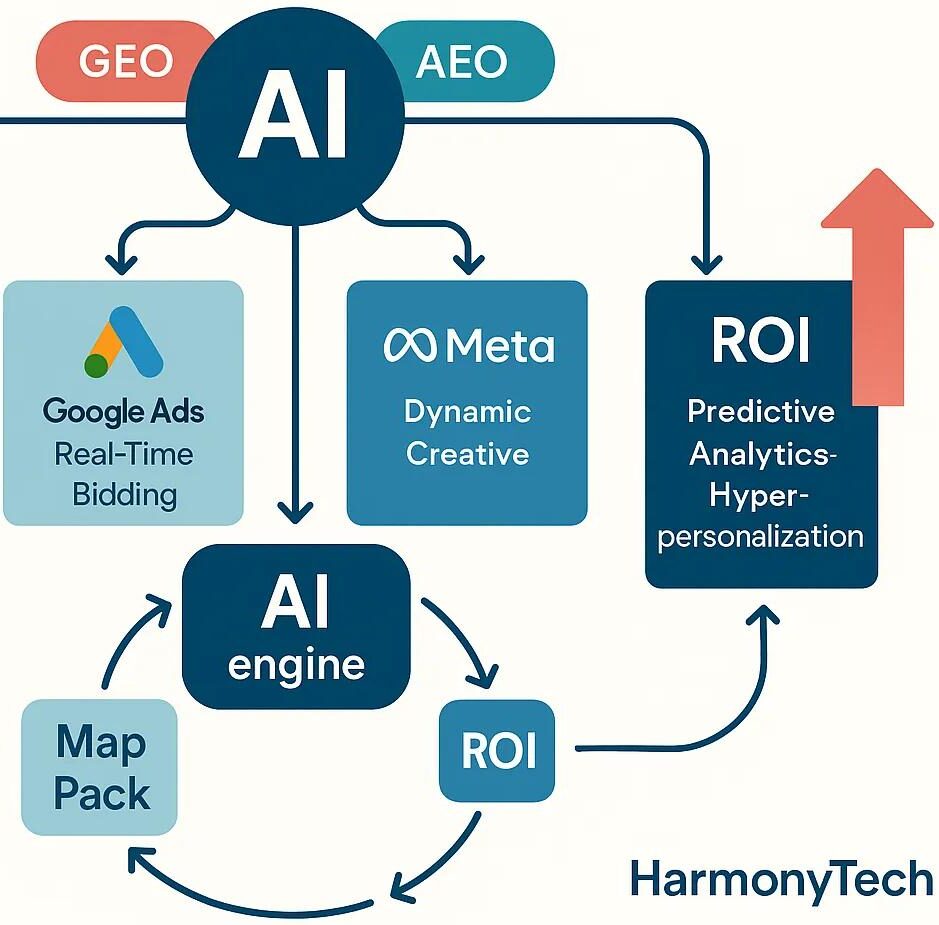
For smaller advertisers, navigating the vast array of AI features in Google Ads can be daunting. However, several key AI capabilities deliver outsized value, significantly impacting efficiency and performance. These include Smart Bidding strategies designed to optimize bids for specific goals, Performance Max campaigns to extend reach across Google’s extensive inventory, and advanced tools that automatically refine ad creative. Each of these features plays a crucial role in reducing manual overhead, allowing SMBs to focus on their core business, while simultaneously improving campaign outcomes and maximizing return on investment.
How does Smart Bidding help control ad spend?
Smart Bidding is Google’s suite of AI-powered bidding strategies that use machine learning to optimize for conversions or conversion value in every auction. Instead of relying on static bids, Smart Bidding leverages a vast array of live signals—such as device type, geographic location, time of day, operating system, browser, user’s past behavior, and even the specific search query context—to set the optimal bid at each individual auction. By targeting specific conversion goals (e.g., website purchases, lead form submissions, phone calls), it helps you get more conversions for the same budget, or even a lower budget, by cutting wasted spend on underperforming searches or less valuable impressions. This dynamic, real-time adjustment ensures that your budget is always directed towards the opportunities most likely to yield a positive return.
Key Smart Bidding Strategies for SMBs:
- Maximize Conversions: This strategy automatically sets bids to help get the most conversions for your budget. It’s ideal for businesses focused purely on driving volume of conversions, regardless of their individual
value. - Target CPA (Cost Per Acquisition): If you have a specific cost you’re willing to pay for each conversion, Target CPA is invaluable. AI will adjust bids to help you get as many conversions as possible at or below
your target CPA. - Maximize Conversion Value: For businesses where conversions have different values (e.g., different product prices, varying lead quality), this strategy aims to maximize the total conversion value for your budget.
- Target ROAS (Return On Ad Spend): Essential for e-commerce businesses, Target ROAS helps you achieve a specific return on your ad spend. If you want to generate $4 for every $1 spent, AI will optimize bids to hit
that 400% ROAS target.
Implementing Smart Bidding requires sufficient conversion data for the AI to learn effectively. Google generally recommends at least 15 conversions per month for Target CPA and Maximize Conversions, and more for Target ROAS. Proper conversion tracking setup is paramount for these strategies to succeed.
What makes Performance Max useful for SMBs?
Performance Max is Google’s newest fully automated campaign type, designed to run a single campaign across Google’s entire inventory—including Search, Display, YouTube, Discover, Gmail, and Maps. For SMBs, its utility lies in its ability to provide wider reach without the complexity and time commitment of juggling multiple, disparate campaigns. The AI at the heart of Performance Max decides where your ads are most likely to perform best, dynamically allocating budget and serving the most relevant creative assets across channels. This simplifies campaign management significantly, improves overall visibility, and helps businesses uncover new conversion opportunities they might have missed with traditional, siloed campaigns.
Components and Advantages of Performance Max:
- Asset Groups: You provide a collection of text headlines, descriptions, images, and videos. Performance Max’s AI then dynamically mixes and matches these assets to create the most effective ad combinations for different
placements and audiences. - Audience Signals: While Performance Max doesn’t allow direct audience targeting in the traditional sense, you provide “audience signals” (e.g., your customer lists, custom segments, interests). The AI uses these
signals to understand who your ideal customer is and then finds similar high-value audiences across Google’s network. - Automated Optimization: The campaign continuously optimizes bids, budget allocation, and creative combinations in real-time to achieve your specified conversion goals.
- Expanded Reach: It ensures your message is seen across all relevant Google properties, maximizing your chances of connecting with potential customers at various stages of their buying journey.
For SMBs with limited marketing teams, Performance Max acts as a powerful force multiplier, allowing them to tap into sophisticated multi-channel advertising capabilities that were once only accessible to larger enterprises with dedicated resources.

How can AI improve ad creative and audience targeting?
AI fundamentally transforms ad creative and audience targeting by enabling personalization at an unprecedented scale. It possesses the capability to identify precisely which headlines, descriptions, images, and even video snippets resonate most effectively with different audience segments. This deep understanding allows AI to then serve the best possible combinations of creative assets to each specific user, often in real-time. The result is a highly personalized ad experience that feels more relevant and engaging to the individual, leading to significantly higher engagement rates and improved conversion metrics from the people who matter most to your business.
What is AI-driven ad creative optimization and personalization?
AI-driven ad creative optimization and personalization represent a sophisticated approach where artificial intelligence continuously tests and refines ad variations to maximize performance. This process involves several key steps:
- Dynamic Creative Assembly: Instead of creating a single static ad, advertisers provide a pool of headlines, descriptions, images, and videos. AI then dynamically assembles countless combinations of these assets,
tailoring the ad to the specific user, context, and placement. - Automated A/B and Multivariate Testing: AI systems can run thousands of A/B tests and multivariate tests simultaneously, far beyond human capacity. It quickly identifies which creative elements (e.g., a specific
headline, a particular image, a call-to-action phrase) drive the best results for different audience segments. - Predictive Creative Selection: Based on real-time signals and historical performance, AI predicts which creative combination is most likely to resonate with a given user at a specific moment. It then serves that
top-performing version, optimizing for click-through rates, engagement, and conversions. - Generative AI for Content: Emerging AI tools can even assist in generating ad copy and image concepts, providing marketers with a starting point or suggesting variations that align with brand voice and performance
goals. This speeds up the creative iteration process significantly.
By automatically serving the most effective copy and assets to the right users, AI dramatically raises click-through and conversion rates while virtually eliminating the guesswork traditionally associated with creative development. It ensures that your ads are always fresh, relevant, and optimized for impact.
How does AI enable precise audience segmentation?
AI empowers precise audience segmentation by analyzing vast datasets of user behavior, demographics, interests, and intent signals to identify distinct and highly granular audience groups. This goes far beyond traditional demographic targeting, delving into the nuances of online activity. Here’s how AI achieves this:
- Behavioral Analysis: AI tracks website visits, app usage, search queries, video views, and content consumption patterns to understand user interests and intent. For example, it can identify users who have recently
researched specific products or services, visited competitor websites, or engaged with related content. - Demographic and Psychographic Profiling: While respecting privacy, AI can infer demographic information and psychographic traits (e.g., lifestyle, values, attitudes) from aggregated data, allowing for more nuanced
targeting. - First-Party Data Integration: When integrated with a business’s CRM or customer data platform, AI can analyze first-party data (e.g., past purchases, loyalty program membership, email engagement) to identify high-value
customers and create lookalike audiences. - Predictive Segmentation: AI can predict which users are likely to become high-value customers, churn, or respond to specific offers, allowing for proactive targeting and retention strategies.
- Real-time Contextual Signals: Beyond static segments, AI considers real-time contextual signals like location, time of day, device, and current events to refine targeting, ensuring ads are relevant to the user’s
immediate situation.
This level of precision allows businesses to tailor messaging and offers for each segment—whether that’s tourists searching for local attractions, nearby residents ready to buy a specific product, or B2B clients researching industry solutions. The result is ads that feel inherently more relevant, persuasive, and ultimately, more effective in driving desired actions.
What concrete benefits do AI-powered Google Ads deliver for South Florida businesses?
For South Florida businesses, the adoption of AI-powered Google Ads translates into a suite of concrete, measurable benefits that directly impact their bottom line and competitive standing. These advantages include significantly higher Return on Investment (ROI), a substantial reduction in wasted ad spend, and the unparalleled ability to deliver highly personalized messaging that resonates deeply with local audiences. These gains are particularly valuable for SMBs operating with limited marketing budgets, as AI empowers them to maximize impact, compete effectively with larger entities, and foster stronger connections within their communities.
How does AI increase ROI and lower costs?
AI increases ROI and lowers costs through a multi-faceted approach that optimizes every stage of the advertising funnel:
- Precision Bidding: By directing budget to the highest-value auctions and adjusting bids in real-time based on conversion probability, AI ensures you’re not overpaying for clicks that are unlikely to convert. This
dramatically improves the efficiency of your ad spend. - Eliminating Waste: AI identifies and eliminates low-performing placements, keywords, and audience segments. It can quickly detect ad fraud or irrelevant traffic sources, preventing your budget from being spent on
non-converting interactions. - Optimized Creative: AI continuously tests and refines ad creatives, ensuring that only the most effective headlines, descriptions, and visuals are shown to specific audiences. This leads to higher click-through rates
and conversion rates, meaning you get more value from each impression. - Predictive Budget Allocation: AI can forecast performance trends and allocate budget dynamically across campaigns and channels to capitalize on emerging opportunities or mitigate underperformance, ensuring your budget
is always working optimally. - Reduced Manual Labor: By automating routine optimization tasks, AI frees up marketing teams to focus on higher-level strategy, creative development, and business growth initiatives, indirectly lowering operational
costs.
The cumulative effect of these optimizations is a significant improvement in conversion rates and a reduction in cost per acquisition (CPA). AI also proactively flags underperforming creatives and suggests data-backed optimizations, ensuring campaigns are always improving in efficiency and effectiveness.
Why is hyper-personalization important for local SMBs?
Hyper-personalization is not just a luxury but a critical necessity for small businesses in South Florida seeking to stand out in their communities and build lasting customer relationships. In a market saturated with advertising, generic messages often get lost. Hyper-personalization, powered by AI, allows SMBs to:
- Build Trust and Relevance: When an ad speaks directly to a local need, references a specific landmark, or offers a deal relevant to a local event, it immediately feels more trustworthy and relevant. This builds a
stronger connection with potential customers. - Boost Conversions: Tailored offers and locally relevant messaging significantly increase the likelihood of conversion. For example, a restaurant ad showing a special for “locals only” or a service business ad highlighting
its proximity to a specific neighborhood will outperform a generic ad. - Encourage Repeat Business: By understanding individual customer preferences and past interactions, SMBs can use AI to deliver personalized follow-up offers or loyalty incentives, fostering repeat business and strengthening
community ties. - Compete with Larger Chains: Hyper-personalization allows SMBs to leverage their local advantage. While large chains might struggle with localized messaging at scale, AI enables small businesses to deliver highly
specific, community-focused campaigns efficiently. - Drive Foot Traffic: For brick-and-mortar businesses, AI-powered geo-targeting and local inventory ads can drive immediate foot traffic by showing ads to users in very close proximity who are actively searching for
relevant products or services.
These benefits—building trust, boosting conversions, and encouraging repeat customers—are absolutely critical for neighborhood-focused brands in South Florida, allowing them to cultivate a loyal customer base and thrive against broader competition.
How does Harmony Technologies implement AI for Google Ads?
At Harmony Technologies, our approach to implementing AI for Google Ads is a carefully calibrated blend of cutting-edge automated systems and expert, hands-on strategic oversight. We understand that while AI offers unparalleled speed and data processing capabilities, human intuition, market understanding, and strategic alignment are indispensable. Our process pairs Google’s powerful AI tools with the nuanced judgment of our experienced human specialists, ensuring that campaigns not only achieve optimal performance metrics but also remain perfectly aligned with specific business goals, brand voice, and the unique realities of the South Florida local market. This synergistic model maximizes efficiency while maintaining strategic control and adaptability.
What does our data-driven campaign process look like?
Our data-driven campaign process is structured to ensure maximum efficiency, transparency, and measurable results:
- Initial Campaign Audit & Strategy Session: We begin with a thorough audit of your existing Google Ads account (if applicable) and a deep dive into your business objectives. This includes understanding your target
audience, competitive landscape, unique selling propositions, and defining clear, measurable KPIs (Key Performance Indicators) and benchmarks for success. We collaborate to set realistic goals and outline a strategic roadmap. - AI Feature Implementation & Setup: Based on the strategy, we meticulously set up and configure the most relevant AI features, including Smart Bidding strategies (e.g., Target CPA, Target ROAS), Performance Max
campaigns, and dynamic creative optimization tools. We ensure robust conversion tracking is in place, which is foundational for AI to learn and optimize effectively. - Continuous Monitoring & Performance Analysis: Once campaigns are live, our AI systems continuously monitor performance in real-time, making micro-adjustments to bids, placements, and creative. Our human experts
simultaneously review results, analyze trends, and interpret the insights generated by the AI. - Strategic Refinement & Iteration: Based on the combined AI data and human analysis, we regularly refine tactics. This includes A/B testing new ad copy, adjusting audience signals, exploring new keyword opportunities,
and optimizing landing pages. This iterative cycle keeps campaigns responsive to market changes and relentlessly focused on achieving and exceeding measurable outcomes. - Transparent Reporting & Communication: We provide regular, easy-to-understand reports detailing campaign performance against your KPIs. Our team maintains open lines of communication, explaining the “why” behind
optimizations and discussing future strategic directions.
How do we keep human oversight in AI-driven campaigns?
While automation handles the routine, high-frequency optimization tasks, our human experts remain central to the success of AI-driven campaigns. This blend of machine speed and human judgment is crucial for several reasons:
- Strategic Interpretation: AI excels at pattern recognition and optimization, but it doesn’t understand the broader business context, market shifts, or competitor strategies. Our experts interpret AI-generated insights,
translating data into actionable business intelligence. - Brand Safety & Voice: AI can sometimes generate ad copy that is technically effective but doesn’t align with a brand’s specific voice, values, or legal requirements. Human oversight ensures brand consistency
and safety. - Ethical Considerations: Our team monitors for potential algorithmic biases and ensures that targeting practices are ethical and compliant with privacy regulations.
- Adapting to Unforeseen Events: AI learns from historical data. In rapidly changing market conditions, economic shifts, or unexpected global events, human strategists can quickly adapt campaigns in ways AI, relying
solely on past data, cannot. - Creative Innovation: While AI can optimize existing creative, true creative breakthroughs and innovative campaign concepts still largely originate from human ingenuity. Our team focuses on developing compelling narratives
and unique selling propositions that AI can then optimize for delivery. - Client Collaboration: AI cannot build relationships or understand the evolving needs of a client. Our human account managers work closely with you, ensuring campaign goals remain aligned with your overarching business
objectives.
This blend of machine efficiency and human intelligence ensures that your campaigns are not just performing well, but performing intelligently, strategically, and in alignment with your long-term vision.
Do we have proof AI works for South Florida SMBs?
Absolutely—the efficacy of AI-enhanced campaigns for South Florida SMBs is not merely theoretical; it’s demonstrated through tangible, measurable gains in real-world scenarios. Local case studies consistently show significant improvements in key performance indicators, validating the power of integrating AI features with expert, hands-on management. These success stories vividly illustrate the profound impact that a strategic combination of advanced AI tools and human oversight can have on a business’s digital advertising performance, proving that smarter campaigns lead to superior results.
Which case studies show clear ROI improvement?
In one compelling example, a local retail client specializing in bespoke home decor in the Miami area faced intense competition from larger online retailers. Their traditional Google Ads campaigns struggled with high Cost Per Click (CPC) and inconsistent conversion rates. After partnering with Harmony Technologies, we implemented a strategy centered around Google’s Smart Bidding (specifically Target ROAS) and Performance Max campaigns. The results were transformative:
- 100% Increase in ROI: Within six months, the client saw their Return on Ad Spend double, meaning they generated twice the revenue for every dollar spent on advertising.
- 35% Reduction in CPA: The cost to acquire a new customer decreased significantly, making their marketing efforts far more profitable.
- Expanded Reach to New Customers: Performance Max allowed them to reach a broader, yet highly qualified, audience across YouTube and Display networks, leading to a 50% increase in website traffic from new users.
- Improved Ad Relevance: Dynamic creative optimization ensured that ads featuring specific product categories were shown to users with demonstrated interest, leading to a 20% increase in click-through rates.
This client successfully reached more of the right customers, not only increasing their sales but also getting substantially more value from their ad spend, proving the power of AI in a competitive local market.
Another example involved a South Florida service-based business, a plumbing company in Fort Lauderdale. They relied heavily on emergency service calls and struggled with inconsistent lead generation. By implementing AI-driven local search campaigns with geo-fencing and optimized call-only ads, they experienced:
- 70% Increase in Qualified Leads: AI’s ability to target users in immediate need within a specific service radius dramatically improved lead quality.
- 25% Decrease in Cost Per Lead: Smart Bidding optimized bids for peak demand times, ensuring their ads were prominent when customers needed them most, at the most efficient cost.
- Improved Service Area Coverage: AI helped identify underserved micro-regions within their service area, allowing for targeted campaigns that captured new business.
These cases underscore that AI is not just for large corporations; it’s a powerful, accessible tool for South Florida SMBs to achieve measurable and impactful growth.
How have SMBs handled AI adoption obstacles?
Adopting new technologies, especially AI, often comes with its share of obstacles for SMBs. Common challenges include:
- Limited Budgets: SMBs often perceive AI tools as expensive or requiring significant upfront investment.
- Lack of In-house Technical Skills: Many small businesses don’t have dedicated data scientists or AI specialists on staff.
- Data Integration Challenges: Connecting various data sources (CRM, website analytics, ad platforms) can be complex.
- Resistance to Change: Marketing teams accustomed to traditional methods may be hesitant to embrace new, automated workflows.
- Understanding AI’s “Black Box”: The perceived lack of transparency in how AI makes decisions can be a concern.
Working with experienced agencies like Harmony Technologies helps businesses overcome these adoption obstacles efficiently. We provide:
- Phased Rollouts: We implement AI features incrementally, starting with low-risk, high-impact strategies to demonstrate value quickly and build confidence.
- Training and Support: We educate clients on how AI works, what to expect, and how to interpret results, demystifying the technology.
- Expert Management: Our team handles the technical setup, ongoing optimization, and strategic interpretation, allowing clients to reap the benefits of AI without needing in-house expertise.
- Cost-Effective Solutions: By leveraging existing Google Ads AI features and our expertise, we make advanced AI strategies accessible and affordable for SMBs.
- Focus on Measurable Results: We prioritize clear KPIs and demonstrate ROI, proving the value of AI adoption and overcoming initial skepticism.
This partnership approach ensures that clients get immediate value from AI without disruption, allowing them to focus on their core business while we manage the complexities of advanced digital advertising.
Adding AI features to Google Ads gives SMBs practical tools to compete online—automating routine work while improving targeting and creative relevance. These capabilities are no longer just for enterprise-level companies; they are essential for any South Florida business looking to thrive in the digital age.
Ethical Considerations and Responsible AI in Paid Media
As AI becomes more integrated into paid media, it’s crucial for SMBs and agencies alike to address the ethical considerations and ensure responsible AI usage. This includes navigating data privacy, mitigating algorithmic bias, and maintaining transparency in AI-driven decision-making.
Data Privacy and Compliance
AI systems rely heavily on data, making data privacy a paramount concern. SMBs must ensure their AI-powered campaigns comply with evolving privacy regulations like GDPR, CCPA, and Florida’s own privacy laws. This means:
- Consent Management: Ensuring proper consent is obtained for data collection and usage.
- Data Anonymization: Utilizing AI tools that can derive insights from aggregated and anonymized data, reducing reliance on personally identifiable information.
- Transparency: Being transparent with users about how their data is used for advertising purposes.
- Secure Data Handling: Implementing robust security measures to protect customer data from breaches.
Responsible AI in this context means leveraging AI’s power for personalization without compromising user trust or legal compliance.
Mitigating Algorithmic Bias
AI models learn from the data they are fed. If this data contains historical biases (e.g., certain demographics being historically underserved or misrepresented), the AI can perpetuate and even amplify these biases in targeting and ad delivery. For SMBs, this can lead to:
- Exclusion of Potential Customers: Missing out on valuable customer segments due to biased targeting.
- Reputational Damage: Being perceived as discriminatory or unfair.
- Ineffective Campaigns: Suboptimal performance if ads are not reaching a diverse and representative audience.
Harmony Technologies actively monitors for potential biases in campaign performance and works to diversify audience signals and creative assets to ensure equitable and inclusive ad delivery. Human oversight is critical here to identify and correct biases that AI might not recognize.
Transparency and Explainability
The “black box” nature of some AI algorithms can make it difficult to understand why certain decisions are made. For SMBs, this can be a concern regarding accountability and control. Responsible AI practices aim for greater transparency:
- Clear Reporting: Providing detailed reports that explain AI’s impact on KPIs and offer insights into its decision-making process where possible.
- Human-in-the-Loop: Ensuring that human experts can review, understand, and override AI decisions if necessary, maintaining strategic control.
- Understanding Limitations: Acknowledging that AI is a tool, not a magic bullet, and understanding its limitations in complex, nuanced situations.
By addressing these ethical considerations, SMBs can harness the full power of AI in paid media responsibly, building trust with their customers and ensuring long-term success.
The Future Landscape: Emerging AI Trends in Paid Media
The evolution of AI in paid media is relentless, with new trends constantly emerging that promise to further revolutionize how businesses connect with their audiences. For South Florida SMBs, staying abreast of these developments is key to maintaining a competitive edge.
Generative AI for Content Creation
One of the most exciting frontiers is the application of generative AI to ad content creation. Tools like OpenAI’s GPT models or Google’s Gemini are already capable of:
- Automated Copywriting: Generating multiple variations of headlines, descriptions, and calls-to-action tailored to specific audiences and campaign goals.
- Image and Video Generation: Assisting in the creation of visual assets, from suggesting concepts to generating entire ad creatives based on prompts.
- Personalized Messaging at Scale: Crafting unique ad messages for individual users based on their real-time context and preferences, far beyond what dynamic creative optimization currently offers.
This will dramatically reduce the time and cost associated with creative development, allowing SMBs to test more ideas and personalize their messaging to an unprecedented degree.
Conversational AI for Ad Interactions
The integration of conversational AI (chatbots, voice assistants) into advertising is another significant trend. Imagine ads that:
- Engage in Dialogue: Users can interact directly with an ad to ask questions, get more information, or even complete a purchase within the ad unit itself.
- Personalized Recommendations: AI-powered chatbots can guide users through product selections based on their stated preferences.
- Enhanced Customer Service: Ads can seamlessly transition into customer support interactions, improving the user experience and conversion path.
This creates a more interactive and engaging ad experience, moving beyond passive consumption to active participation.
Predictive Budgeting and Forecasting
While current AI helps optimize bids, future AI will offer even more sophisticated predictive budgeting and forecasting capabilities:
- Dynamic Budget Allocation: AI will automatically shift budgets between campaigns, channels, and even different times of day based on real-time market conditions and predicted performance.
- Scenario Planning: Businesses can simulate the impact of different budget levels or strategic changes on their ROI before implementation.
- Market Trend Anticipation: AI will identify emerging market trends or shifts in consumer behavior and proactively adjust budgets and strategies to capitalize on them.
This will give SMBs unprecedented control and foresight over their ad spend, maximizing efficiency and minimizing risk.
Privacy-Centric AI Solutions
With increasing privacy regulations, AI will play a crucial role in developing privacy-preserving advertising solutions. This includes:
- Federated Learning: AI models that learn from decentralized data without directly accessing or sharing individual user data.
- Differential Privacy: Techniques that add noise to data to protect individual privacy while still allowing for aggregate insights.
- Contextual Targeting Enhancements: AI that can understand the context of web pages and content to serve relevant ads without relying on individual user tracking.
These innovations will allow SMBs to continue delivering personalized and effective advertising in a world with stricter privacy controls.
Preparing Your Business for AI-Powered Ads
Embracing AI in your Google Ads strategy requires more than just flipping a switch; it demands a foundational readiness within your business. For South Florida SMBs, preparing for AI-powered ads means focusing on data integrity, setting clear objectives, fostering a culture of continuous learning, and recognizing the value of strategic partnerships.
Data Hygiene and Integration
AI is only as good as the data it learns from. Therefore, robust data hygiene is paramount:
- Accurate Conversion Tracking: Ensure your Google Ads conversion tracking is meticulously set up and accurately reports all desired actions (purchases, leads, calls, etc.). This is the fuel for Smart Bidding.
- First-Party Data Collection: Actively collect and organize your own customer data (CRM, email lists, website analytics). This first-party data is invaluable for creating powerful audience signals for AI.
- Data Integration: Explore ways to integrate your various data sources. A unified view of customer interactions across your website, CRM, and ad platforms provides AI with a richer dataset for optimization.
- Regular Audits: Periodically audit your data sources for accuracy, completeness, and consistency.
Clear Objectives and KPIs
AI needs clear goals to optimize effectively. Before diving into AI-powered campaigns, define:
- Specific Business Goals: Are you aiming for more leads, higher online sales, increased brand awareness, or improved foot traffic?
- Measurable KPIs: Translate your goals into measurable metrics like Target CPA, Target ROAS, conversion volume, or click-through rate.
- Realistic Expectations: Understand that AI requires a learning phase and sufficient data to perform optimally.
Without clear objectives, AI can optimize for the wrong things, leading to suboptimal results.
Continuous Learning and Adaptation
The AI landscape is constantly evolving. Businesses that succeed with AI are those that:
- Embrace Experimentation: Be willing to test new AI features and strategies.
- Monitor and Analyze: Regularly review AI-driven campaign performance and understand the insights it provides.
- Stay Informed: Keep up with the latest developments in AI and Google Ads.
- Adapt Quickly: Be prepared to adjust your strategies based on AI’s learnings and market changes.
A static approach will quickly fall behind in the dynamic world of AI-powered advertising.
Strategic Partnership with Experts
For many SMBs, the most effective way to prepare for and leverage AI in paid media is through a strategic partnership with an experienced agency like Harmony Technologies. We provide:
- Expertise: Deep knowledge of Google Ads AI features and best practices.
- Resources: Access to tools and platforms that might be cost-prohibitive for individual SMBs.
- Time Savings: Handling the complexities of AI setup and ongoing management, freeing up your internal resources.
- Strategic Guidance: Translating AI insights into actionable business strategies.
- Risk Mitigation: Navigating potential pitfalls and ensuring ethical, compliant AI usage.
By focusing on these preparatory steps, South Florida SMBs can confidently step into the future of AI-powered advertising and unlock significant growth opportunities.
Frequently Asked Questions
Which businesses benefit most from AI-powered Google Ads?
AI-powered Google Ads offer significant advantages to a wide spectrum of SMBs. Retailers can optimize product visibility and sales, service businesses (like plumbers, electricians, or legal firms) can generate high-quality local leads, hospitality businesses can attract tourists and locals, healthcare providers can reach patients seeking specific treatments, and real estate firms can target buyers and sellers with precision. Features like Smart Bidding and Performance Max are particularly beneficial as they improve targeting and scale without adding heavy management overhead, making AI a flexible and powerful solution for diverse local needs across South Florida.
How should SMBs measure success with AI-driven campaigns?
To effectively measure success, SMBs should focus on key performance indicators (KPIs) directly tied to their business objectives. These include Return on Investment (ROI), conversion rate, and cost per acquisition (CPA). For e-commerce, Average Order Value (AOV) and Return On Ad Spend (ROAS) are crucial. For lead generation, focus on lead quality and conversion rate from lead to customer. Utilize Google Ads reporting to monitor trends, compare performance against benchmarks, and set specific, quantifiable goals—like increasing online sales by 20% or reducing CPA by 15%. Regular, data-driven adjustments based on these metrics ensure the AI strategy meets your targets.
What challenges should SMBs expect when adopting AI in Google Ads?
Typical hurdles for SMBs include limited budgets, which can make investing in new technologies seem daunting; unfamiliarity with AI tools and concepts, leading to a knowledge gap; and internal resistance to new workflows from teams accustomed to traditional methods. Additionally, ensuring sufficient and accurate conversion data for AI to learn from can be a challenge. Partnering with an experienced agency like Harmony Technologies can significantly reduce friction by providing expert setup, ongoing management, staff training, and phased rollouts of AI features, allowing clients to gain value without major disruption or the need for extensive in-house expertise.
How often should SMBs review AI-driven campaigns?
Monthly reviews are a good baseline for SMBs to spot overarching trends, assess strategic performance, and make significant adjustments. However, more frequent checks (weekly or even daily for critical metrics) are advisable during major campaign updates, new product launches, or promotional periods. Regular monitoring helps catch performance shifts early, allows for quick responses to market changes, and ensures budgets remain aligned with evolving business goals. While AI handles daily optimizations, human review provides strategic context and ensures the AI is optimizing towards the correct long-term objectives.
Can AI help with ad copy and creative design?
Yes, AI is increasingly powerful in assisting with ad copy and creative design. It can test countless variations of headlines, descriptions, and images to identify the combinations that perform best for different audiences and contexts. This capability speeds up creative iteration, reduces guesswork, and helps deliver more relevant and engaging ads. Emerging generative AI tools can even suggest new ad copy ideas, refine existing text for clarity and impact, and assist in conceptualizing visual assets, providing marketers with a significant advantage in producing high-performing creative at scale.
What should SMBs know about data privacy and AI-driven ads?
Data privacy is an absolutely essential consideration for SMBs utilizing AI-driven ads. Businesses must ensure full compliance with relevant data protection laws, such as GDPR, CCPA, and any local Florida regulations. Key practices include obtaining explicit user consent for data collection, maintaining transparency about how data is used for advertising, and implementing robust data security measures. AI tools can support compliance by focusing on aggregated and anonymized signals rather than individual personal details, and by offering privacy-enhancing technologies. Partnering with an agency that prioritizes ethical AI and data privacy best practices is crucial to build trust and avoid legal pitfalls.
Conclusion
AI-powered Google Ads offer South Florida SMBs a practical, powerful, and indispensable path to achieving superior marketing results. By intelligently automating routine tasks, enhancing targeting precision, and dynamically optimizing creative relevance, AI empowers local businesses to operate with unprecedented efficiency and effectiveness. The strategic integration of Google’s advanced automation capabilities with expert human oversight ensures that campaigns are not only high-performing but also deeply aligned with specific business goals and the unique nuances of the local market. If you’re ready to harness the transformative potential of AI to increase conversions, maximize your ad spend, and build lasting customer relationships in the competitive South Florida landscape, Harmony Technologies stands ready to guide the strategy and execution every step of the way.
Learn More! It will only take a minute.
Explore The Abundant Business Opportunities A.I. Digital Marketing Offers For You Today!
No Responses