
Choosing the Right AI Advertising Agency for Your Small Business

How to Choose the Right AI-Powered Advertising Agency for Your Business: A Complete Hiring Guide
Choosing the right advertising agency is a pivotal decision for small businesses that want faster growth, better ROI, and professional marketing execution without acquiring full-time staff. This guide is written for small business owners and marketing leads who need a reproducible process to define goals, evaluate agencies, negotiate contracts, and measure performance. **In today’s rapidly evolving landscape, understanding how AI enhances agency capabilities is crucial for achieving faster, more precise, and scalable marketing outcomes.** You will learn how to set clear marketing objectives and budgets, which agency attributes to prioritize, a step-by-step selection process with interview questions and RFP essentials, plus practical contract negotiation tactics and KPI frameworks for ongoing optimization. The article blends tactical checklists, EAV comparison tables, and featured-snippet-friendly step lists to make decision-making actionable and efficient. Throughout, keywords like **AI advertising agency**, advertising agency for small business, marketing agency pricing structures for small business, and agency selection process are used naturally to help you quickly implement each recommendation.
Why Should Small Businesses Hire an AI-Driven Advertising Agency?
Hiring an advertising agency gives small businesses access to specialized marketing services, measurable campaigns, and flexible resourcing that would be costly or slow to build in-house. **The integration of artificial intelligence further amplifies these benefits, enabling agencies to deliver hyper-targeted campaigns, predictive analytics, and automated optimizations at scale.** Agencies combine marketing services, professional services, and business services—bringing strategic planning, creative production, and media buying under one roof to deliver faster results. The right agency reduces time-to-market for campaigns and provides economies of scale on tools and ad spend, enabling a small team to focus on core operations while professionals manage marketing. This capability is particularly useful when you need expertise across hyponyms like a digital marketing agency, local advertising agency, or specialist agencies for SEO and PPC; understanding these distinctions helps match needs to agency strengths. The next paragraphs break the strategic benefits into concrete, actionable items you can evaluate when deciding whether to hire an agency.
What follows are the primary benefits and how they translate into operational advantages for small businesses, **especially when powered by AI.**
What Are the Key Benefits of Partnering with a AI Marketing Agency?
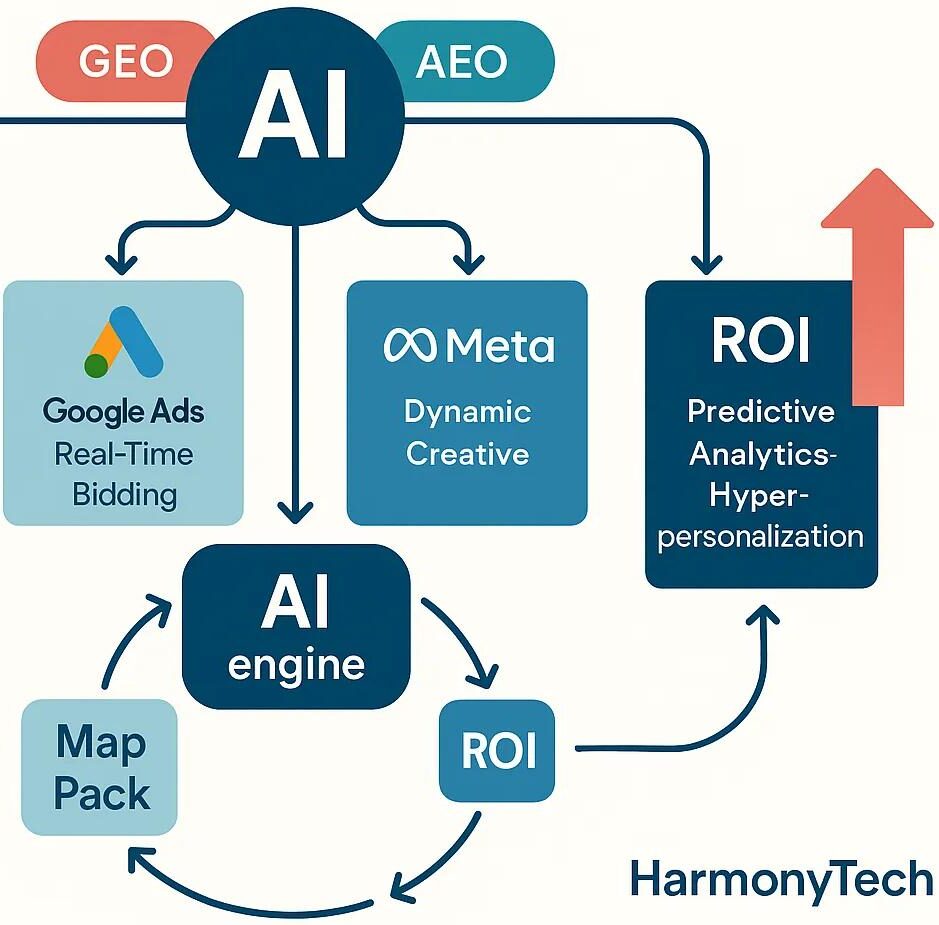
Partnering with an agency provides focused capabilities that extend a small business’s marketing reach and speed of execution. **AI-powered advertising agencies leverage advanced algorithms for audience segmentation, predictive targeting, and real-time bid management, significantly improving campaign effectiveness.** Agencies deliver specialized skills across channels, from PPC and SEO to social media and content marketing, which improves campaign effectiveness and strategic depth. They offer economies of scale on tools and media buying, lowering effective costs per lead or acquisition compared to ad-hoc in-house purchases. An external perspective helps identify market opportunities and weaknesses that internal teams may miss, while tested processes and measurement frameworks accelerate learning and optimization. For example, a small retailer may see faster sales uplift when a specialist social media strategy leverages user-generated content and localized ads to increase conversions and repeat customers, **often with AI-driven content personalization and ad placement.**
These benefits naturally lead to the next consideration: how agencies deliver specialized expertise while remaining cost efficient.
How Does an AI Agency Provide Specialized Expertise and Cost Efficiency?
AI Agencies deliver specialized expertise and cost efficiency through shared resources, flexible pricing models, and access to cross-functional teams without full-time hiring commitments. **AI tools further enhance this efficiency by automating repetitive tasks, generating creative variations, and providing deep analytical insights that would otherwise require extensive manual effort.** Common pricing models include retainers for ongoing strategy, project-based fees for discrete initiatives, and performance-based arrangements tied to agreed KPIs; selecting the right model depends on your risk tolerance and growth stage. Tool and media-buying leverage means agencies often negotiate better platform rates and combine license costs across clients, reducing per-client expenses. A brief cost-comparison illustrates this: hiring an in-house specialist plus tools and benefits often exceeds the combined monthly retainer for agency services that cover strategy, creative, and paid media execution. Deciding which model to use should follow a defined goals-and-budget mapping to ensure cost aligns with expected outcomes, **with AI contributing to more precise forecasting and optimization of ad spend.**
This clarifies why many small businesses prefer agency partnerships when scaling marketing activity and controlling costs.
How to Define Your Small Business Marketing Goals and Budget

Defining marketing goals and budget is the foundation for selecting an advertising agency and measuring success; clear objectives map directly to channel choices and KPI selection. **An AI-powered advertising agency can assist in this by providing data-driven insights into market trends, audience behavior, and competitive landscapes, helping to refine objectives and optimize budget allocation.** A goal-driven approach starts by naming a primary objective—brand awareness, lead generation, sales, or retention—then mapping each objective to measurable KPIs and an appropriate budget allocation. This method ensures you and prospective agencies evaluate proposals against the same success criteria and prevents scope creep. The following three-step featured-snippet style process gives a concise framework to set goals and a starting budget range for small businesses.
- Identify the primary objective (awareness, acquisition, revenue, retention) and a secondary objective to support it.
- Map each objective to 1–3 KPIs (e.g., impressions for awareness, CPA for acquisition, LTV for retention) and set target ranges.
- Select a budgeting method—percentage of revenue, goal-based allocation, or a fixed test budget—then plan to scale based on early performance, **leveraging AI for predictive budget optimization.**
An example budget range for early-stage small businesses can be goal-based: allocate an initial 5–10% of projected revenue toward marketing with 30–50% prioritized for performance channels like PPC and paid social during testing. This mapping creates clarity for agencies and forms the basis of a measurable scope of work.
Below is a table to map common marketing goals to KPIs and sample target values so you can align internal priorities with agency proposals.
This table helps translate strategic objectives into operational targets that you can include in RFPs and performance reviews. With goals and budget defined, the next section explains which agency attributes to prioritize during selection.
What Marketing Objectives Should You Set Before Hiring an AI Agency?
Before contacting agencies, prioritize objectives using an awareness-versus-performance framework that matches business stage and sales cycle complexity. Early-stage businesses often prioritize acquisition and measurable lead generation to validate product-market fit, while established brands may emphasize retention and long-term brand equity. Choose metrics that reflect the customer journey and your sales process—impressions and reach for upper funnel work, CTR and conversion rate for mid-funnel, and repeat purchase rate for retention. Prioritization should influence budget allocation and the type of agency you shortlist; for instance, a performance-based marketing agency is more aligned to strict CPA targets, while a full-service AI advertising agency may better support integrated brand and growth needs. **Specifically, an AI advertising agency can offer advanced analytics to pinpoint the most impactful objectives and the AI tools to achieve them efficiently.** Clear prioritization reduces misalignment and ensures proposals focus on the outcomes that matter most.
How to Establish a Realistic AI Advertising Budget for Your Small Business?
Set budgets using a hybrid of percentage-of-revenue and goal-based testing: commit a modest test budget to validate channels, then scale according to ROI. A practical approach is to allocate 60%–70% of the initial budget to performance channels (PPC, social ads), 20% to content and SEO for long-term value, and 10%–20% to experimentation like **AI-powered marketing tests** or local partnerships. Use a three-month test window to evaluate CPA and conversion rates before increasing spend. Start with conservative spend levels that allow statistically significant results—too small a budget yields noisy data and poor scaling decisions. This test-and-scale method controls risk while establishing a data-driven baseline for ongoing monthly or quarterly budgeting adjustments, **often refined by AI-driven forecasting models.**
Mapping goals to budget and KPI expectations prepares you to evaluate agency proposals on equal footing.
How to Choose the Best AI Advertising Agency for Your Small Business

Selecting the best advertising agency requires an objective evaluation framework that balances experience, measurable results, service scope, and cultural fit. Core criteria include relevant experience with your industry or customer profile, a portfolio that demonstrates concrete KPIs and timelines, transparent pricing models, and a reporting cadence that matches your governance needs. **Crucially, assess the agency’s proficiency and integration of AI tools and strategies across their services, as this indicates their capability to deliver cutting-edge, data-driven results.** Assess whether the agency functions as a full-service advertising agency, a digital marketing agency, or a specialist agency for SEO, PPC, or social, since each hyponym brings different strengths. The next subsections show how to read portfolios and why soft-fit factors like communication and pricing structure materially affect long-term partnership success.
Use the following comparison table to quickly compare agency attributes when shortlisting vendors.
This comparison helps quantify differences between agencies and highlights total cost of ownership beyond headline fees. Next, we explore how to interpret portfolios and case studies for real performance signals.
How to Evaluate Agency Experience, Portfolio, and Case Studies?
When reviewing portfolios, prioritize case studies that present clear before-and-after metrics, timelines, attribution methods, and client contexts that resemble your own business. Look for specific KPIs such as CPA, revenue lift, or conversion rate improvements rather than vanity metrics without context. **Pay close attention to how agencies highlight their use of AI in achieving these results, whether through advanced audience segmentation, dynamic creative optimization, or predictive analytics.** Red flags include anonymized results with no measurable impact, generic creative examples, or a pattern of short-lived campaigns without sustained optimization. Request references and ask about how the agency handled measurement challenges, attribution, and cross-channel coordination, **and specifically how AI tools contributed to overcoming these challenges.** This evidence-based assessment separates tactical vendors from strategic partners who can demonstrate repeatable performance and methodological rigor.
Clear assessment of portfolios leads naturally to evaluating soft-fit factors like communication and pricing.
Why Are Communication, Cultural Fit, and Pricing Models Important?
Communication style and cultural fit determine how well your team and the agency collaborate during strategy shifts, campaign pivots, and crisis response. Agree on reporting cadence, decision rights, and escalation paths up front to prevent misalignment. Pricing models influence incentives: performance-based arrangements align agency rewards with results but require strict KPI definitions and reliable data, while retainers favor steady strategic investment and ongoing optimization. Consider mini-case comparisons: a low-cost project fee may deliver a short-term burst but lack optimization, while a retainer supports continuous testing and incremental gains. Evaluate trade-offs between cost certainty and performance upside to choose a structure that matches your growth objectives. **Ensure the agency’s pricing model transparently accounts for the value added by their AI tools and expertise, rather than just traditional service costs.**
These selection criteria and comparisons prepare you for a systematic agency search and interviewing process in the next section.
What Is the Step-by-Step Process to Choose the Right Marketing Agency?
A reproducible process reduces hiring risk: research and shortlist, issue a brief or RFP, interview finalists, check references, and run a paid pilot before committing to long-term contracts. This process is designed to surface capability, cultural fit, and measurable execution while keeping commitments flexible. Use structured scoring rubrics during interviews to compare agencies objectively across the same attributes, and require a concise pilot scope with defined KPIs to validate performance. **When evaluating, prioritize agencies that clearly articulate their AI strategy and how it integrates into their service delivery.** The numbered checklist below is optimized for easy copying into RFPs or procurement docs.
- Research and shortlist 6–8 agencies using referrals, directories, and case-study searches, **prioritizing those with demonstrated AI capabilities.**
- Issue a brief or RFP that includes goals, KPIs, budget range, timelines, and evaluation criteria.
- Interview top 3 agencies, score responses, check references, and request a pilot engagement.
- Run a time-boxed pilot with defined deliverables and a clear success threshold before scaling.
Following these steps produces evidence-based comparisons and reduces the chance of a costly long-term mismatch. The next subsections detail sourcing channels and what to include in an RFP.
How to Research, Shortlist, and Interview Potential Agencies?
Start sourcing through professional referrals, industry networks, and curated directories, and pre-qualify agencies by scanning case studies and client lists for relevant experience. Use a scoring rubric that weights factors such as demonstrated outcomes (30%), strategic fit (25%), team and availability (20%), pricing transparency (15%), and cultural alignment (10%). **Add a specific weighting for AI proficiency and integration (e.g., 10-15% from other categories), as this is a critical differentiator.** During interviews, ask targeted questions about attribution methods, campaign testing frameworks, expected timelines to impact, and sample reporting dashboards. **Crucially, inquire about their specific AI tools, how they ensure data privacy, and how AI insights translate into actionable strategies.** Use a short list of five to seven questions that each interviewer scores numerically to avoid subjective bias. This structured approach makes final comparisons defensible and repeatable.
A well-constructed RFP follows and clarifies what you expect from shortlisted agencies.
What Should You Include in a Request for Proposal?
An effective RFP includes concise business context, primary and secondary goals, target audience profiles, desired KPIs, budget range, timeline expectations, scope boundaries, evaluation criteria, and submission guidelines. Be explicit about measurement standards and required reporting frequency so agencies propose realistic scopes and pricing models. **Specifically, ask agencies to detail their AI capabilities, the AI tools they utilize, and how AI will be integrated into strategy, creative development, media buying, and performance optimization for your specific goals.** Ask for a brief proposed approach, team bios, three relevant case studies with metrics, and proposed contract terms for a pilot phase. Including these elements reduces proposal variability and accelerates meaningful comparisons across vendors. Clear RFPs lead to better-aligned proposals and faster time-to-decision when evaluating finalists.
With candidates evaluated and a pilot run, the next critical stage is understanding contracts and negotiation levers.
How to Understand and Negotiate Advertising Agency Contracts?
Understanding contract elements and negotiation levers protects small businesses from scope creep, hidden fees, and one-sided termination terms; it also creates a foundation for a measurable, collaborative partnership. Key clauses to review include scope of work, payment terms, IP ownership, confidentiality, termination and exit terms, performance SLAs, and auto-renewal language. **Given the increasing role of AI, pay special attention to clauses regarding data ownership, usage of client data for AI model training, and intellectual property rights for AI-generated creative assets.** Negotiation levers include pilot periods, clearly defined KPIs tied to payment or incentives, caps on additional fees, and defined data access and reporting standards. The table below summarizes contract elements, why they matter, and practical negotiation tips to use when reviewing drafts with legal counsel or procurement partners.
This table provides a negotiation-ready reference to balance risk and flexibility in agency agreements. The next subsections explain essential clauses and common pitfalls in detail.
What Are the Key Contract Elements Small Businesses Must Know?
Small businesses should insist on a clear SOW, a payment schedule tied to deliverables or milestones, explicit IP and data ownership clauses, confidentiality provisions, and defined termination with reasonable notice. The SOW must include specific deliverables, timelines, and acceptance criteria to prevent disagreements. Payment terms should balance upfront fees for setup with milestone payments for ongoing services, and consider holding a portion contingent on pilot success. IP clauses should assign ownership of campaign creative and data to the client or clearly license work for client use. **This is particularly important for AI-generated content and the data used to train AI models; ensure your contract specifies client ownership or clear licensing terms for all AI-related outputs and data.** Finally, a termination clause with a defined cure period and no automatic renewal reduces lock-in risk and preserves negotiating leverage.
Understanding these elements prepares you to spot common pitfalls and propose constructive alternatives.
What Are Common Contract Pitfalls and Negotiation Tips?
Typical pitfalls include vague deliverables, auto-renewal clauses, overly broad IP assignments, undefined performance metrics, and penalties that favor the agency. To mitigate these risks, negotiate a pilot period with clearly stated deliverables and a success threshold, cap third-party vendor pass-through costs, require transparent media billing, and include an exit strategy with data handover provisions. **Be wary of clauses that grant the agency broad rights to use your campaign data for training their general AI models without explicit consent or compensation.** Use alternative phrasing such as “deliverables as specified in SOW” with a defined amendment process to manage scope changes. These practical negotiation tips protect your budget and ensure the relationship focuses on measurable outcomes rather than subjective commitments.
Having a solid contract and pilot in place allows you to set up the measurement framework that will maximize partnership ROI.
How to Measure and Maximize Your Advertising Agency Partnership ROI?
Maximizing ROI from an agency relationship depends on aligning KPIs to business outcomes, agreeing on reporting cadence, and institutionalizing continuous optimization processes. Establish a dashboard with prioritized KPIs that reflect your objectives—LTV and CAC for revenue-focused goals, impressions and reach for brand initiatives, and conversion rates for acquisition work. Set a reporting cadence (weekly for tactical execution, monthly for performance reviews, and quarterly for strategic planning) and require the agency to deliver insights and optimization plans, not just raw metrics. **An AI advertising agency should leverage its tools to provide deeper, predictive insights and automate optimization recommendations, moving beyond basic reporting.** Continuous optimization should include A/B testing, creative refresh cycles, and budget reallocation based on marginal return analysis. These routines turn agency activity into a measurable growth engine.
The following mini-table maps objectives to representative KPIs and example targets to guide reporting setup.
This EAV-style mapping helps create dashboards that focus attention on business outcomes rather than vanity metrics. The final subsection outlines communication and optimization rituals that sustain performance.
Which KPIs and Metrics Should You Track for Success?
Track KPIs that directly connect to revenue and growth: impressions and reach for awareness, CTR and conversion rate for acquisition, CPA and CAC for cost efficiency, and LTV and repeat purchase rate for retention. Define baseline targets and acceptable variance bands so both your team and the agency know when to trigger optimization or strategic reviews. Include attribution windows and channel-level granularity to correctly assign credit across touchpoints. **An AI-powered agency can offer advanced multi-touch attribution models and predictive analytics to refine these KPIs and provide more accurate forecasts.** Regularly revisit KPI relevance as campaigns mature; early-stage emphasis on CPA and conversion rate may shift to LTV and retention metrics as customer data accrues.
Consistent KPI alignment enables productive optimization conversations with your agency and reduces misaligned incentives.
How to Maintain Effective Communication and Optimize Campaigns?
Establish a communication and optimization rhythm: weekly tactical check-ins for active campaigns, monthly performance reviews for KPI analysis and budget reallocation, and quarterly strategic sessions for roadmap adjustments. Use concise meeting agendas with pre-shared dashboards and action-item tracking to make meetings decision-focused. Implement an optimization checklist that includes hypothesis-driven A/B tests, creative refresh timelines, landing page improvements, and budget rebalancing based on marginal returns. **Insist on post-test documentation that links changes to results so learnings are institutionalized and applied across channels, with AI-driven insights often accelerating this learning process.** These communication norms and optimization rituals ensure the agency partnership continuously drives measurable improvements and adapts to changing market conditions.
No Responses