
AI GEO Optimization: Maximize LLM Local Business Visibility
AI GEO Optimization: Maximize Your Local Business Visibility in LLM Search Results
The digital landscape keeps changing, and local businesses that adapt win attention. AI GEO Optimization uses artificial intelligence to improve visibility in local search—especially inside large language model (LLM) experiences—so your business can stand out where customers are asking questions. In this article, we explain how AI GEO works, why it matters for local brands, and practical steps to implement it.
Too many local businesses get overlooked in AI-driven search results, missing customers and walks-through the door. With clear AI GEO strategies you can sharpen your online presence and attract more local traffic. Below we outline the core pillars, a step-by-step implementation plan, success metrics, real-world South Florida examples, and how to keep your approach current.
AI GEO Optimization: Maximize Local Visibility in LLM Searches
AI GEO Optimization describes using AI technologies to improve how local businesses appear in search results, especially within LLM-powered interfaces. It blends tried-and-true SEO practices with machine learning that prioritizes context and intent rather than just matching keywords. That shift makes search results more useful to users—and more opportunity for local businesses that signal relevancy correctly.
How Does AI GEO Differ from Traditional SEO and Local SEO?
Unlike traditional SEO, which centers on keyword targeting, AI GEO leans on AI to read behavior, context, and patterns in queries. Machine learning helps surface the businesses most likely to meet a user’s needs by understanding intent and local signals. In practice, that means businesses optimized for AI GEO are more likely to appear when users pose conversational or intent-rich queries.
Why Should South Florida Businesses Prioritize AI GEO Optimization?
South Florida’s market is competitive and culturally diverse—making local relevance essential. Businesses in the region that adopt AI GEO tactics tend to see better engagement and more customer acquisition. Local case studies show measurable lifts in foot traffic and online inquiries after implementing these approaches, so AI GEO is a practical advantage, not just a buzzword.
What Are the Core Pillars of Effective AI GEO Optimization?
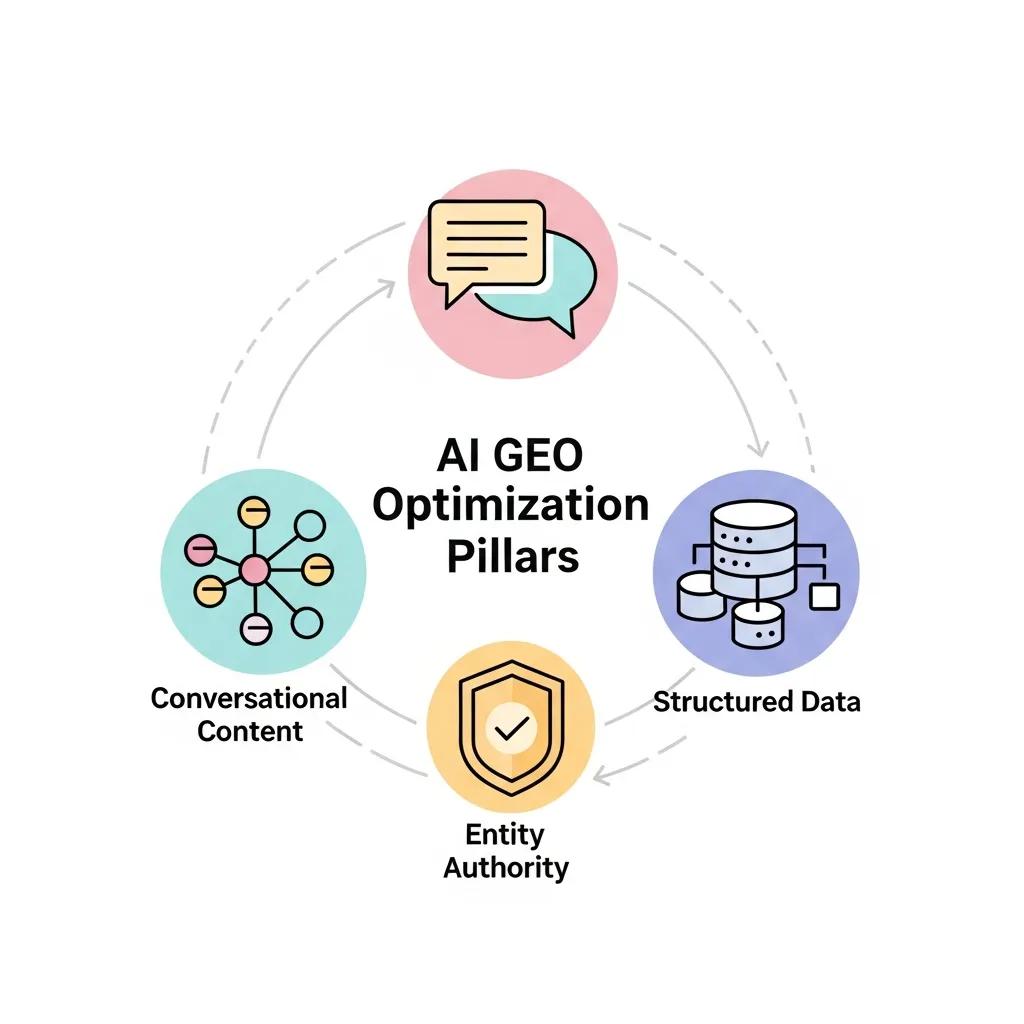
AI GEO stands on a few reliable pillars that work together to improve local search visibility: conversational content, structured data (schema), and strong entity authority. Each pillar helps search systems understand your business and match it to relevant, location-based queries.
How Does Conversational Content Improve LLM Search Visibility?
Conversational content mirrors how people naturally ask questions—short, direct, and intent-focused. LLMs favor content that answers questions clearly and directly, so sites with natural-language Q&As, short-answer snippets, and helpful local context are more likely to be surfaced. Use clear, human phrasing and anticipate the exact ways locals will ask for your services.
Why Is Structured Data and Schema Markup Essential for AI Visibility?
Structured data (schema) gives search engines unambiguous signals about your business—services, hours, location, and offerings—so AI systems can index and surface the right details quickly. Proper schema reduces ambiguity and helps LLMs return accurate, relevant results that increase the chances of discovery.
How Can Local Businesses Implement AI GEO Optimization Step-by-Step?
AI GEO Optimization follows a practical sequence: tidy up local profiles, publish clear conversational content, add structured data, and use analytics to iterate. Taken together, these steps improve how AI systems perceive and recommend your business.
What Are the Best Practices for Optimizing Google Business Profile and Local Directories?
To get the most from your Google Business Profile and local listings, follow these essentials:
- Complete Information: Keep your name, address, phone number, and hours consistent and accurate across every profile.
- Engaging Descriptions: Write concise, benefits-focused descriptions that include relevant local terms and what makes you different.
- Regular Updates: Post fresh photos, offers, and customer responses to show activity and relevance.
These practices increase trust signals and improve placement in local AI-driven results.
How to Build Entity Authority and E-E-A-T for Local AI SEO?
E-E-A-T—Experience, Expertise, Authoritativeness, Trustworthiness—matters for AI-driven ranking. Focus on:
- Creating High-Quality Content: Publish helpful, locally relevant content that demonstrates real expertise.
- Engaging with Customers: Respond to reviews and questions promptly—public engagement builds trust.
- Leveraging Local Partnerships: Partner with local organizations and reputable sites to strengthen your entity signals.
These actions help position your business as a reliable, local authority for AI systems and human users alike.
How Do You Measure and Monitor Success in AI-Driven Local Search?
Measuring AI-driven local success requires tracking KPIs that reflect both visibility and engagement. Use a mix of platform-specific and broader analytics to see how often you’re appearing in AI responses and how users interact with those results.
Which Metrics Reflect AI Citation Frequency and AI Share of Voice?
Key metrics include:
- Citation Frequency: How often your business is mentioned across platforms and knowledge graphs.
- Share of Voice: The percentage of local conversations or mentions your brand holds versus competitors.
- Engagement Rates: Click-through rates, call clicks, direction requests, and social interactions.
What Tools Help Track AI Search Visibility and Semantic Entity Performance?
Useful tools for tracking AI visibility and entity performance include:
- Google Analytics: Tracks website behavior and traffic sources to show real user actions.
- SEMrush: Offers keyword and competitor insights that help you benchmark visibility.
- Moz: Provides local rank tracking and visibility reports tailored to local SEO.
Combine these tools to get a fuller picture and to guide optimization decisions.
What Are Real-World Examples of AI GEO Optimization Success in South Florida?

South Florida examples show how these tactics work in practice. Local businesses that aligned their content, listings, and schema with AI signals saw measurable increases in discovery and customer action.
How Have South Florida SMBs Increased Visibility Using AI-Driven SEO Strategies?
Examples include a neighborhood restaurant that rewrote its site with conversational menus and FAQs and saw reservation requests climb, and a retail shop that tightened its Google Business Profile and reported more in-store visits over several months. These are practical, repeatable wins from straightforward changes.
What Lessons Can Be Learned from These AI GEO Implementation Examples?
Key takeaways include:
- Emphasizing User Experience: Clear, conversational content and easy-to-find info increase trust and conversions.
- Leveraging Data Analytics: Use analytics to test what works locally and double down on successful tactics.
- Continuous Optimization: Treat listings, content, and schema as living assets that should be updated regularly.
These lessons help other businesses replicate success without unnecessary complexity.
How to Stay Updated and Adapt to Evolving AI Search and GEO Trends?
AI search is evolving—so your approach should too. Make learning and testing part of your routine to keep visibility strong as algorithms change.
Which Industry Resources and Tools Provide Timely AI and SEO Updates?
Reliable sources include:
- SEO Blogs: Sites like Moz, Search Engine Journal, and Neil Patel publish practical updates and experiments.
- Webinars and Conferences: Live events and webinars provide timely insights and actionable tactics.
- Social Media Groups: Niche communities and forums offer peer-tested tips and early warning on trends.
Use a mix of these channels to stay informed and test new ideas locally.
How Can Businesses Maintain Semantic Authority Amid AI Algorithm Changes?
To protect and grow semantic authority:
- Quality Content Creation: Keep producing relevant, helpful content that answers local intent.
- Monitoring Algorithm Updates: Track major algorithm and model updates and run quick audits after changes.
- Building Relationships: Earn mentions, links, and partnerships with reputable local and industry sources.
These practices make your business resilient as AI ranking systems evolve.
This table summarizes how each strategy supports effective AI GEO Optimization and the benefits local businesses can expect.
Frequently Asked Questions
What are the common challenges local businesses face when implementing AI GEO Optimization?
Local businesses often encounter several challenges when implementing AI GEO Optimization. These include a lack of understanding of AI technologies, difficulty in creating conversational content that resonates with users, and the complexity of structured data implementation. Additionally, many businesses struggle with maintaining consistent information across various platforms, which is crucial for local SEO. Overcoming these challenges requires a commitment to learning and adapting strategies that align with AI-driven search trends.
How can small businesses with limited budgets effectively utilize AI GEO Optimization?
Small businesses can effectively utilize AI GEO Optimization on a budget by focusing on high-impact strategies. Start by optimizing your Google Business Profile with accurate and engaging information. Create conversational content that answers common customer questions, and leverage free tools like Google Analytics to track performance. Collaborating with local partners for content and backlinks can also enhance visibility without significant costs. Prioritizing these efforts can yield substantial results even with limited resources.
What role does customer feedback play in AI GEO Optimization?
Customer feedback is vital in AI GEO Optimization as it provides insights into user experience and preferences. Positive reviews and interactions can enhance your business’s credibility and authority, which are crucial for AI-driven search rankings. Actively engaging with customer feedback—responding to reviews and addressing concerns—can improve trust and encourage more interactions. This engagement not only boosts your local SEO but also helps refine your content and services to better meet customer needs.
How often should businesses update their AI GEO Optimization strategies?
Businesses should regularly update their AI GEO Optimization strategies to stay relevant in a rapidly changing digital landscape. A good practice is to review and refresh content, structured data, and local listings at least quarterly. Additionally, keep an eye on algorithm updates and industry trends, adjusting your strategies accordingly. Continuous optimization ensures that your business remains competitive and visible in local search results, adapting to evolving user behaviors and AI technologies.
What are the benefits of using analytics in AI GEO Optimization?
Using analytics in AI GEO Optimization provides critical insights into how users interact with your business online. By tracking metrics such as website traffic, engagement rates, and conversion actions, businesses can identify what strategies are working and where improvements are needed. Analytics help in understanding customer behavior, allowing for data-driven decisions that enhance content and visibility. This iterative approach ensures that optimization efforts are effective and aligned with user intent.
Can AI GEO Optimization strategies be applied to e-commerce businesses?
Yes, AI GEO Optimization strategies can be effectively applied to e-commerce businesses. While the focus is often on local visibility, e-commerce sites can benefit from optimizing for local search queries, especially if they have physical locations or offer local delivery. Implementing structured data for products, creating localized content, and ensuring accurate business information can enhance visibility in AI-driven search results. This approach helps attract local customers and improves overall online presence.
Conclusion
Implementing AI GEO Optimization can significantly enhance your local business visibility, driving more traffic and customer engagement. By leveraging conversational content, structured data, and building entity authority, you position your brand to meet the evolving demands of AI-driven search. Staying proactive in your optimization efforts ensures you remain competitive in a dynamic market. Start optimizing your local presence today and watch your business thrive in the digital landscape.
No Responses