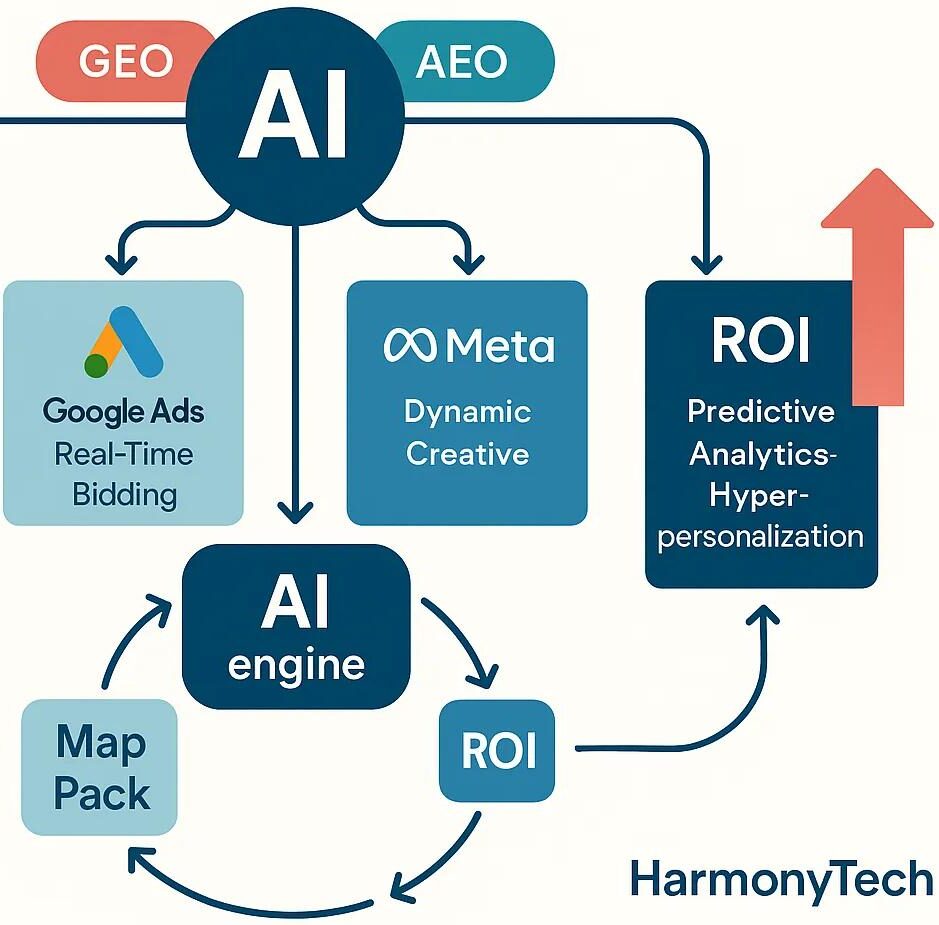
Achieving Hyper-Personalization in Marketing with AI
Harness AI for Marketing Triumph
Hyper-personalization is a key differentiator in AI-powered digital marketing. Here we show how artificial intelligence (AI) strengthens hyper-personalization for small and medium-sized businesses (SMBs). Read on for core mechanisms, common AI technologies, and practical benefits for engagement and conversion, including marketing automation, customer journey mapping, predictive analytics, and real-time content personalization.
What is Hyper-Personalization in Marketing and How Does AI Enhance It?
Hyper-personalization tailors messages and experiences to individuals using preferences, behavior, and real-time signals. AI processes large data sets to find patterns and produce actionable insights so businesses can deliver more relevant content. Typical uses include refining ad copy, creative assets, and targeting rules to boost relevance, engagement, and conversions.
Defining Hyper-Personalization and Its Importance for SMBs
Combining analytics and AI aligns marketing with each customer’s signals. For SMBs, hyper-personalization raises engagement, builds trust, improves conversion rates, and helps allocate marketing spend more efficiently, enabling measurable gains and competitive parity with larger firms.
Research also highlights AI-enhanced customer journey mapping as a key enabler of contextually relevant experiences.
Hyper-Personalization with AI Customer Journey Mapping
One of the most profound strategic impacts of data-driven and AI-enhanced customer journey mapping (CJM) lies in its ability to deliver hyper-personalized and contextually relevant
AI-Powered Customer Journey Mapping: Turning Data into Real-Time Experience Intelligence, S Verma, 2025
How AI Technologies Drive Personalized Customer Experiences
AI creates precise audience segments, suggests bespoke messaging, and optimizes placements by analyzing behavioral and transaction data. Models identify high-value segments and guide ad creation and A/B testing to surface top variants. Clean, reliable customer and business data improve targeting, lift conversion rates, and reduce wasted spend, while continuous monitoring keeps campaigns responsive.
Which AI Marketing Automation Tools Boost Campaign Efficiency?
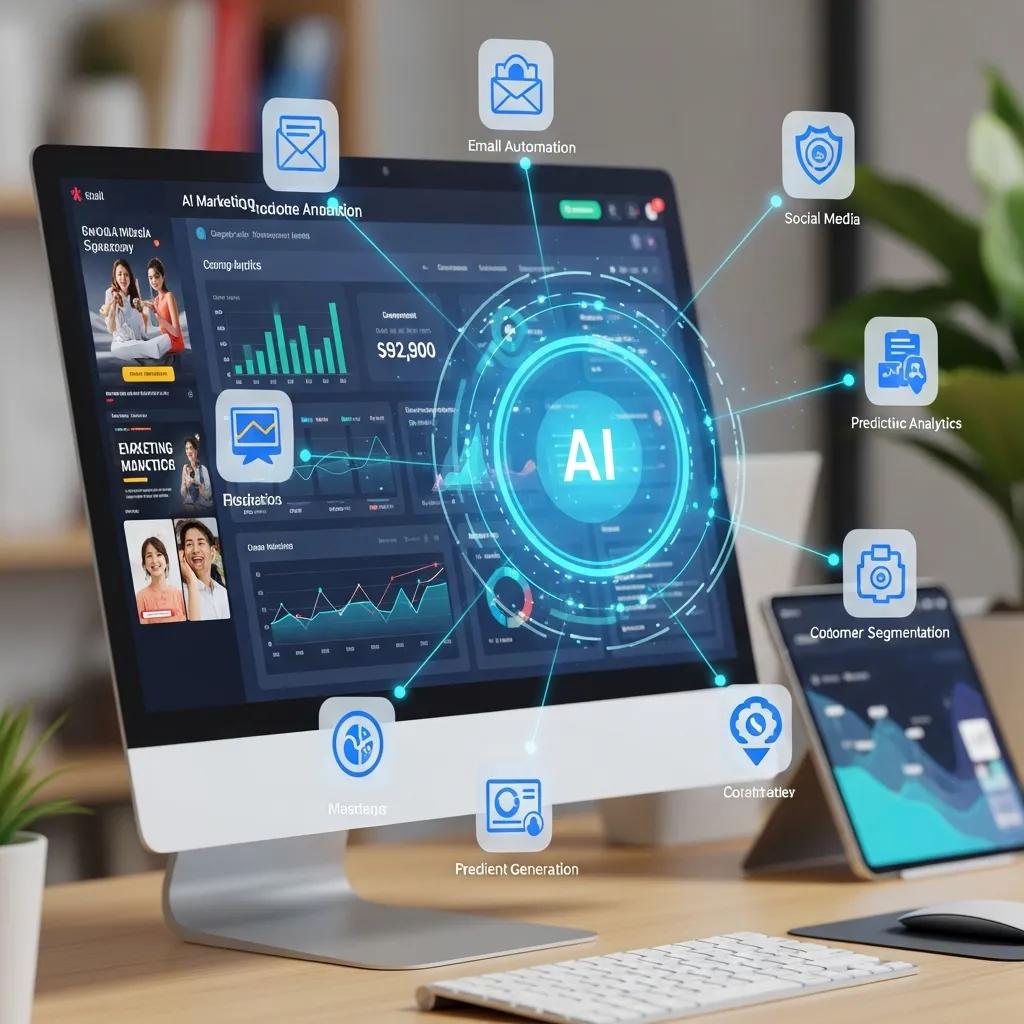
AI marketing automation platforms eliminate repetitive work and refine targeting so teams can focus on strategy. These platforms ingest performance signals and adjust advertising variables in near real time using machine learning and analytics.
AI Marketing Automation & Predictive Analytics for Ad Optimization
The AI-Based Advertisement Optimization and Performance Analytics program aims to revolutionize digital marketing by way of real-time automation and optimization of advertising campaigns using AI. The architecture proposes in making use of advanced machine learning algorithms and data analytics to analyze massive amounts of ad performance data, theirs including and not limited to click-through rates, conversion rates, audience demographics, engagement rates, and temporal patterns, and develop key performance indicators or useful insights on the paved way of real-time automated marketing and optimization of advertising campaigns through AI. The system’s other operations engage predictive modeling approaches to provide ad placements, formats, and budgets, recommending them dynamically while maximizing returns and minimizing costs per click, complemented also by audience sentiment estimation involving reviews and feedback input via techniques like natural language processin
AI-Based Advertisement Optimization and Performance Analytics,
TA Kumar, 2025
Key Features of AI Marketing Automation Software
Common features include automated creative testing, compliance controls, continuous performance monitoring, strategic guidance, data hygiene and integration, defined KPIs, and continuous model learning.
- Ad Copy and Creative Assistance: AI tests headline, description, and image variants to accelerate iteration.
- Data Privacy Controls: Support for aggregated/anonymized data and privacy-enhancing methods.
- Performance Monitoring: Ongoing reviews and automated optimizations reduce manual work.
- Strategic Guidance: Agencies or consultants can provide experience and oversight.
- Data Hygiene & Integration: Accurate tracking and first‑party data are essential for model accuracy.
- Clear KPIs: Defined goals guide AI optimization toward measurable outcomes.
- Continuous Learning: Experimentation and model updates keep tactics current.
Together these features streamline routine tasks, improve targeting, and raise marketing effectiveness.
Benefits of Automating Customer Segmentation with AI
AI segmentation improves targeting precision, raises conversion rates, and reduces wasted spend by classifying audiences more accurately.
- Enhanced Targeting: Clean data helps AI find the right neighborhoods and demographics.
- Higher Conversion Rates: Predictive segments enable tailored creatives and bids.
- Less Wasted Spend: Better audience classification improves ROI.
- Deeper Audience Insights: Behavioral signals inform intent-based segments.
- Increased Engagement: More relevant ads increase response rates.
- Continuous Improvement: Ongoing monitoring refines models and tactics.
Operationally, improved segmentation yields higher-quality leads and more efficient resource use.
How Does Customer Journey Mapping with AI Improve Engagement?
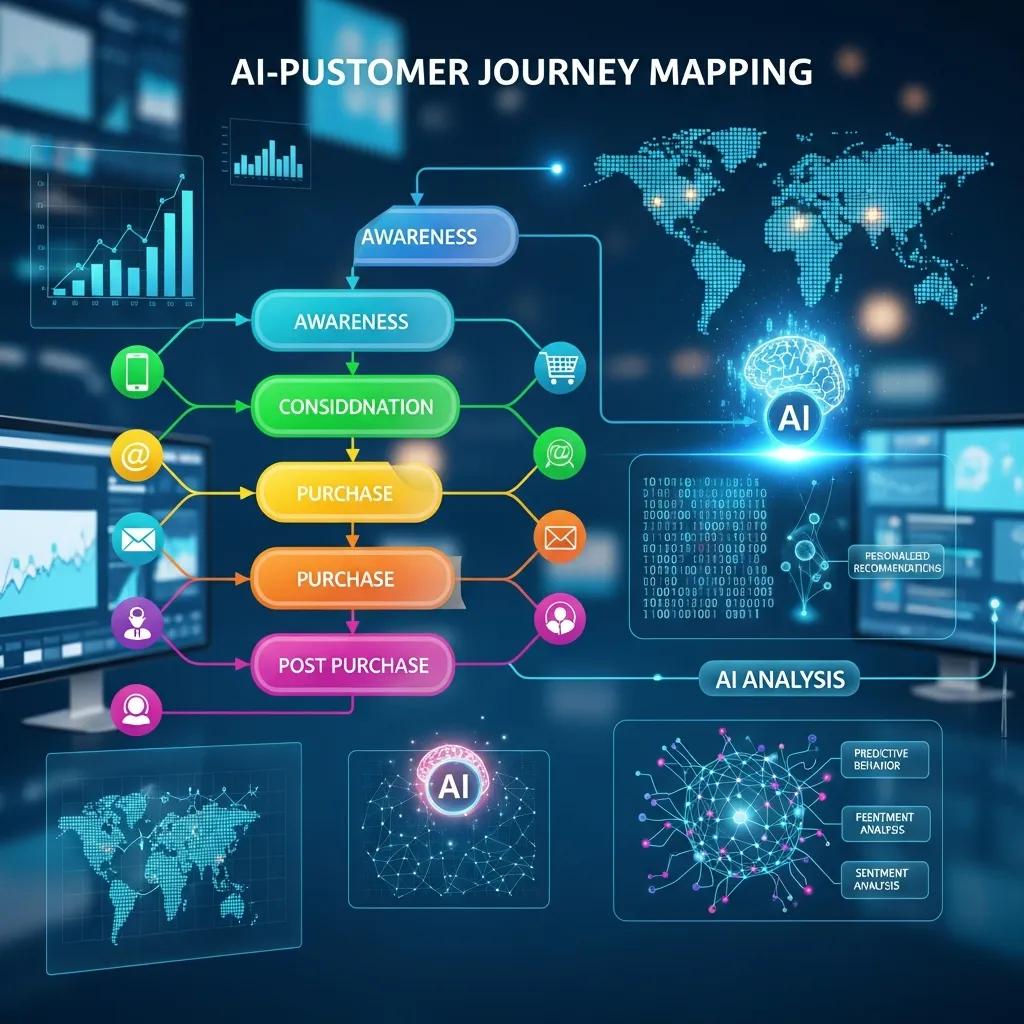
AI-driven journey mapping merges data sources to improve segmentation and touchpoint relevance. When business profiles and customer signals align, AI recommends placements and messaging that reduce friction and boost conversions. Monitoring KPIs and improving profile data also increases stakeholder visibility and confidence.
Evidence suggests predictive analytics and AI strengthen journey mapping and personalization.
AI & Predictive Analytics for Personalized Customer Journeys
This research paper explores the transformative role of Artificial Intelligence (AI) and predictive analytics in customer journey mapping (CJM), focusing on how AI tools help organizations understand, anticipate, and respond to consumer behavior across various touchpoints[13]. Through a combination of quantitative and qualitative research methods, the study investigates the effectiveness of AI-driven CJM in enhancing consumer satisfaction, loyalty, and personalized engagement. Hypotheses were tested using statistical tools like regression analysis, t-tests, and chi-square tests. Findings reveal significant positive relationships between AI-enabled predictive analytics and consumer satisfaction, particularly through personalized interactions and predictive insights. Visualizations support key data points, and the paper concludes with actionable recommendations for businesses seeking to adopt AI-driven CJM.[2].
AI-Driven Customer Journey Mapping: Enhancing Consumer Experience through Predictive Analytics,
AK Jha, 2025
Techniques for AI-Driven Customer Touchpoint Analysis
Recommended practices include tracking Google Business Profile actions, evaluating engagement metrics, maintaining data accuracy, running regular performance reviews, testing creative variants with AI, and ensuring privacy compliance.
- Tracking Key Actions: Monitor GBP calls, website clicks, and direction requests for behavioral insight.
- Engagement Metrics: Use CTRs and reviews to evaluate profile effectiveness.
- Data Accuracy: Strong data management improves segmentation and targeting.
- Regular Reviews: Monthly checks reveal trends; increase frequency during campaigns.
- AI for Creative: Rapidly test variants to find effective messaging.
- Privacy Compliance: Follow laws and be transparent about data use.
These steps refine touchpoints and support measurable performance improvements.
Integrating Data Sources for Comprehensive Journey Mapping
Consolidate data across platforms to form a single customer view. Customer data platforms (CDPs) and integrations give AI access to joined data, improving segmentation accuracy and enabling precise, journey-based interventions.
What Role Does Predictive Analytics Play in Individualized Campaigns?
Predictive analytics helps AI infer intent, build precise segments, and support tailored messaging and budget allocation. Accurate inputs enable geo-targeted campaigns that reduce waste and improve conversion rates. Robust models improve audience matching and lead quality, increasing ROI.
Using Predictive Analytics to Optimize Marketing Strategies
Optimization depends on reliable data, clear KPIs, and routine audits. By analyzing click-through, conversion, and engagement metrics, teams can measure effectiveness and iterate confidently.
Examples of AI-Powered Campaign Personalization Success
Case studies show measurable uplifts from AI-led personalization. Retailers and travel brands often see improved conversion and engagement after deploying segmentation and predictive email strategies.
How Can Real-Time Dynamic Content Personalization Increase Conversion Rates?
Real-time personalization serves contextually relevant content to segments, improving lead quality and reducing wasted impressions. High-quality data supports audience modeling and geofencing, which can increase CTRs and lower acquisition costs when campaigns target specific neighborhoods and demographics.
Technologies Enabling Real-Time Marketing AI
Key systems include automated bidding and targeting, AI-driven advertising platforms, and creative optimization tools. All rely on clean data and include privacy features for responsible deployment.
Implementing Dynamic Content for Enhanced Customer Interaction
An effective approach identifies target segments, produces tailored creative variants, deploys automation to serve content in real time, and monitors performance to iterate.
- Identify Target Segments: Use analytics to find audiences most likely to respond.
- Develop Dynamic Content: Create variants aligned to segment preferences.
- Utilize Automation Tools: Deliver content in real time based on interactions.
- Monitor Performance: Measure engagement and refine creatives and rules.
Following this process increases relevance at each touchpoint and yields measurable gains.
What Case Studies Demonstrate ROI from AI-Driven Hyper-Personalized Marketing?
Organizations that adopt hyper-personalization report returns from targeted campaigns and operational efficiencies, typically showing improved key metrics and clearer ROI paths.
South Florida SMB Success Stories with AI Marketing Automation
South Florida SMBs report tangible benefits from AI automation: restaurants saw more repeat visits, while retailers reduced stockouts through predictive analytics, improving satisfaction and operations.
Data-Backed Results: Conversion and Retention Improvements
Data-driven initiatives commonly yield conversion uplifts and stronger customer loyalty. Combining AI with disciplined marketing processes produces measurable gains in conversion and retention.
Frequently Asked Questions
How can small businesses start integrating AI into their marketing strategies?
Start with a clear problem (for example, segmentation or personalization). Evaluate easy-to-use AI tools, run a small pilot to measure impact, train staff on new workflows, and use consultants if you need faster adoption.
What types of data are most valuable for AI-driven marketing?
High-value inputs include customer demographics, purchase history, online behavior, and engagement metrics. Behavioral signals (CTR, time on page) plus quality first‑party data improve segmentation and targeting while ensuring compliance.
How does AI enhance customer engagement in real-time marketing?
AI analyzes interactions and preferences to deliver personalized content in the moment, adapting messaging so the right message reaches the right person at the right time, reducing friction and improving conversions.
What are some examples of successful AI applications in marketing?
Examples include adaptive email campaigns, chatbots for instant service, and predictive analytics for demand forecasting. Retailers optimize inventory and travel firms recommend customized itineraries to improve outcomes.
How can businesses measure the effectiveness of AI-driven hyper-personalization?
Use KPIs such as conversion rate, engagement, customer lifetime value, and ROI. Run A/B tests to compare personalized approaches and gather customer feedback to assess experience improvements.
What future trends should businesses watch for in AI marketing?
Watch for broader voice search optimization, deeper predictive analytics, and wider delivery of hyper-personalized content across channels. Follow AI ethics and data privacy developments, which will shape implementations.
Conclusion
Leveraging AI for hyper-personalization helps SMBs strengthen engagement and increase conversions through tailored, data-informed experiences. By combining analytics and automation, organisations can create interactions that drive measurable outcomes and higher satisfaction. Adopting these strategies supports sustainable growth and optimizes marketing ROI. Explore AI marketing solutions to elevate your business.