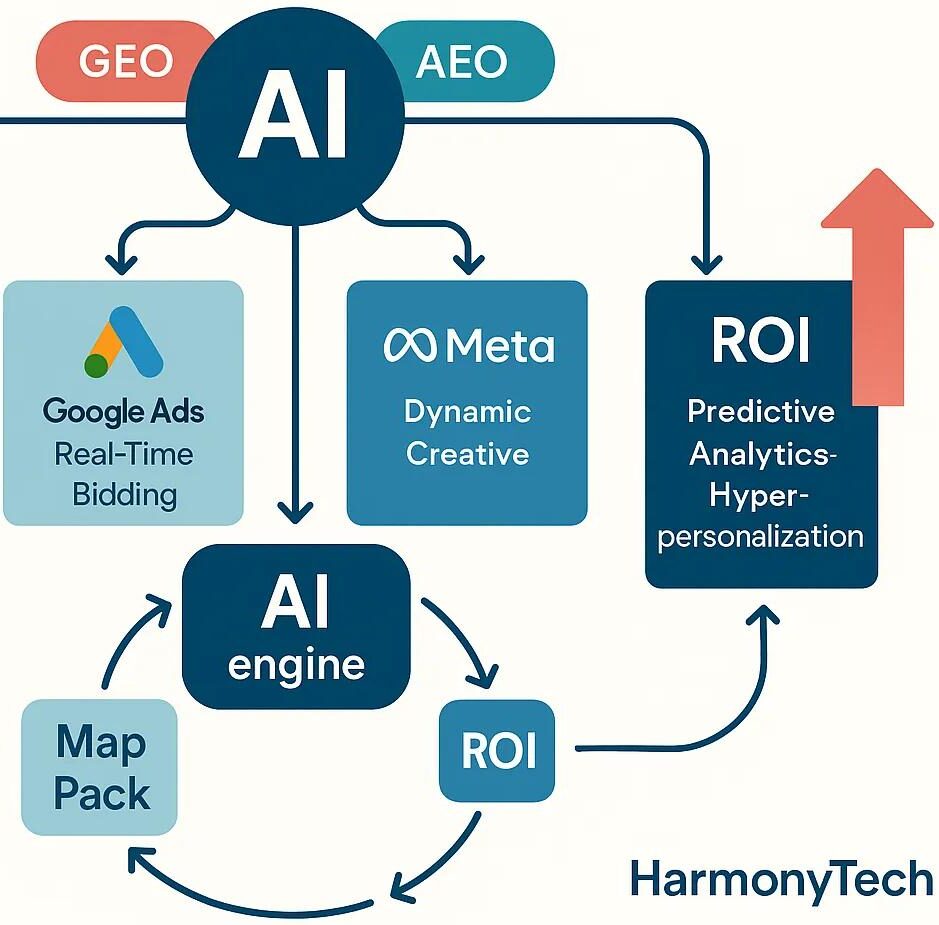
Top Platforms for Video Advertising Campaigns
Top Platforms for Video Advertising Campaigns in 2025 into 2026: Best Networks, Strategies, and AI Trends
Video advertising platforms are the networks and programmatic channels brands use to deliver moving-image creative across screens. In 2025 into 2026, success comes from AI-driven optimization, short-form dominance, and growing connected TV inventory. This guide breaks down what modern video platforms do, why they matter for reach and ROI, and how local and regional businesses can match platform choice to measurable outcomes — from leads and online conversions to store visits. You’ll get platform-by-platform strengths (YouTube, Meta, TikTok, programmatic/CTV), a practical pre-roll playbook, the AI trends changing bidding and creative, and the KPIs local marketers should prioritize. The article is arranged to explain why video belongs in your plan, compare platforms by objective, deep-dive into pre-roll creative, unpack AI capabilities that move the needle, and finish with measurement tactics and a South Florida lens on AI-driven paid media. Practical examples, lists, and comparison tables help decision-makers pick the right mix for awareness, engagement, and lead generation in 2025 into 2026.
Why Are Video Advertising Platforms Essential for Businesses in 2025 into 2026?
Video platforms matter because they combine scale, sustained attention, and precise targeting into measurable paid-media outcomes. Today’s platforms deliver both broad awareness and direct-response performance by leaning on short-form viewing and programmatic controls, so businesses can turn viewers into leads or store visits when measurement is set up correctly. Formats like pre-roll, bumpers, and in-feed shorts consistently outperform static creative for recall and engagement, making video efficient for brand building and conversion optimization. Recent shifts — more CTV inventory, faster short-form consumption, and AI-enabled bidding — mean platform choice and creative strategy now have a bigger impact on local and regional ROAS.
For local and regional businesses, the gains are concrete: increased branded searches, more foot traffic, and higher lead volume when campaigns use geo-targeting and locally relevant creative. Below are the core reasons video should be central to paid media plans in 2025.
- Higher attention and recall from moving-image creative that lifts brand search and consideration.
- Precise geo-targeting and audience segmentation for local campaigns that drive store visits and appointments.
- Flexible formats — bumpers, pre-roll, shorts, and CTV spots — that map to different funnel stages, from awareness to direct response.
Those outcomes map to practical KPIs like view-through rate (VTR), click-through rate (CTR), and cost-per-acquisition (CPA), which local marketers should monitor to align spend with results. That sets up the next section: how AI is changing targeting, bidding, and creative testing for video campaigns in 2025.
What Are the Key Benefits of Video Advertising for Local and Regional Businesses?
Video advertising delivers three measurable benefits local and regional businesses can use: reach, relevance, and response. First, video expands reach across devices and contexts — mobile short-form, desktop, and connected TV — giving customers multiple ways to discover your brand. Second, geo-targeted creative and dynamic messaging increase relevance, letting retailers and service providers tailor CTAs like in-store offers, appointment links, and local promos. Third, video supports both upper-funnel brand lift and lower-funnel conversions when paired with good measurement and remarketing flows that turn viewers into leads or foot traffic.
Real examples: location-targeted bumper campaigns that lift weekend foot traffic, or TrueView lead-form ads that drive booked appointments for service businesses. These show how video maps directly to measurable KPIs — search lift, store visits, and lead volume. Next, we’ll look at how AI powers those outcomes through continuous optimization and creative personalization.
How Is AI Transforming Video Advertising Campaigns Today?

AI now automates core campaign functions — audience prediction, bid optimization, and creative testing — delivering performance improvements that used to require manual scale. Machine-learning models read signals like engagement patterns, audience cohorts, and contextual inventory in real time to shift budget toward high-value impressions and surface creative variants that work best for specific segments. The result: less wasted spend and improved view-through and conversion efficiency.
Practically, AI enables dynamic creative optimization where location, product, or offer tokens assemble into personalized video variants, while reinforcement-learning bid strategies reallocate spend across platforms to hit CPA targets. These capabilities shorten testing cycles and boost incremental returns, which brings us to a platform-by-platform look at where to deploy video formats for different business goals.
AI-Driven Optimization of Advertising Creative Content using Genetic Algorithms and Reinforcement Learning
In an increasingly data-driven ad landscape, personalized, high-impact creative is a major challenge. This paper describes a framework that uses genetic algorithms to explore creative variations and reinforcement learning to adapt selection based on real-time interactions, accelerating the discovery of high-performing ads.
Enhancing Advertising Creative Optimization through AI: Leveraging Genetic Algorithms and Reinforcement Learning Techniques, 2022
Which Are the Best Video Advertising Platforms for 2025 into 2026?
“Best” depends on your objective: awareness, consideration, or direct-response conversion. Major platforms — YouTube, Meta (Facebook/Instagram), TikTok, and Connected TV/programmatic networks — each offer distinct formats, targeting options, and budget trade-offs that suit different funnel stages and local business goals. The most effective mixes usually pair a high-reach platform for awareness with short-form social for discovery and programmatic CTV for premium attention.
Below is a concise comparison of leading platforms and when to use them.
- YouTube: Ideal for scalable reach and measurable view-through performance across TrueView, bumpers, and Shorts.
- Facebook/Instagram (Meta): Best for granular local targeting, in-feed short-form, and conversion-focused placements.
- TikTok: Strong for discovery and viral short-form engagement — great when you’re targeting younger audiences with UGC-style creative.
- Connected TV (CTV) / Programmatic: Best for premium brand-building on the big screen and regional reach with audience and geographic segmentation.
This platform map leads to a side-by-side comparison to clarify trade-offs for budgeting and local targeting.
This comparison clarifies platform selection by objective and budget. HarmonyTech’s platform-agnostic experience helps translate guidance into execution for local businesses ready to take the next step.
What Makes YouTube Ads the Leading Platform for Video Campaigns?
YouTube stands out for scale, measurement depth, and a range of video formats that serve both awareness and action. TrueView offers view-based bidding and lead-form extensions; bumpers deliver concise reach at lower CPV; Shorts enable short-form discovery that integrates well with social strategies. Google’s measurement tools help connect views to downstream conversions like website leads or store visits.
Best practices: use TrueView for lead capture, bumpers for broad reach, and Shorts to test hooks you can repurpose across channels. Local advertisers should pair location-targeted YouTube inventory with tailored CTAs and location extensions to drive foot traffic and bookings. YouTube’s VTR and engagement metrics complement programmatic and social reporting for a fuller performance picture.
How Do Facebook, Instagram, and TikTok Video Ads Drive Local Engagement?
Meta platforms and TikTok excel at short-form discovery and local engagement driven by relevant creative and community signals. Reels and in-feed videos capture attention in discovery feeds, while local awareness and offer formats let advertisers reach users within a specific radius with tailored CTAs. TikTok’s distribution model amplifies compelling creative, which benefits brands that lean on social proof and trend-driven messaging.
Tactics that work: pair influencer or UGC-style content with precise geo-targeting, run creative variants tied to local events or seasonal demand, and use mobile-optimized landing pages with clear CTAs to reduce friction. Combining Meta’s audience granularity with TikTok’s discovery reach helps local businesses build salience and drive immediate engagement across demographics.
User Engagement with Short-Form Video Advertising: A Visual-Audio Perspective
This study examines drivers of engagement on short-form video platforms, focusing on how visual and audio elements interact to influence viewer behavior and ad effectiveness.
Exploring user engagement behavior with short-form video advertising on short-form video platforms: a visual-audio perspective, J Mou, 2024
Why Should Businesses Consider Connected TV Advertising?
Connected TV (CTV) delivers premium, full-screen video that captures high-attention impressions in the living room — ideal for brand-building and consideration. CTV is often bought programmatically or via platform marketplaces and can be targeted by DMA, household, or audience cohort for regional campaigns. It’s especially effective for broad regional awareness or seasonal promotions that need wide reach.
Consider CTV when your goal is top-of-funnel salience or when a big-screen presence can influence later search and conversion behavior. Pairing CTV with short-form social or YouTube bumpers builds a funnel that moves viewers from attention to action. Next, we’ll cover pre-roll ads — how they work tactically across platforms and how creative structure drives performance.
How Can Pre-Roll Ads Maximize Video Advertising Effectiveness?
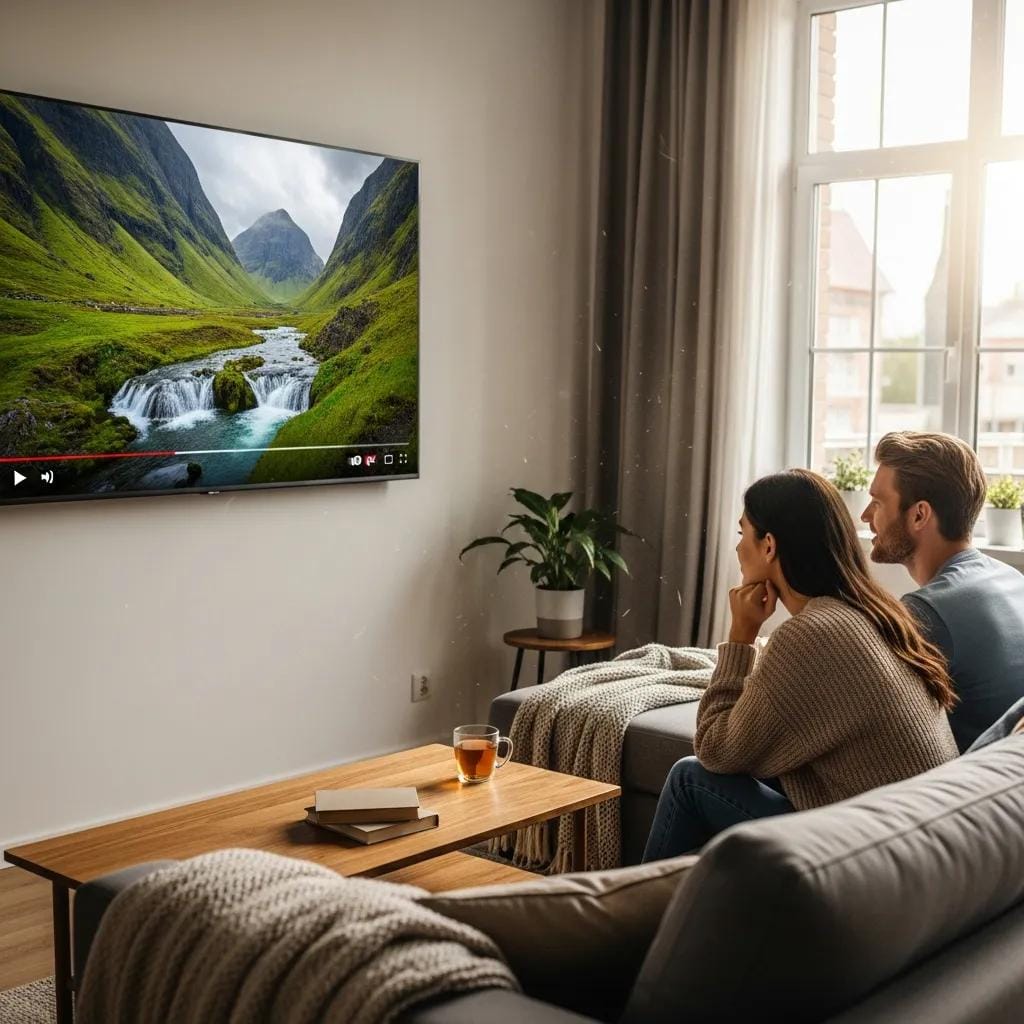
Pre-roll ads play before content and are effective because they reach viewers at predictable moments. Their power lies in the first few seconds — that window decides whether someone watches or skips. When pre-roll follows a hook → message → CTA structure and respects platform behavior, it reliably drives awareness, recall, and measurable conversions.
Use this short checklist to build pre-roll that performs across YouTube, social, and CTV.
- Hook within the first 3 seconds with a visual or verbal cue tied to viewer intent.
- Deliver a single, clear message that matches the landing page or offer.
- Place a concise CTA before the 15-second mark for skippable formats; on CTV, use an end CTA for full-screen impact.
These tactical rules feed into the EAV table below, which outlines creative and technical best practices for pre-roll units.
Bottom line: align attention windows with creative delivery to improve VTR and downstream conversions. HarmonyTech uses AI-assisted creative testing to iterate pre-roll variants and can run a pre-roll audit to surface quick wins in creative and targeting.
What Are Best Practices for Creating Engaging Pre-Roll Video Ads?
Great pre-roll prioritizes immediate relevance, tight storytelling, and a measurable CTA. Start with a distinct hook in the first three seconds — a product close-up, a local visual cue, or an urgent benefit — to cut skip rates and boost VTR. Keep the message focused: one offer, one action. Include readable captions, since many viewers watch without sound.
Run A/B tests on hooks, CTA placement, and thumbnails, then let algorithmic bidding favor top performers. Use frequency caps and pacing to prevent creative fatigue while reaching key audiences. HarmonyTech’s workflow combines human creativity with AI-assisted variant testing to find the winning hooks and CTAs fast, and pre-roll audits reveal low-effort improvements that move the needle.
How Do Pre-Roll Ads Perform Across Different Platforms?
Performance varies by platform because viewer intent and device context differ. YouTube pre-roll often drives higher measurable VTR; social pre-rolls spur discovery and engagement; CTV pre-rolls deliver strong brand-lift and recall. On YouTube, skippable TrueView can provide cost-effective awareness and lead capture via on-video forms. Social favors short, punchy edits that encourage interaction and sharing, often at lower cost for younger demos.
CTV excels at brand-lift studies and consideration metrics but usually needs bigger budgets and different attribution methods. Set format-specific expectations: target completion and VTR for YouTube and CTV (awareness), and prioritize CTR and engagement on social short-form for discovery and immediate response. Test across platforms and align measurement windows to map pre-roll performance to downstream actions.
What Are the Latest AI Video Advertising Trends and How Do They Improve Campaigns?
AI is reshaping video ads through automated bidding, predictive audience scoring, and dynamic creative assembly — all of which boost efficiency and relevance. Automated bid strategies shift budget in real time using performance signals; predictive models surface high-propensity viewers and enable lookalike expansion; dynamic creative optimization composes video elements (headline, hero shot, location token) into personalized variants that resonate with specific segments.
Together, these tools reduce manual optimization time and improve ROAS by continually aligning creative and bidding to campaign goals. Below are clear AI mechanisms and examples showing how those gains happen.
- Reinforcement learning for bidding reallocates spend to inventory that meets CPA targets.
- Predictive audience scoring surfaces likely converters for targeted creative.
- Dynamic creative assembly personalizes CTAs and visuals by location or product.
Knowing how these systems work helps set realistic expectations for testing cadence, reporting rhythm, and the incremental improvements AI can deliver in 2025.
Creative AI: Data-Driven Online Advertising Optimization Utilizing AI and Big Data
Deploying autonomous, AI-driven creative optimization requires combining advanced AI approaches with big-data workflows. This work outlines how algorithmic creative assembly and data-driven testing can improve online ad outcomes while maintaining design discipline.
Creative AI: a data-driven design approach for creative online ad optimisation using artificial intelligence and big data, H Phay, 2019
How Does AI Optimize Targeting, Bidding, and Creative Elements in Video Ads?
AI learns from incremental signals — user behavior, engagement metrics, and conversion events — to predict which impressions will convert and which creative will work for each audience. Reinforcement-learning bid systems update bids based on conversion probability, while multi-armed bandit approaches accelerate creative discovery by routing impressions to top variants. Predictive lookalike models expand reach to users who mirror high-value behaviors, improving conversion efficiency.
In practice, expect AI to shorten test cycles and stabilize CPA, but also build guardrails to protect brand safety and message consistency. The next section covers AI’s role in creating personalized video assets at scale while keeping quality under human control.
What Role Does AI Play in Generating Personalized Video Ad Content?
AI assembles personalized video assets from modular creative blocks and data tokens — location, inventory, audience segment — so you don’t need to produce every variant manually. Tools can auto-generate captions, pick effective thumbnails, and suggest headline text aligned with audience signals, saving time while boosting engagement. Always include human review and brand-safety checks to ensure automated outputs match tone and compliance needs.
Examples: swap in local store photos, promote nearby inventory, or tailor CTAs by segment to lift conversion probability. AI scales personalization, but editorial oversight and a consistent brand voice remain essential to preserve trust and effectiveness across platforms.
How Should Businesses Measure Success on Video Advertising Platforms?
Measure success with KPIs tied to campaign objectives — awareness, consideration, or conversion — and instrument tracking so those KPIs reflect business outcomes. Core video KPIs: VTR and completion rate for awareness; CTR and engagement rate for consideration; CPV and CPA for direct response. Attribution should include cross-device and offline touchpoints, especially for local businesses where store visits and phone calls matter.
In short: track KPIs tied to business goals and use platform signals plus offline import workflows to reconcile ad metrics with actual leads, calls, and visits. The list below gives practical measurement tactics.
Practical measurement tactics include:
- Combine platform analytics with GA4 and server-side tracking to reduce attribution loss.
- Import offline conversions (phone calls, POS transactions) into ad platforms to close the loop.
- Keep a testing cadence that ties KPI shifts to creative or audience changes.
What Key Performance Indicators Matter Most for Video Campaigns?
Prioritize KPIs by funnel stage: VTR and completion for awareness; CTR and engagement for consideration; CPA and conversion rate for direct response. View-through metrics show creative resonance and placement fit for brand-building, while clicks and conversions reveal landing-page and offer strength. Cost metrics like CPV and CPA guide efficiency choices and reallocation when combined with lifetime value or revenue-per-lead inputs.
For local advertisers, add offline signals such as call tracking and store-visit lifts to understand full campaign impact. Set realistic initial targets and use AI-driven bid automation to pursue CPAs while preserving brand delivery.
How Can Local Businesses Track and Improve Video Ad Performance?
Local businesses should build a hybrid tracking stack: platform analytics for realtime metrics, GA4 or server-side analytics for cross-channel attribution, and offline conversion imports for calls and store visits. Use UTM tagging, consistent landing pages, and call-tracking numbers for clearer attribution; server-side events reduce browser-based loss. Regular A/B tests on hooks, CTAs, and thumbnails, paired with automated budget reallocation, create a repeatable optimization cadence.
Operationally, run weekly creative reviews, refine audiences by performance cohorts, and reallocate strategically each month based on business outcomes. These steps close the loop between impressions and tangible local results like booked appointments or increased foot traffic.
How Can South Florida Businesses Leverage AI-Driven Video Advertising Services?
South Florida businesses can gain an edge by mixing local market knowledge with AI-driven video orchestration to maximize reach and conversions across YouTube, social, and CTV. Harmony Technologies (HarmonyTech) offers AI-Driven Paid Media services that combine continuous machine-learning optimization for bids and budgets, localized creative personalization, and integrated measurement workflows that import offline conversions. Local clients benefit from targeted geo-strategies, seasonal planning for tourism peaks, and creative that reflects regional culture and language nuances.
HarmonyTech focuses on outcome-driven campaigns for lead generation and foot-traffic growth, using automated bid strategies and dynamic creative to improve ROAS while keeping local relevance front and center. To explore audits, campaign design, or case studies, interested businesses can reach out to HarmonyTech via the listed email or phone to request an evaluation and view anonymized results for similar verticals.
What Advantages Does HarmonyTech’s AI-Powered Paid Media Offer for Video Ads?
HarmonyTech’s AI-Powered Paid Media brings several tangible advantages: cross-platform bid and budget automation to lower CPA, dynamic creative personalization to boost local relevance, and measurement frameworks that import offline leads and calls for closed-loop reporting. The service aligns platform choice with business goals — linking YouTube, short-form social, and CTV buys to local targeting strategies that drive visits and leads. The outcome is a leaner channel mix that adapts continuously to machine-learning signals and prioritizes high-impact inventory.
Common use cases: service businesses booking appointments via TrueView lead forms, retailers driving weekend foot traffic with local bumpers, and hospitality brands running CTV for seasonal brand lift. HarmonyTech blends technical orchestration with regional insight to make video budgets more efficient and measurable.
Are There Case Studies Showing Success with Local Video Advertising Campaigns?
Short case highlights show what South Florida businesses can expect from a well-executed AI-driven video strategy. For example, a regional service provider saw double-digit increases in booked leads after combining YouTube TrueView lead-form campaigns with locally personalized pre-roll creative and an offline-conversion import workflow. A hospitality client reported measurable search lift and higher direct bookings after pairing CTV brand spots with short-form social promos and AI-optimized bidding that shifted spend into peak-converting inventory.
These anonymized examples underline measurable lifts in leads and store visits from aligned creative, platform mix, and measurement. For detailed case studies or a campaign-specific example, contact Harmony Technologies via the company email or phone to request a relevant success story and a tailored proposal.
Frequently Asked Questions
What types of businesses benefit most from video advertising in 2025 into 2026?
Video works especially well for local and regional businesses — retail, services, and hospitality among them. These businesses can use video to build awareness, drive foot traffic, and generate leads with targeted campaigns. Localized creative that reflects community events, language, or offers makes ad spend more efficient and delivers measurable outcomes like increased visits and bookings.
How can businesses effectively measure the success of their video advertising campaigns?
Measure against KPIs that match your objective. For awareness: VTR and completion rate. For consideration: CTR and engagement. For direct response: CPA and conversion rate. Combine platform analytics with cross-channel tracking and offline conversions to get a complete view of effectiveness.
What role does audience segmentation play in video advertising?
Segmentation lets you tailor messages to specific groups by demographics, interests, and behaviors. Targeted creative resonates more, raising engagement and conversions. Good segmentation ensures your ads reach the right people at the right time, which is essential for maximizing ROAS.
How can businesses optimize their video ad creative for better performance?
Focus on a strong hook in the first few seconds, clear messaging, and a single, measurable CTA. Test visuals, messaging, and CTAs with A/B experiments. Localized content often performs better — show nearby stores, local offers, or community cues to boost relevance.
What are the emerging trends in video advertising for 2025 into 2026?
Key trends include wider AI adoption for optimization, dynamic creative assembly, and the continued rise of short-form video. AI refines targeting and bidding, while platforms like TikTok push bite-sized creative that grabs attention fast. Staying current with these trends is critical to staying competitive.
How can local businesses leverage AI in their video advertising strategies?
Local businesses can use AI for audience targeting, bid optimization, and creative personalization. Machine learning spots patterns in engagement and conversion data to predict which ads will perform best, letting you allocate budget more effectively. AI tools can also automate personalized video production, saving time while boosting local relevance.
Conclusion
Video advertising platforms are a must for local and regional businesses that want measurable growth in 2025 into 2026. With AI-driven optimization, precise targeting, and attention-grabbing formats, you can turn viewers into leads and store visits. Understanding how YouTube, Meta, TikTok, and CTV fit your goals helps you plan smarter campaigns. When you’re ready to improve your video performance, explore our services and start optimizing your campaigns with proven tactics and local know-how.