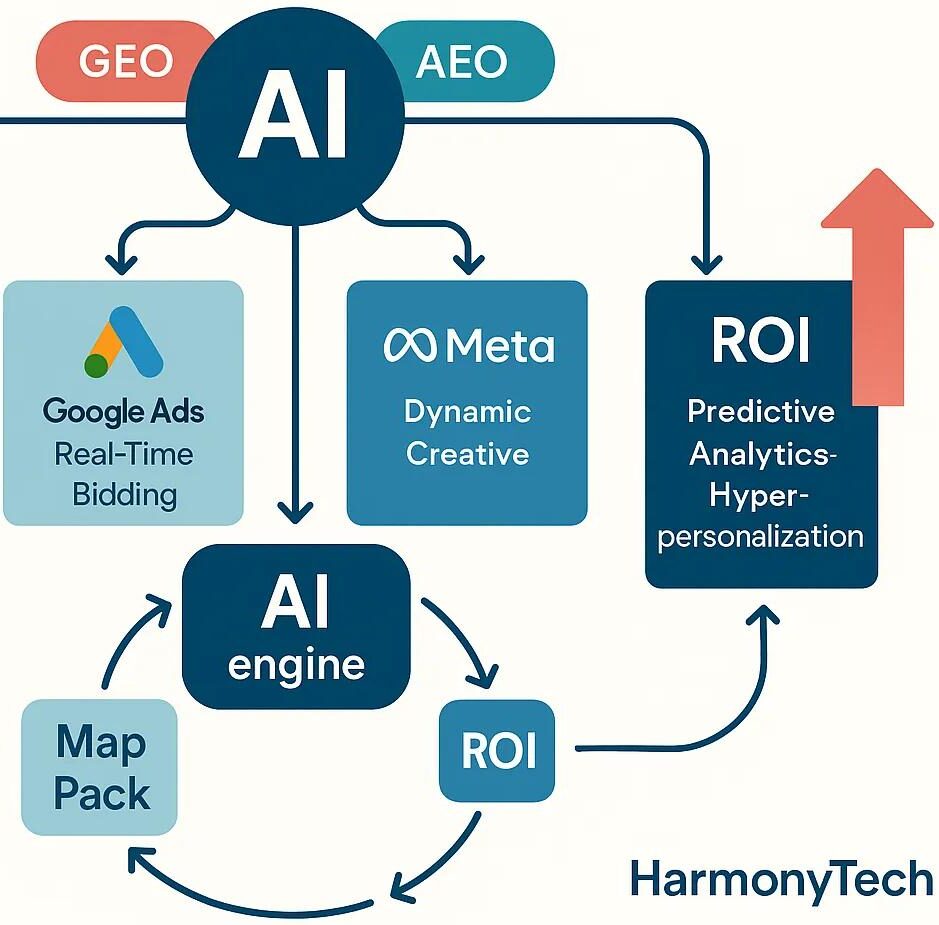
The Future Landscape of AI in Digital Marketing

The Future Landscape of AI in Digital Marketing: Harnessing AI Marketing Automation and Predictive Analytics for Business Growth
The future landscape of AI in digital marketing is rapidly evolving, with businesses increasingly leveraging AI marketing automation and predictive analytics to drive growth. This article will explore how these technologies enhance audience segmentation, optimize ad campaigns, and improve customer engagement. As companies face the challenge of standing out in a crowded digital marketplace, the integration of AI tools becomes essential for achieving marketing success. By understanding the mechanisms behind AI-driven strategies, businesses can adapt to changing consumer behaviors and preferences. We will delve into the transformative role of AI marketing automation, the significance of predictive analytics, and how small to medium businesses in South Florida can effectively utilize these solutions to thrive in the digital age.
How is AI Marketing Automation Transforming Digital Marketing Strategies?
AI Marketing Automation is transforming digital marketing strategies by enabling superior audience segmentation and precise targeting through impeccable data management. It automates routine tasks, enhances targeting precision, and dynamically optimizes creative relevance, allowing businesses to operate with greater efficiency and effectiveness. AI can assist in ad copy and creative design by testing various combinations to identify the most effective ones, speeding up creative iteration and reducing guesswork. Additionally, regular monitoring and analysis of AI-driven campaigns help businesses adapt quickly to market changes and ensure alignment with long-term objectives. Overall, the integration of AI in marketing strategies empowers businesses to achieve better results and maximize their ad spend.
Indeed, the emergence of sophisticated AI marketing automation platforms is ushering in a new era for crafting effective digital strategies.
What are the key features and benefits of AI marketing automation platforms?
- Enhanced Targeting Precision: AI improves audience segmentation and targeting, leading to more relevant ad placements and messaging.
- Dynamic Optimization: AI automates routine tasks and optimizes campaigns in real-time, allowing for quick adjustments based on performance data.
- Creative Assistance: AI can assist in generating ad copy and creative designs by testing various combinations to identify the most effective options.
- Data-Driven Insights: Regular monitoring and analysis of campaign performance provide valuable insights that inform strategic decisions.
- Time Savings: Automating complex processes frees up internal resources, allowing businesses to focus on strategy rather than execution.
- Scalability: AI tools can handle increased volumes of data and campaigns without a proportional increase in effort or cost.
- Compliance Support: AI can help ensure adherence to data privacy regulations by focusing on aggregated data rather than personal details.
- Strategic Guidance: Partnering with experts can translate AI insights into actionable business strategies, enhancing overall effectiveness.
These features empower businesses to operate more efficiently and effectively in competitive markets.
How does AI marketing automation enhance lead generation and customer engagement?
AI marketing automation enhances lead generation and customer engagement by enabling superior audience segmentation and precise targeting through impeccable data. Accurate business information allows AI models to analyze customer behavior and preferences, leading to more relevant ad placements and impactful messaging. This results in improved online visibility, higher conversion rates, and deeper customer trust. Additionally, AI can assist in optimizing ad copy and creative design, testing various combinations to identify the most effective ones, which further enhances engagement and lead quality.
What Role Does Predictive Analytics Play in Shaping Marketing Outcomes?

Predictive analytics plays a crucial role in shaping marketing outcomes by enabling businesses to analyze customer behavior and preferences through accurate data. This analysis allows for superior audience segmentation, personalized messaging, and optimized ad spend. When data is precise, AI models can effectively target the right audiences, leading to more relevant ad placements and improved lead quality. Conversely, inaccurate data can result in misclassified audience segments and wasted ad spend, ultimately diminishing marketing effectiveness. Thus, predictive analytics, supported by impeccable data, enhances local SEO, customer engagement, and conversion rates.
How does predictive analytics improve customer targeting accuracy?
Predictive analytics improves customer targeting accuracy by enabling AI models to analyze structured business data, which helps in constructing precise audience segments and inferring intent patterns. When data such as location, service descriptors, and categories are accurate and consistent, AI systems can effectively predict which neighborhoods and demographic segments are more likely to convert. This allows for tailored creative and bidding strategies, resulting in higher-quality leads and reduced wasted ad spend. Accurate data enhances the precision of geo-targeted campaigns, ultimately boosting conversion rates and improving overall marketing effectiveness.
Research further emphasizes the critical role of predictive analytics in refining customer segmentation for more effective marketing initiatives.
Which AI-driven tools forecast customer behavior effectively?
- Google Analytics: Provides insights into user behavior and engagement metrics, helping businesses tailor their marketing strategies.
- HubSpot: Offers predictive lead scoring to identify high-potential leads based on historical data.
- Salesforce Einstein: Utilizes AI to analyze customer interactions and predict future behaviors, enhancing sales strategies.
These tools enable businesses to make data-driven decisions that enhance marketing effectiveness.
How Does AI-Driven Customer Segmentation Improve Personalization?

AI-driven customer segmentation improves personalization by enabling precise targeting of audiences based on accurate and reliable data. This allows businesses to create sophisticated audience segments that reflect customer behavior and preferences, leading to more relevant ad placements and messaging. When data is clean and consistent, AI models can effectively predict which neighborhoods and demographic segments are more likely to convert, allowing for tailored creative and bidding strategies. This targeted approach not only enhances engagement but also reduces wasted ad spend and improves conversion rates, ultimately driving better results for marketing campaigns.
What AI techniques enable precise customer segmentation?
- Lookalike Modeling: This technique helps identify audiences similar to existing customers based on reliable data.
- Geofencing: This allows targeting specific geographic areas based on accurate location data.
- Relevance-Driven Bidding Strategies: These strategies optimize ad spend based on the relevance of the audience segments.
- Behavioral Signal Analysis: AI systems analyze customer behavior signals, such as click-through rates and engagement metrics, to refine audience segments.
- Data Ingestion from Multiple Sources: AI models consume structured business data from listings, aggregators, and analytics to create sophisticated audience segments.
These techniques rely on clean, reliable data to ensure effective targeting and minimize wasted ad spend.
How does AI content personalization increase marketing ROI?
AI content personalization increases marketing ROI by enabling superior audience segmentation and precise targeting through impeccable data. Accurate business information allows AI models to analyze customer behavior and preferences, leading to more relevant ad placements and impactful messaging. This reduces wasted ad spend and improves lead quality, ultimately enhancing conversion rates. By ensuring clean, reliable data, businesses can achieve higher-quality leads and a measurable lift in conversions, maximizing the effectiveness of their AI-driven marketing strategies.
What Emerging AI Marketing Technologies Will Shape 2026 and Beyond?
Emerging AI marketing technologies are set to revolutionize the digital marketing landscape in the coming years. These innovations will enhance the efficiency and effectiveness of marketing strategies, allowing businesses to stay competitive in an ever-evolving market. Key technologies include advanced AI-driven analytics, machine learning algorithms for predictive modeling, and automated content generation tools. As these technologies continue to develop, they will provide marketers with deeper insights and more effective tools for engaging customers.
Which new AI innovations are revolutionizing digital marketing?
- Ad Copy and Creative Design Assistance: AI can test numerous variations of headlines, descriptions, and images to find the best-performing combinations, speeding up creative iteration and reducing guesswork.
- Smart Bidding and Performance Max: These features improve targeting and scale without adding significant overhead, benefiting various businesses like retailers and service providers.
- Data Hygiene and Integration: Ensuring accurate data collection and integration across platforms enhances AI’s ability to optimize campaigns effectively.
- Automated Routine Tasks: AI automates routine marketing tasks, allowing businesses to operate more efficiently.
- Dynamic Optimization: AI dynamically optimizes creative relevance based on real-time data, improving campaign performance.
These innovations enable businesses to achieve superior marketing results and enhance customer engagement.
How can businesses adopt emerging AI tools to stay competitive?
- Embracing Experimentation: Be willing to test new AI features and strategies.
- Monitoring and Analyzing: Regularly review AI-driven campaign performance and understand the insights it provides.
- Staying Informed: Keep up with the latest developments in AI and Google Ads.
- Adapting Quickly: Be prepared to adjust strategies based on AI learnings and market changes.
- Establishing Strategic Partnerships: Collaborate with experienced agencies for expertise, resources, time savings, strategic guidance, and risk mitigation.
- Ensuring Data Hygiene and Integration: Maintain accurate conversion tracking, collect first-party data, and integrate various data sources.
- Setting Clear Objectives and KPIs: Define specific business goals and measurable metrics to guide AI optimization.
- Fostering Continuous Learning: Cultivate a culture of learning to keep pace with the evolving AI landscape.
By focusing on these areas, businesses can effectively leverage AI tools for growth and competitive advantage.
How Can Small to Medium Businesses in South Florida Leverage AI Marketing Solutions?
Small to medium businesses (SMBs) in South Florida can leverage AI marketing solutions by utilizing AI-powered Google Ads to automate routine tasks, enhance targeting precision, and optimize creative relevance. This allows businesses to operate more efficiently and effectively, aligning campaigns with specific business goals and local market nuances. Partnering with an agency that emphasizes ethical AI and data privacy can also help build trust and avoid legal issues. Harmony Technologies offers guidance in strategy and execution to help SMBs increase conversions, maximize ad spend, and foster lasting customer relationships.
The impact of AI software on personalized marketing automation for small and medium-sized enterprises is significant, enhancing both customer experience and sales.
What localized AI marketing strategies drive growth for South Florida SMBs?
- Smart Bidding and Performance Max: These features enhance targeting precision and scalability without requiring extensive management, making them suitable for diverse local needs.
- Data Hygiene and Integration: Ensuring accurate conversion tracking, collecting first-party data, and integrating various data sources provide a richer dataset for AI optimization.
- Clear Objectives and KPIs: Defining specific business goals and measurable KPIs helps AI optimize effectively for desired outcomes.
- Continuous Learning and Adaptation: Embracing experimentation, regularly reviewing campaign performance, and staying informed about AI developments allow businesses to adapt quickly to changes.
- Strategic Partnerships: Collaborating with experienced agencies like Harmony Technologies can provide expertise, resources, and guidance, helping SMBs navigate AI complexities and maximize growth opportunities.
How does Harmonytec’s AI platform support measurable ROI in regional markets?
Harmonytec’s AI platform supports measurable ROI in regional markets by ensuring accurate and reliable data, which enhances audience segmentation and targeting precision. This leads to higher-quality leads, reduced wasted impressions, and improved conversion rates. The platform utilizes advanced audience models and geofencing strategies to predict neighborhoods with higher conversion potential, allowing for tailored creative and bidding strategies. By focusing on key performance indicators (KPIs) such as ROI, conversion rates, and cost per acquisition (CPA), businesses can effectively measure the impact of their AI-driven campaigns and make data-driven adjustments to optimize results.
Frequently Asked Questions
What are the potential challenges of implementing AI in digital marketing?
Implementing AI in digital marketing can present several challenges. One major hurdle is the need for high-quality data; without accurate and comprehensive data, AI models may produce unreliable insights. Additionally, businesses may face resistance from employees who are unfamiliar with AI technologies or fear job displacement. There is also the challenge of integrating AI tools with existing marketing systems, which can require significant time and resources. Finally, ensuring compliance with data privacy regulations is crucial, as mishandling customer data can lead to legal repercussions.
How can small businesses measure the success of their AI marketing efforts?
Small businesses can measure the success of their AI marketing efforts by establishing clear key performance indicators (KPIs) aligned with their marketing goals. Common metrics include conversion rates, customer acquisition costs, and return on investment (ROI). Utilizing analytics tools can help track these metrics over time, providing insights into campaign performance. Additionally, businesses should regularly review and adjust their strategies based on data-driven insights to ensure continuous improvement and alignment with customer needs and market trends.
What role does customer feedback play in enhancing AI marketing strategies?
Customer feedback is vital in enhancing AI marketing strategies as it provides direct insights into consumer preferences and behaviors. By analyzing feedback, businesses can refine their audience segmentation and improve the relevance of their messaging. AI systems can incorporate this feedback to adjust targeting and optimize campaigns in real-time. Furthermore, understanding customer sentiment can help businesses identify areas for improvement in their products or services, ultimately leading to better customer satisfaction and loyalty.
How can businesses ensure ethical use of AI in marketing?
To ensure ethical use of AI in marketing, businesses should prioritize transparency and data privacy. This includes clearly communicating how customer data is collected, used, and protected. Implementing robust data governance policies and adhering to regulations such as GDPR can help maintain compliance. Additionally, businesses should avoid manipulative practices and ensure that AI algorithms are free from bias. Engaging with stakeholders and seeking feedback on AI practices can also foster trust and accountability in marketing efforts.
What skills are essential for marketers to effectively leverage AI technologies?
Marketers looking to leverage AI technologies should develop a mix of technical and analytical skills. Understanding data analytics is crucial, as it allows marketers to interpret AI-generated insights effectively. Familiarity with AI tools and platforms is also important, enabling marketers to utilize these technologies to their full potential. Additionally, strong communication skills are necessary to convey complex data insights to stakeholders. Finally, a willingness to adapt and learn continuously is essential, given the rapid evolution of AI technologies in the marketing landscape.
How can businesses stay updated on the latest AI marketing trends?
Businesses can stay updated on the latest AI marketing trends by subscribing to industry newsletters, following thought leaders on social media, and participating in webinars and conferences. Engaging with professional organizations and online communities focused on digital marketing and AI can also provide valuable insights. Additionally, investing in continuous education and training for marketing teams can help ensure they are equipped with the latest knowledge and skills to implement cutting-edge AI strategies effectively.
Conclusion
Embracing AI in digital marketing offers businesses enhanced targeting precision, dynamic optimization, and improved customer engagement, ultimately driving growth. By leveraging advanced AI marketing automation and predictive analytics, companies can adapt to evolving consumer behaviors and maximize their marketing effectiveness. Small to medium businesses in South Florida can particularly benefit from these technologies to stay competitive in a crowded marketplace. Discover how our tailored AI solutions can elevate your marketing strategy today.