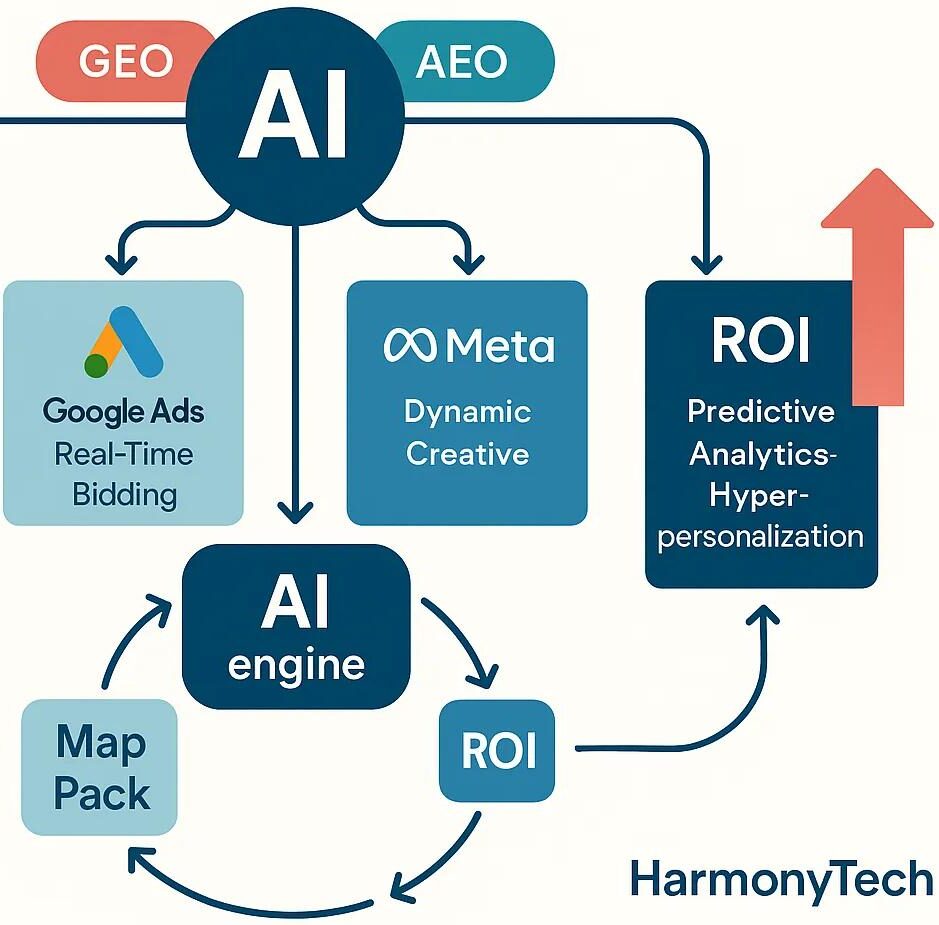
Strategies for Online Reputation Management

Practical Online Reputation Strategies to Drive Local Business Growth
Online reputation management (ORM) is a set of coordinated practices that shape how customers find, judge, and recommend a local business. It directly affects trust, conversion rates, and lead generation. Effective ORM combines ongoing monitoring of public feedback, clearer brand signals across listings, and fast, thoughtful responses to negative experiences so search visibility and referrals improve. This article walks through core ORM tactics for local businesses, shows where AI speeds up monitoring and response, and explains why Google Business Profile (GBP) and social channels must be part of any practical plan, as these platforms are where these strategies are most effectively applied and yield the most measurable results for local businesses. We weave South Florida examples and local context throughout, specifically highlighting how businesses in St. Lucie, Martin, Palm Beach, Broward, and Miami-Dade Counties can leverage these strategies for concrete, measurable steps. You’ll learn how to generate more reviews, use sentiment analysis to prioritize replies, optimize local listings for visibility, and apply crisis playbooks that restore reputation and drive leads. Each H2 section includes examples, checklists, at least one table or list, and clear KPIs so teams can turn strategy into repeatable workflows.
Key Online Reputation Management Strategies for Local Businesses
The most effective ORM for local companies rests on five pillars: proactive review management, brand image consistency, AI-enabled monitoring, Google Business Profile optimization, and crisis communication readiness. Together these tactics deliver stronger local search signals, higher trust with prospective customers, faster issue resolution, more persuasive social proof, and steady lead flow. Focusing on these areas brings measurable results like improved average ratings, more reviews, and increased GBP actions (calls, directions, website clicks). Use the checklist below to prioritize activities and assign weekly responsibilities.
- Proactive review management: ask for reviews, make it easy to leave them, and reply quickly.
- Brand image building: keep messaging, visuals, and curated UGC consistent across listings.
- AI monitoring and sentiment analysis: spot negative trends early and act where it matters.
- Google Business Profile optimization: complete every field, post regularly, and manage Q&A.
- Crisis communication: use ready-made templates, clear escalation paths, and transparent remediation.
These strategies reinforce one another to raise trust and visibility. The next section explains how proactive review work directly strengthens brand trust and SEO signals.
How Proactive Review Management Builds Brand Trust

Proactive review management means asking for feedback right after service, making the review process frictionless, and responding with empathy and speed. The payoff is simple: fresh positive reviews raise your overall rating and provide new content signals search engines use to rank local businesses, while thoughtful replies show future customers you care. Adopt a cadence—request a review within 48 hours of service, follow up once, and remove friction from the submission path—to increase response rates and nudges to higher average ratings over time. Practical tactics include post-transaction SMS or email prompts, in-store QR codes linked to review pages, and front-line staff trained to ask for reviews naturally. These steps boost both discoverability and conversion, which is why a consistent brand image is the next priority for reputation health.
Compare common review solicitation approaches to choose the mix that fits your operations:
This comparison helps local businesses balance customer experience with compliance and scalability. Next, we explain how a consistent brand image makes those reviews more persuasive.
Why a Positive Brand Image Matters for Reputation
A consistent brand image aligns what customers expect with what they actually receive—and it amplifies the effect of your reviews. When visuals, tone, and service descriptions match across listings and social channels, customers view your business as more reliable and reviews become more believable. Practical steps include standardizing profile photos and cover images, using the same business description on every platform, and encouraging user-generated content that highlights your core strengths. Short stories about local involvement or signature services build affinity and give reviewers useful details to expand on. Consistent brand messaging also helps AI and automation classify feedback more accurately and suggest context-aware responses, which is the focus of the next section.
How AI Improves Review Management and Reputation Monitoring
AI makes review management scalable by aggregating mentions across platforms, using natural language processing to rate sentiment, and routing urgent issues to human responders. Think of AI as the sensory and analytical layer that collects signals, scores tone, spots trends, and then flags what needs action. The practical benefits are speed (near-real-time alerts), scale (coverage across many channels), and early insight (detecting negative patterns before they escalate).
AI delivers measurable advantages:
- Faster detection and resolution of negative feedback, lowering escalation risk.
- Prioritization of high-impact issues using sentiment and customer value signals.
- Automated, brand-aligned response drafts that staff can review and send.
These features turn a reactive operation into a proactive one. The table below shows how specific AI capabilities translate into business actions.
Seeing how these features feed workflows makes the ROI case clearer—faster response times and smarter prioritization—so let’s dig into sentiment mechanics next.
What AI-Powered Sentiment Analysis Brings to the Table
Sentiment analysis flags tone, urgency, and recurring themes across reviews, social posts, and comments so teams can spot risks and strengths early. NLP models score language and context to produce sentiment and topic tags, then trigger alerts when thresholds are reached. That lets teams intervene on local issues—service hiccups, product flaws, or staff incidents—before they build into damaging stories. Tie sentiment trends to KPIs like weekly negative-share or month-over-month rating change to focus resources where they cut reputational risk most effectively. These insights then feed automated reply drafts and escalation rules described next.
The ability to decode consumer emotions from textual sources has become increasingly valuable for personalization, engagement, and service responsiveness.
AI Sentiment Analysis for Digital Marketing and Customer Feedback
In the era of data-driven marketing, the ability to decode consumer emotions from unstructured textual sources—such as social media, product reviews, helpdesk transcripts, and chat logs—has become increasingly valuable for enhancing personalization, engagement, and service responsiveness. Adhering to the PRISMA 2020 methodology, this review rigorously analyzed 87 peer-reviewed articles published between 2010 and 2024, encompassing diverse disciplines including artificial intelligence, natural language processing, marketing analytics, and service operations.
AI-Powered Sentiment Analysis In Digital Marketing: A Review Of Customer Feedback Loops In It Services, R Paul, 2023
How AI Can Automate Personalized Review Responses
AI can draft personalized replies by combining sentiment scores, past customer interactions, and approved tone templates to produce context-aware messages for staff to review. This keeps human oversight in the loop—AI suggests, people approve—and uses guarded templates to avoid tone drift, legal issues, or policy violations. Sample replies can cover apologies, remediation offers, or clarifications and include dynamic fields like customer name, service date, and next steps. Automated suggestions boost speed and consistency while a human final pass preserves authenticity and compliance. This hybrid approach pairs naturally with GBP optimization, which we cover next.
Note: Harmony Technologies uses AI-Driven Earned Media and AI-Driven Social Media services to put these capabilities into practice for local businesses, combining automated sentiment scoring, mention consolidation, and draft responses with human escalation rules to keep focus on topic-first outcomes.
Why Google Business Profile Optimization Matters for Local Reputation

Google Business Profile (GBP) is often the first thing local customers see, so optimizing it is essential. Many of the ORM strategies discussed, from review management to consistent branding, find their most direct and impactful application on GBP, making its optimization paramount. GBP displays ratings, photos, services, and actions that directly affect discovery and conversion. Complete, accurate GBP signals—categories, attributes, photos, services, and recent posts—help Google match intent and boost visibility. Optimizing these fields raises the chances your GBP appears for relevant searches and helps convert views into calls or visits. Use the checklist table below for GBP fields and quick wins you can implement right away.
These optimizations deliver quick wins like more views, direct calls, and direction requests. Try these immediate GBP tasks today:
- Audit primary category and services: make sure every entry matches how customers search.
- Refresh photos and add UGC: include recent, authentic customer images.
- Publish weekly posts: promote offers, events, or seasonal services to show activity.
Done consistently, these steps boost local relevance and prepare your listing to convert review-driven traffic. If you want hands-on help, Harmony Technologies provides GBP audits, content updates, and review-management integration; contact details are below. Next, we explain how GBP optimization affects local search performance.
How GBP Optimization Improves Local Search Visibility
Optimizing GBP improves the ranking signals search systems use—relevance (categories/services), prominence (review volume and rating), and proximity (accurate location data). A complete, active profile is more likely to appear in the local pack and get higher click-throughs, which leads to more GBP actions like calls and directions. Track searches, views, and actions to measure impact; noticeable improvements often appear within 30–90 days if profiles are kept up to date. Correlate weekly GBP views and actions with your review cadence and post frequency to see what’s moving the needle. In short, GBP optimization feeds lead generation by increasing qualified local traffic.
GBP Review Management Best Practices
For GBP reviews, respond within 24–72 hours using an empathetic, solution-focused tone, and move sensitive discussions to private channels when needed. Prompt replies show attention and reduce perceived neglect; a consistent tone protects your brand voice across replies. Use the Q&A section proactively to answer common questions and pin helpful community answers, and leverage GBP posts to surface positive stories or promotions. When soliciting reviews, follow platform policies—ask transparently, avoid disallowed incentives, and make leaving feedback straightforward. Together, these practices raise trust and conversion from your GBP listing.
After getting GBP right, social channels serve as the next layer to amplify reputation and source UGC, which we cover below.
How Social Media Helps Build and Protect Your Reputation
Social platforms function as both listening posts and distribution channels for your brand narrative and user-generated proof. These platforms are also where ORM strategies, particularly those involving engagement, content amplification, and crisis containment, extend their reach and impact significantly. The approach is simple: monitor mentions, engage quickly, amplify positive stories, and contain negative conversations through direct outreach and transparent follow-up. Effective social work increases visibility, creates shareable assets that feed GBP and review pages, and acts as an early-warning system for emerging reputation issues. Below is a short checklist and a table of visual content tactics that shape perception.
- Prioritize platforms where your local customers are active and where your business type performs best.
- Set alert thresholds for mention spikes so you can escalate issues fast.
- Use templated replies for routine engagement and custom responses for complex interactions.
These monitoring habits feed UGC sourcing and content repurposing, discussed next.
Practical Social Monitoring and Engagement Techniques
Good social monitoring focuses on the channels your customers use, sets automated alerts for brand mentions, and follows a triage workflow to handle high-priority items within hours. The process is: detect → classify → engage → escalate—so limited resources address the interactions that most affect perception and conversion. Recommended cadences: daily checks for mentions, weekly trend reviews, and monthly sentiment reports to surface persistent issues. Combine quick public acknowledgements with private follow-ups to resolve disputes and reduce escalation. These routines support visual content strategies that build trust.
This approach applies to reputation monitoring, competitor analysis, market research, and sentiment tracking.
Social Media Data Analysis for Reputation Management
This paper describes an approach for interactive diversity analysis using social media data. The method applies to common value-management tasks such as reputation management, competitor analysis, market research, sentiment analysis, and related activities focused on measuring community activity.
An approach for evaluation of social media monitoring tools, 2012
How Visual and Video Content Shapes Perception
Visual and video content boosts authenticity by showing real staff, services, and outcomes—helping potential customers form realistic expectations. Short testimonial clips, before-and-after photos, and behind-the-scenes footage typically convert better than text because they show context and emotion. Encourage UGC by asking satisfied customers to share images and giving clear tagging and permission instructions; then repurpose verified UGC across GBP and social channels. Recommended formats include 15–60 second story videos, carousel photo sets for service highlights, and optimized thumbnails to improve CTR. Visual content amplifies positive reviews and reduces buyer skepticism—useful preparation for crisis response.
Best Practices for Managing Negative Reviews and Crisis Communication
Handling negative reviews and crises requires a repeatable framework: acknowledge publicly, resolve privately, follow up transparently, and amplify the fix. This reduces uncertainty and shows accountability—usually restoring trust faster than defensive replies. A solid playbook includes ready templates, clear escalation rules, legal/compliance checks, and metrics to track sentiment recovery and rating improvements. Below are immediate response steps and a phased repair roadmap with KPIs.
- Acknowledge publicly within 24 hours: show you’re listening and will follow up.
- Move to private resolution: collect specifics (order number, dates) to investigate without sharing sensitive details.
- Offer remediation or clarify misunderstandings: propose concrete next steps or appropriate compensation.
- Publicly close the loop: share the outcome and invite updated feedback.
This protocol stabilizes situations and leads into a longer-term repair plan outlined below.
These phases help restore trust and drive measurable gains in sentiment and inbound leads. The next section covers how to write responses that protect reputation while staying human and compliant.
How to Respond to Negative Feedback Without Harming Your Reputation
Keep responses concise and empathetic: acknowledge the issue, apologize if appropriate, outline next steps, and invite private contact for details. Stay professional and avoid argumentative language. Fast replies reduce escalation risk, and moving the conversation offline protects sensitive data. Use templated frameworks for common scenarios but customize them to reflect specifics—this balances scale with sincerity. After resolution, politely ask the customer to update their review or leave a short public note about the fix to help repair the public record.
Reputation Repair Steps After a Crisis
Post-crisis recovery follows three phases: stabilize (contain and acknowledge), repair (fix root causes and rebuild trust), and amplify (share positive outcomes and proactive content). Stabilize with immediate communications and corrective actions; repair through operational fixes, staff training, and compliant review-capture efforts; amplify using earned media, targeted ads, and UGC to overwrite negative narratives. Track KPIs like sentiment improvement, rating change over 90 days, and the volume of positive reviews. Use a 30/90/180-day timeline to measure progress and adjust tactics. With a repeatable plan and localized AI monitoring, businesses can move from damage control back to growth.
How South Florida Businesses Gain from AI-Powered ORM
South Florida businesses, particularly those in St. Lucie, Martin, Palm Beach, Broward, and Miami-Dade Counties, see strong ROI from AI-enabled ORM because localization improves accuracy and timing. Models tuned to regional language and local market nuances across these counties reduce false positives, faster detection helps with location-specific issues, and timing-aware review solicitation captures more feedback during tourism peaks. Benefits include higher review volume during busy seasons, small but meaningful lifts in average ratings, and better conversions from search to contact when GBP and social signals match local intent. The list below summarizes regional outcomes and the table that follows outlines example local KPIs from an AI-enabled ORM program.
- Capture more reviews during high-tourism months by timing outreach strategically.
- Detect and address localized service problems (e.g., weather interruptions) before they escalate.
- Improve conversion from search to contact as GBP and social signals align with local intent.
Pairing AI workflows with a local-first execution plan amplifies these outcomes; the next subsection shares brief examples and how to request a custom strategy.
Local Success Stories from AI-Driven ORM
Local rollouts have produced measurable results—average ratings rising by several tenths of a star within months and a corresponding increase in GBP actions and inbound leads. For example, AI that prioritized high-value negative mentions reduced escalation by routing urgent items to human teams within hours. Coordinated, seasonal review campaigns have also increased review volume and visibility. These anonymized examples show the practical ROI of combining monitoring, response automation, and GBP optimization for local operators.
HarmonyTech’s AI Approach to Customized Reputation Solutions
Harmony Technologies (HarmonyTech) combines AI-Driven Earned Media and AI-Driven Social Media services to create localized ORM workflows for businesses across St. Lucie, Martin, Palm Beach, Broward, and Miami-Dade Counties. We tune sentiment models for regional language and specific county-level market dynamics, set up proactive review-generation tactics, and deliver human-in-the-loop templates to preserve brand voice. Typical onboarding includes a GBP audit, monitoring setup, and escalation rules tied to KPIs like rating change and GBP actions. To request a custom ORM strategy or a GBP audit for your business in the State of Florida, contact Harmony Technologies by phone at 954-946-8078 or email at info@harmonytec.net, and a regional specialist will outline next steps. The integration is designed to be concise so the article stays focused while offering a clear path to implementation.
Frequently Asked Questions
What challenges do local businesses commonly face with online reputation management?
Local businesses frequently struggle with negative reviews, inconsistent messaging across platforms, and limited time or expertise to monitor their online presence. Social channels move quickly, making timely responses difficult. Without a structured ORM plan, unresolved issues can erode trust and cost potential customers.
How can local businesses measure the success of their ORM efforts?
Track KPIs such as average review ratings, review volume, and engagement metrics. Monitor local search visibility and the number of inquiries or conversions from your Google Business Profile. Regular sentiment analysis helps reveal shifts in customer perception. Establish a baseline and compare performance over time to evaluate impact and guide adjustments.
How does customer feedback shape ORM strategy?
Customer feedback is the roadmap for improvement. Positive reviews attract new customers; negative feedback highlights operational gaps. By collecting and analyzing reviews, businesses can spot trends, fix problems, and refine services. This feedback loop supports crisis prevention and continuous improvement.
What’s the best way to respond to negative reviews?
Respond quickly and empathetically. Acknowledge the issue, apologize if appropriate, explain how you’ll resolve it, and invite private contact to finalize details. This shows accountability and often prevents escalation. After resolving the issue, follow up and, when appropriate, ask the customer to update their review.
What benefits does AI bring to ORM?
AI improves monitoring, speeds up detection, and enhances sentiment analysis across many platforms. It automates collection and initial analysis of feedback so teams can act faster. AI can also draft personalized replies that maintain tone consistency, freeing staff to handle complex cases.
How can local businesses use social media for ORM?
Use social media to listen, engage, and distribute positive content. Monitor mentions, respond promptly, and showcase user-generated content and positive reviews. Social platforms are also effective for transparent, public responses to issues—when handled well, they build trust in the community.
ORM Conclusion: Save Your Digital Face
Strong online reputation management is essential for local businesses that want more trust, visibility, and leads. By combining AI tools with disciplined GBP optimization, proactive review programs, and social listening, you can move from reactive damage control to predictable growth. If you’re ready to improve your local presence, explore our tailored ORM solutions and start measuring real results.