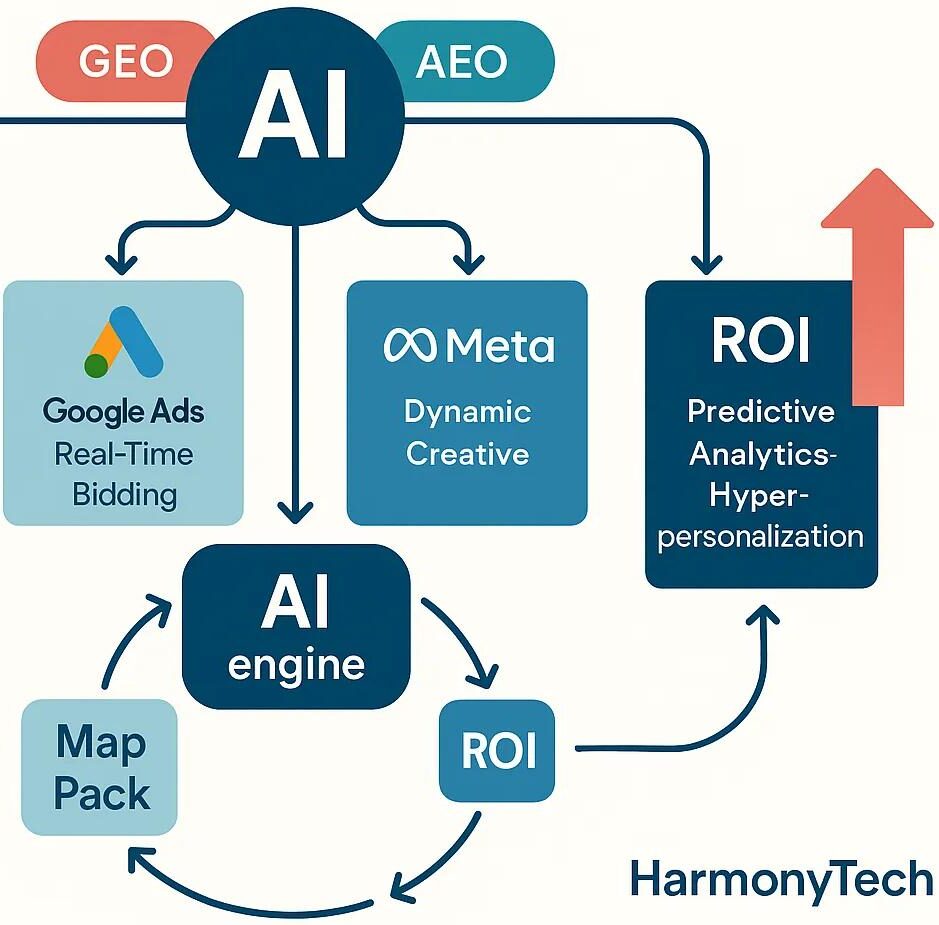

Affordable Digital Marketing for St. Lucie & Martin County Small Businesses — Practical Ways to Grow
Small business owners in St. Lucie County need advertising that produces clear, measurable leads without eating through tight budgets. Affordable digital marketing does this by prioritizing local reach, simple KPIs, and channel choices that deliver results fast. This guide shows what both “affordable digital advertising in St. Lucie County, FL” and “affordable digital advertising in Martin County, FL”looks like in practice. We show how local SEO and a well-maintained Google Business Profile drive foot traffic, which low-cost paid and social tactics return the most, and how email plus analytics make every ad dollar go further. You’ll find side-by-side comparisons, step‑by‑step GBP optimization, budget-friendly social plans, email automation tactics, and easy ROI calculations tailored to common local businesses. We also map realistic cost ranges, suggested starter budgets, and quick DIY actions to capture near‑term traffic while building a sustainable pipeline. Practical examples and clear tables help local owners pick the right mix, and where helpful we note how Harmony Technologies can support implementation if you prefer a done‑for‑you option.
Top Affordable Advertising Channels for St. Lucie Small Businesses
Affordable advertising for St. Lucie small businesses focuses on channels that match local intent, generate measurable leads, and allow rapid optimization. These channels reduce wasted spend by pairing search or social intent with tightly targeted messages. Local SEO (GBP upkeep and citations) captures nearby, high‑intent customers at low recurring cost; organic social and email marketing leverage audiences you already own to drive repeat business. Low‑budget paid tactics — geo‑targeted Google Search, Facebook/Instagram boosted posts, and modest retargeting — let you control spend and test creatives quickly. The right mix depends on goals: storefronts rely more on GBP and local SEO, while service-based or event businesses often begin with small social tests and email capture funnels. Below is a concise comparison of channels with typical monthly cost ranges and expected outcomes to help prioritize investment.
This table compares common affordable channels and when to use each in St. Lucie County.
Channel
Typical Monthly Cost
Expected Outcomes / When to Use
Local SEO & GBP upkeep
$200–$800
Better local search visibility and foot traffic; ideal for brick‑and‑mortar and service‑area businesses
Facebook / Instagram ads (low-budget)
$150–$800 ad spend + management
Quick local awareness and event promotion; useful for retail, events, and time‑limited specials
Google Search (budget campaigns)
$200–$1,000
High‑intent lead capture for services with clear keywords; best when conversions happen immediately
Email marketing
$0–$150 (tools) + $100–$500 content
Strong ROI for repeat customers and promotions; use to nurture leads and increase lifetime value
Local citations & directories
$0–$200
Foundation for GBP authority; use to ensure consistent NAP and referral listings
In short: local SEO and GBP deliver low‑cost, long‑term gains, while paid channels let you experiment and get fast feedback. The sections below unpack local SEO mechanics and budget paid options so you can plan next steps.
How Does Local SEO Drive Cost-Effective Traffic in St. Lucie County?
Local SEO brings cost‑effective traffic by improving how your business appears for geographically specific searches — people searching “near me” or a city name often have real intent to buy, visit, or book. The approach includes completing your Google Business Profile, building consistent citations across directories, and publishing localized on‑page content that signals relevance for St. Lucie County queries. These tactics reduce reliance on paid clicks by increasing visibility in the local pack and map results, where click‑through rates can be higher and competition lower. For example, a focused citation cleanup and weekly GBP posts can produce measurable walk‑ins or calls for a Port St. Lucie bakery or contractor within a few weeks. Next, we compare budget‑friendly paid channels that can fill immediate demand while SEO builds long‑term momentum.
Evidence shows that improving a retailer’s local presence for search engines helps increase organic traffic and conversions.
Local SEO Optimization for Retailers: Boosting Organic Traffic and Conversions
This research highlights the value of local optimization for retailers — showing practical recommendations for improving a business’s Google presence to gain an advantage in the Local Pack, boost organic traffic, and increase conversions (example: a Ukrainian retailer). The study outlines tactics and data‑driven steps to improve local search placement compared with competitors.
Business optimization in the digital age: Insights and recommendations, A Natorina, 2020
Which Budget-Friendly Paid Advertising Channels Work Best in St. Lucie?
Budget‑friendly paid channels perform best when geo‑targeted and paired with creatives that speak to local needs — the usual tradeoff is reach versus intent. Geo‑targeted Google Search campaigns capture in‑market buyers but need careful negative keyword lists and modest daily budgets to start. Facebook and Instagram micro‑targeting (by zip code, radius, or local interests) are low‑cost ways to drive awareness and leads for promotions; boosted posts are especially handy for quick local engagement. Retargeting site visitors with tailored offers often produces the lowest cost‑per‑lead because it reconnects with warm audiences at lower CPCs. Suggested starters: $10–$25/day for social tests, $10–$50/day for search experiments, and $50–$150/month for a basic retargeting pool. Small, rapid tests reveal which creatives and offers scale while keeping spend under control.
How Can St. Lucie Businesses Optimize Their Google Business Profile for Local Visibility?
An optimized Google Business Profile for St. Lucie shows a complete, authoritative listing that uses local signals — accurate NAP, detailed services, strong photos, and timely posts — to improve placement in maps and the local pack. Google evaluates GBP fields plus signals like reviews, categories, and citation consistency to determine relevance for local queries, so filling every applicable field and staying active increases your ranking potential. Use high‑quality photos, describe services with local keywords (for example, “St. Lucie County HVAC repair”), and publish weekly Posts or Offers to communicate freshness. Start by completing the listing, adding service menus or attributes, and scheduling a simple weekly posting cadence. After best practices for management, the next section covers reviews and citation work to protect reputation and search presence.
Many owners prefer to outsource this work — Harmony Technologies offers local GBP setup and ongoing management to keep fields, posts, and review workflows optimized without adding to your internal workload.
What Are the Best Practices for Managing Reviews and Local Citations in St. Lucie?
Reviews and citations matter because social proof and consistent business data are strong ranking signals for local search; reviews also influence clicks and conversions. Best practices include asking satisfied customers for reviews with concise, polite language, replying to every review promptly and constructively, and tracking citation sources to keep NAP consistent across directories. For DIY review requests, use a short template: thank the customer, invite feedback, and give an easy way to leave a review. When responding to reviews, address specifics and offer remediation when appropriate. Monthly citation audits remove duplicates and fix discrepancies that dilute local signals. Keeping this routine improves both discoverability and customer trust.
Training micro‑businesses on SEO and Google My Business can significantly broaden their online reach and promotional ability.
SEO and Google My Business Training for Micro Businesses to Expand Online Reach
This community training aimed to build capacity among micro‑entrepreneurs to use SEO and Google My Business to extend their online promotion. The program combined needs mapping, classroom and hands‑on training, and close follow‑up, covering SEO basics, content optimization, and step‑by‑step Google My Business setup to improve visibility on Google Search and Maps.
Pelatihan Strategi Search Engine Optimization (SEO) Dan Google My Business Untuk Pelaku Usaha Mikro Di Daerah Tertinggal, 2025
How Do Local Directories Enhance Affordable Advertising in St. Lucie County?
Local directories and chamber listings extend affordable advertising by acting as low‑cost distribution points and by strengthening citation consistency — both of which support local search authority. Claim key listings — Chamber of Commerce, local business associations, popular local marketplaces, and niche directories for your industry — to create backlinks, referral paths, and trust signals that complement your GBP. The process is simple: find the top directories for your niche, submit consistent NAP data, and add descriptive, keyword‑rich service summaries. Avoid duplicate or incomplete listings; consolidate duplicates and standardize every entry. These steps boost discoverability without recurring ad spend and create referral pathways that paid campaigns can amplify.
What Budget-Friendly Social Media Marketing Strategies Are Available for St. Lucie Businesses
Affordable social media for St. Lucie focuses on organic community engagement, local partnerships, and small ad tests that turn neighborhood awareness into bookings and leads. Organic content — local stories, behind‑the‑scenes posts, event announcements, and user‑generated content — builds trust with little cash outlay; a light paid layer (boosts or narrow targeting) speeds reach for time‑sensitive promotions. The idea is simple: owned content nurtures an audience that paid amplification converts; repurposing posts across platforms multiplies impact without extra production cost. Build a simple monthly calendar with three post types: community stories, promotions/events, and product/service spotlights to keep engagement steady. The sections that follow describe organic tactics to reduce ad spend and cost‑effective Facebook/Instagram strategies with sample audience setups.
Below is a practical comparison of social ad approaches to choose the best low‑cost tactic for local goals.
Ad Type
Cost Drivers
Best Use Cases / ROI Expectations
Boosted posts
Engagement and reach; modest ad spend
Rapid event promotion or local specials; good for immediate exposure
Targeted ad sets
Audience definition and creative testing
Lead generation and website conversions for services; scalable with testing
Retargeting
Pixel setup and audience size
Lower CPCs and higher conversion rates from warm audiences
Organic community campaigns
Time and content creation
Low‑cost sustained engagement and loyalty; supports paid campaigns
This table shows that boosted posts are great for quick local reach, while targeted ad sets and retargeting improve lead efficiency over time.
How Can Small Businesses Use Organic Social Content to Save Advertising Costs?
Organic social saves ad dollars by turning customers and local partners into free distribution channels. Tactics include asking patrons for user‑generated content, cross‑promoting with neighboring businesses, and sharing event recaps that encourage shares. A weekly plan with three pillars — community, product/service, and proof (reviews/photos) — keeps content varied and reduces production time through repurposing. Use local hashtags, geotags, and partnerships with local influencers or organizations to extend reach affordably. Building owned audience momentum reduces reliance on paid spend and improves conversion rates when you do run ads.
What Are Cost-Effective Facebook and Instagram Ad Strategies for St. Lucie?
Efficient Facebook and Instagram ads combine hyper‑local targeting, clear offers, and iterative A/B testing to find what resonates locally. Start with a small test audience: limit by zip code or a 5–15 mile radius, pick interests linked to local behavior, and use single images or carousel creatives with a clear local CTA (book, visit, RSVP). When conversion tracking is set, value‑focused bidding (target CPA) works well; if not, begin with lowest‑cost bids and optimize for CTR and CPL. CPM/CPC ranges vary by market, but careful audience curation and regular creative refreshes keep costs manageable. Run each creative for a 2–3 week test window to gather meaningful signal, then scale what works.
How Can Email Marketing Help St. Lucie Startups Advertise Affordably?
Email marketing is one of the highest‑ROI channels for startups because messages are inexpensive and segmentation enables targeted offers that convert repeat customers. Build a list with incentives and capture points — in‑store signups, local events, and social lead magnets — then use automated sequences (welcome, nurture, promotional) to move prospects toward purchase. Affordable email platforms and templates keep setup costs low while automations handle engagement. The table below helps you choose between DIY tools, template libraries, and automated platforms based on setup complexity and benefit.
Tool / Approach
Setup Cost / Complexity
Primary Benefit
DIY email platforms
Low ($0–$50/month)
Cost‑effective for small lists with basic automations
Template libraries
Low–medium
Faster campaign production with professional designs
Automated sequences
Medium ($20–$150/month)
Drives conversions with minimal manual effort
This shows startups can begin with free or low‑cost tools and add automation as lists and revenue grow.
What Are the Best Ways to Build an Email List on a Budget in St. Lucie?
Budget‑friendly list growth uses multiple low‑cost capture points tuned to local habits — website popups, in‑store tablets, event signups, and social lead ads tailored to St. Lucie interests. Offer a small, relevant lead magnet — a discount, local guide, or event access — and keep the signup CTA short and clear. Follow CAN‑SPAM rules, include an easy unsubscribe, and segment signups by source (in‑store vs. online) so your first messages match expectations. Good segmentation and a clear value proposition increase lifetime value while keeping acquisition costs low.
How Do Automated Email Campaigns Maximize ROI for Small Businesses?
Automated email campaigns raise ROI by sending the right message at the right time without ongoing manual work. Common sequences include welcome flows, cart or booking reminders, and re‑engagement campaigns. Automation captures intent signals (signup, abandonment, inactivity) and triggers targeted messaging that nudges prospects toward purchase, lifting conversion rates at modest incremental cost. For example, a welcome series with an introductory offer often converts better than one‑off blasts. Affordable platforms provide templates and reporting so you can measure opens, CTR, and revenue per email and iterate subject lines and CTAs for steady improvement.
How Do St. Lucie Businesses Measure the ROI of Affordable Advertising Strategies?
Measuring ROI for affordable advertising means tracking a compact set of high‑impact KPIs and using lightweight analytics to attribute outcomes to channels. ROI is net revenue attributable to a campaign divided by campaign cost; practically, track leads, conversion rate, average value per conversion, and direct revenue when available. Use simple attribution methods — first‑click, last‑click, and lead‑source tagging — to see which channels drive discovery versus final conversion. Set up conversion goals, use UTM tags for ad links, and keep a short reporting cadence (weekly for active tests, monthly for strategy reviews). The list below shows core KPIs and a simple ROI formula to keep measurement actionable.
- Cost per Lead (CPL): Total spend divided by new leads generated.
- Conversion Rate: Percentage of visitors who take a desired action.
- Customer Acquisition Cost (CAC): Total marketing spend divided by customers acquired.
- Return on Ad Spend (ROAS): Revenue from ads divided by ad spend.
Tracking these metrics together gives a clear view of channel efficiency and helps owners move modest budgets to the highest‑yield tactics.
Which Key Performance Indicators Should Martin County Small Businesses Track?
Small businesses should focus on a concise KPI set: CPL, conversion rate, CAC, ROAS, and revenue per lead — metrics that map directly to profitability and budget choices. CPL and conversion rate show whether creative and targeting are resonating; CAC and ROAS indicate sustainability; revenue per lead ties marketing activity to dollars. Expect higher CPLs for competitive service keywords and lower CPLs from email and GBP‑driven conversions. Report weekly during active tests and monthly for strategy reviews so you can pivot quickly and optimize steadily.
What Analytics Tools Are Best for Budget-Conscious St. Lucie Advertisers?
Budget‑minded advertisers should blend free and low‑cost tools — Google Analytics 4 for web behavior, GBP Insights for local search performance, and platform reports from email and ad tools for campaign metrics — to form a practical measurement stack. Setup steps include configuring GA4 conversions, connecting ad accounts for cost data, and using UTM parameters to preserve attribution. Free local SEO tools can check citations and rankings, while a lightweight dashboard (spreadsheet or low‑cost BI) consolidates KPIs for weekly review. Automate core reports and inspect creatives manually to spot optimization opportunities.
Harmony Technologies can help businesses that want expert setup: we offer affordable analytics audits and conversion tracking to ensure accurate attribution and actionable reporting without large upfront costs.
Why Choose Harmony Technologies for Affordable Digital Marketing in St. Lucie & Martin Counties?
Harmony Technologies is a South Florida-based digital marketing partner focused on local business growth and practical affordability. We offer local SEO, paid media, social media marketing, and other county‑focused services designed for small budgets. Our value is transparent, budget‑aware plans that prioritize measurable traffic, leads, and sales for St. Lucie & Martin County businesses — not one‑size‑fits‑all packages. We emphasize clear budget planning, quick local SEO wins, and small paid tests to prove value before scaling. For owners who want a mix of DIY guidance and done‑for‑you services, Harmony provides both strategic roadmaps and managed execution to move results forward while keeping costs controlled.
How Does Harmony Technologies Customize Cost-Effective Advertising Solutions in Martin County?
Harmony Technologies builds custom plans using a four‑step process: discovery, budget‑aligned planning, phased implementation, and measurable optimization. Discovery finds the highest‑impact channels; budget planning outlines starter budgets and timelines; implementation focuses on quick local SEO fixes, GBP setup, and small paid tests; optimization uses KPI‑driven changes to scale winners. Deliverables usually include an action roadmap, baseline analytics setup, creative recommendations, and a monthly summary highlighting cost‑per‑lead and ROAS. This iterative, data‑forward workflow helps businesses see early value and reduce wasted spend while staying flexible as local conditions change.
What Success Stories Demonstrate Harmony’s Impact on St. Lucie Small Businesses?
Harmony Technologies has produced measurable results for local clients by combining GBP updates, citation cleanup, targeted social tests, and email follow‑up sequences that increase traffic and leads on tight budgets. Typical outcomes include improved local pack placement after citation and GBP work, lower CPL from focused social creative, and higher repeat purchases after basic email automation. Many businesses see early wins in the first 4–12 weeks from combined local SEO and small paid tests, followed by steady gains as campaigns are optimized. To see if a tailored approach fits your needs,
contact Harmony Technologies for a consultation and an affordable audit aligned to your budget and goals.
Frequently Asked Questions
What role does content marketing play in affordable digital marketing strategies?
Content marketing is a cost‑effective way to engage your local audience without heavy ad spend. Helpful, locally relevant content — blog posts, short videos, or simple how‑tos — attracts organic traffic, builds trust, and supports local SEO. Over time, good content increases visibility, drives referrals, and improves conversion rates without large recurring costs.
How can small businesses effectively utilize social media for local engagement?
Use social media to share community‑focused content, promote local events, and partner with nearby businesses. Post about neighborhood happenings, customer stories, and time‑limited offers to spark interaction. Employ local hashtags and geotags to increase discoverability, and respond to comments and messages promptly to build relationships and repeat visits.
What are the benefits of using email segmentation for marketing campaigns?
Email segmentation lets you deliver the right message to the right people, which raises open and conversion rates. Segment by behavior, purchase history, or sign‑up source so your offers feel relevant. Segmentation also helps keep your list healthy by identifying inactive subscribers and tailoring re‑engagement attempts.
How can small businesses measure the effectiveness of their digital marketing efforts?
Track a few core KPIs — traffic, leads, conversion rates, and acquisition cost — and use tools like Google Analytics to monitor performance. Set clear goals for each channel, tag links with UTMs for attribution, and review results on a regular cadence. Use the data to refine messaging, targeting, and budget allocation.
What are some common mistakes to avoid in digital marketing for small businesses?
Common mistakes include overlooking local SEO, not defining target audiences, and failing to track results. Skipping GBP optimization limits local discovery, vague audience definitions waste ad dollars, and absent measurement prevents improvement. Avoid these by focusing on local signals, clear targeting, and simple reporting.
How can small businesses stay updated on digital marketing trends?
Stay current by following reputable industry blogs, subscribing to short newsletters, and attending occasional webinars. Join local business groups to share practical tips with peers, and experiment with one new tactic at a time so trends that matter to your business become real tests rather than noise.
Conclusion
Affordable digital marketing — built around local SEO, targeted social, and smart email — can materially boost visibility and revenue for St. Lucie small businesses without large upfront spend. Use the tactics in this guide to prioritize quick wins and build sustainable channels. If you’d like hands‑on help putting these ideas to work, reach out to Harmony Technologies for a consultation and an affordable audit tailored to your budget and growth goals.