Optimizing Blog Posts for SEO and Engagement

How We Optimize Blog Posts for SEO and Local Engagement with AI and Neighborhood-Focused Tactics
Optimizing a blog means combining technical SEO, clear content strategy, and audience-first engagement so your posts rank, attract the right visitors, and convert them into customers. When keyword intent, structured content, and performance signals work together, posts drive organic traffic and feed your lead pipeline — including local discovery. Too often South Florida businesses get traffic but not qualified leads because content misses local context, semantic structure, or a clear next step. This guide gives practical fixes and shows how AI plus local tactics change outcomes. We also outline Harmony Technologies’ business marketing services and how our local-first, AI-enabled approach demonstrates expertise, builds trust, and turns readers into leads — learn more or contact Harmony Technologies to get started. Follow the sections below to apply each tactic immediately and lift both visibility and engagement.
What Are the Best Blog SEO Practices to Boost Search Rankings?
Strong blog SEO starts with satisfying user intent, making relevance obvious to search engines, and structuring content for easy discovery. The best posts begin with intent-driven keyword choices, clear on-page signals like optimized titles and schema, and a layout that answers questions quickly and authoritatively. Add internal links, optimize images, and use structured FAQ/HowTo blocks to improve crawlability and rich-result chances. The sections that follow walk through local intent research and the on-page elements that matter most for blog visibility.
How Does Keyword Research Target Local South Florida Audiences?
Local keyword research blends broad intent phrases with geographic modifiers, neighborhood names, and local wording to match how residents and visitors search. Start with vertical seed terms, then layer in city, neighborhood, and “near me” variants plus service-focused intent phrases that capture both information and transaction signals. Filter by search volume and intent to prioritize keywords that map to conversion stages, and mine Google Business Profile questions and People Also Ask for authentic local phrasing. Reserve high-conversion local terms for cornerstone posts and use cluster pages to capture related long-tail and event-driven queries.
What On-Page SEO Techniques Improve Blog Post Visibility?
On-page SEO is about metadata, content structure, and markup so search engines can correctly interpret and surface your posts — and so people find fast, useful answers. Begin with meta titles and descriptions that include your primary keyword and local signals without exceeding length best practices. Use an H1/H2 hierarchy that reflects user intent, place concise answer boxes for common questions, and add FAQ or HowTo schema to boost eligibility for rich results. Below is an EAV-style reference showing key on-page elements and recommended values to apply across posts.
Intro to the on-page elements table: this table lists the most important on-page components, recommended attributes, and practical values you can apply to every blog post.
Summary: consistent attention to meta, headings, images, and schema improves indexation and the odds of snippet placement, setting content up for higher engagement and stronger local relevance.
How Can AI Enhance Content Optimization Strategies for Blogs?
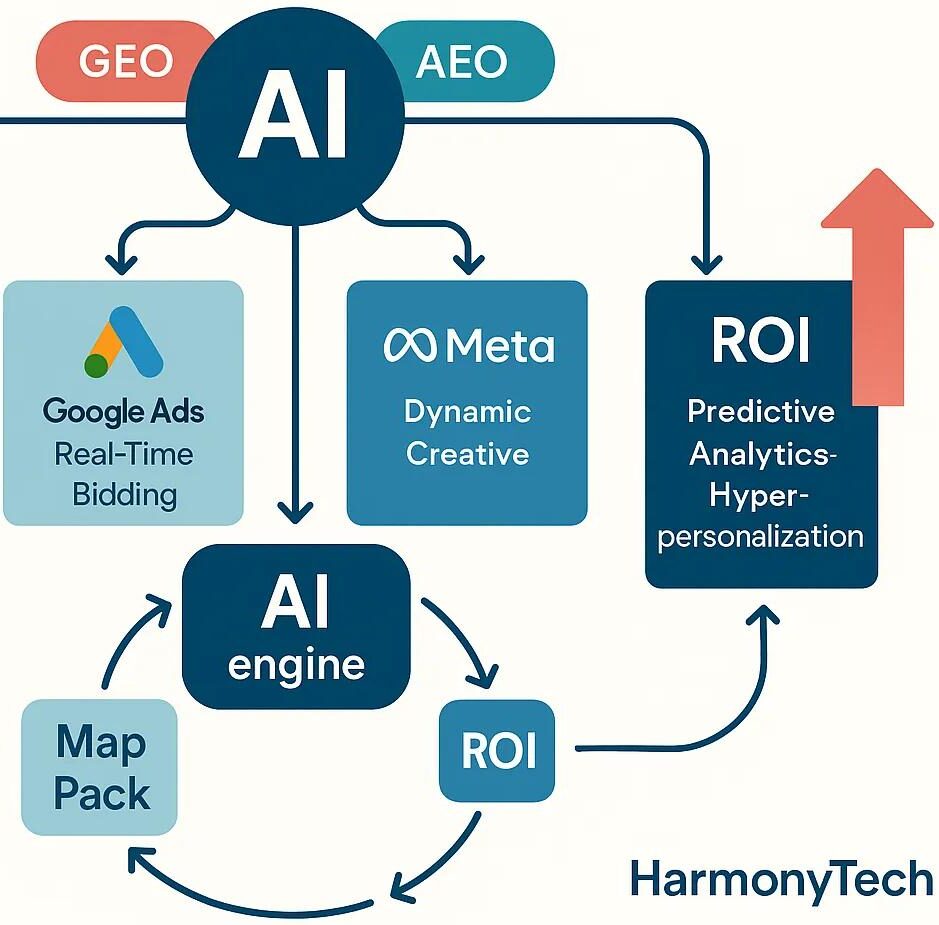
AI speeds semantic research, produces data-driven briefs, and supports iterative optimization for engagement signals — all while keeping editors in control. AI platforms cluster keywords, surface related entities, and suggest concise answer blocks suited for AEO/GEO optimization, helping teams produce structured content that aligns with modern search models. Combined with human review that reinforces E-E-A-T and local nuance, AI-driven workflows cut production time and make on-page experiments — like headline A/B tests or meta variations — more precise. The sections below compare tool types and explain how Generative Engine Optimization improves blog performance.
Which AI Tools Improve Blog Content Quality and Relevance?
AI tools vary: some specialize in semantic mapping, others in readability or entity detection. Choose tools based on your workflow and goals — research tools for keyword clustering and entity graphs, brief generators for structured outlines, and optimizers to score relevance against top pages and snippet opportunities. The table below matches tool categories to core capabilities and recommended use-cases to help pick the right mix for your editorial pipeline.
Intro to AI tools table: this comparison maps tool categories to their capabilities and primary use-cases for blog optimization.
Summary: combine research, brief, optimization, and readability tools so AI surfaces accurate entities and phrasing while editors keep local voice and authority — improving both discoverability and trust.
How Does Generative Engine Optimization Boost Blog Performance?
Generative Engine Optimization (GEO) prepares content so answer engines and AI assistants can extract and present it cleanly. Implement GEO by adding short, entity-rich answer blocks, numbered steps, and concise definitions that directly respond to common queries — and pair those blocks with schema so machines can pull them. GEO also gains from explicit entity linking (people, places, products, and concepts) to strengthen semantic associations and improve the chance of inclusion in AI-generated summaries. Practical tip: place a 40–60 word direct answer near the top and use structured lists for multi-step responses to maximize extraction.
What Are Effective Ways to Increase Blog Engagement and Reader Interaction?
Driving engagement is about removing friction, offering valuable multimedia, and giving visitors clear next steps that lead toward conversion. Interactive features invite participation, short-form video extends time on page, and contextual CTAs convert intent into action. Choose lightweight interactivity that preserves performance and accessibility while encouraging sharing and return visits. The subsections below cover interactive types and how video supports deeper engagement.
How Do Interactive Elements and Multimedia Drive Blog Engagement?
Quizzes, calculators, and polls boost time on site and deliver personalized value that can qualify leads. Use decision-support calculators, product-fit quizzes, and topical polls that align with reader needs — and make results shareable and trackable. Balance interactivity with performance by lazy-loading scripts and offering accessible fallbacks for screen readers. Well-designed interactivity creates a two-way experience that encourages longer sessions and clearer conversion paths.
Why Is Incorporating Video Content Essential for Blog Engagement?
Short embedded videos highlight key points quickly and serve visual and auditory learners, which lowers bounce rates and raises session duration — positive signals for SEO. Add 60–120 second explainer clips to summarize long-form sections, include transcripts and captions to aid accessibility and indexing, and use VideoObject schema to improve discovery. Repurpose clips for social channels to drive referral traffic and include direct CTAs in both video and surrounding copy to convert viewers into leads. Video plus transcript gives you content that works for people and search engines.
How to Master Local Blog SEO for South Florida Businesses?

Local blog SEO for South Florida relies on neighborhood-aware keywords, Google Business Profile alignment, and local proof points to capture “near me” and hyperlocal intent — improving both local pack and organic visibility. Write about neighborhoods, landmarks, and regional events to match how locals search, and link posts to local landing pages and your Google Business Profile to reinforce geographic relevance. Collect local citations and reviews to strengthen trust signals and use structured data to define service areas. Below we describe how Harmony Technologies applies these tactics to deliver measurable local outcomes.
Harmony Technologies’ local marketing services combine AI-driven GEO/AEO processes with practical local SEO: we surface neighborhood intent, tie posts to GBP content, build internal links to local service pages, and produce long-form local guides that answer neighborhood-specific questions — all designed to build trust and generate leads. Contact Harmony Technologies to discuss a local-first strategy.
What Local SEO Tactics Help Blogs Rank in “Near Me” Searches?
“Near me” visibility depends on clear geographic signals in copy, schema, and link structure so search engines can infer proximity and relevance for mobile and voice queries. Add neighborhood names, nearby landmarks, and directional modifiers in headings and body copy; produce local guides, event roundups, and service-area FAQs to capture search intent variations. Use internal linking to send topical traffic to localized service pages and keep NAP details consistent across site mentions and citations. These tactics connect on-site content to local search ecosystems and improve chances of ranking for proximity-based queries.
How Does Building E-E-A-T Establish Trust for Local Blogs?
Demonstrating Experience, Expertise, Authoritativeness, and Trustworthiness (E-E-A-T) means publishing clear author bios, local case studies, and verifiable citations so readers — and search engines — can trust your claims. Add author profiles that highlight neighborhood experience, reference primary sources for factual statements, and include local examples or event involvement to show community engagement. Surface customer reviews and testimonials on relevant pages and use structured data to emphasize authorship and sources. Proven local expertise shortens the path to offline conversions and helps you compete for valuable local terms.
This research reinforces that well-executed digital marketing — SEO and engagement tactics combined — is essential for local businesses to grow in today’s market.
Digital Marketing’s Impact on Local Businesses: SEO and Engagement
Purpose: This study examines how digital marketing affects local businesses, emphasizing customer engagement, sales performance, and brand development. It explores barriers local businesses face adopting digital tools and strategies to sustain growth in a digital-first landscape.
Research Design and Methodology: The authors used a qualitative literature review, performing thematic analysis and meta-synthesis of existing studies. Sources were drawn from databases such as Google Scholar, JSTOR, ScienceDirect, and ProQuest. The review highlights core digital marketing elements — social media, email, and SEO — and their effects on local business outcomes.
Findings and Discussion: The analysis shows digital marketing materially improves customer engagement and business performance by increasing interaction, visibility, and trust.
The Impact of Digital Marketing on Local Businesses, Y Yendra, 2024
How Can Voice Search Optimization Improve Blog Discoverability?
Optimizing for voice search makes your content more likely to answer conversational queries by using natural phrasing, short answer blocks, and schema that voice assistants can parse quickly. Write brief, direct answers (30–60 words) to common questions, use FAQ schema for clear Q&A pairs, and model content on dialogue-style queries that mirror how people speak. Local voice searches often include “near me” or “open now,” so combine conversational phrasing with local signals to capture both voice and map-pack intent. The sections below give concrete phrasing tactics and show how AI helps.
What Are Best Practices for Optimizing Blogs for Conversational Queries?
To capture conversational queries, write in a user-first tone and include explicit question-and-answer sections that echo natural speech. Put short answers near the top of pages, add likely follow-up questions as FAQ blocks, and keep language plain with active verbs. Mark up Q&A with FAQ schema and test voice queries with simulation tools to ensure phrasing matches assistant responses. This structure increases the chance your content is pulled verbatim by voice assistants and shows up in zero-click results.
How Does AI Support Voice Search Optimization for Blogs?

AI finds long-tail conversational queries by analyzing search logs, People Also Ask data, and interaction patterns to surface the phrasing voice assistants prefer. Use AI to cluster conversational intents, draft concise answers, and iterate wording to improve extraction rates. Always pair AI suggestions with human review to preserve local nuance and accuracy, then add schema so answers are machine-readable. This hybrid approach speeds discovery and increases the chance of voice-driven referrals.
How to Measure and Maintain Blog SEO and Engagement Performance?
Good measurement and maintenance start with a focused KPI set, regular audits, and a cadence for updates and experiments so content stays relevant. Use analytics and Search Console to monitor organic traffic, rankings, and engagement metrics; prioritize high-traffic or high-potential posts for quarterly updates. Run A/B tests for headlines and meta descriptions to lift CTR, and track events to measure interaction with videos or interactive widgets. The subsections below list recommended KPIs and audit frequency to keep content performing.
Which KPIs Track Blog SEO Success and User Engagement?
Pick KPIs that reveal where to focus: organic sessions for reach, keyword rankings for visibility, engagement metrics for satisfaction, and conversion metrics for business impact. Monitor organic traffic and top keywords in search analytics, track average time on page and scroll depth for engagement, and measure conversions (forms, calls, lead events) to link content to revenue. The table below pairs each primary metric with where to measure it and a suggested cadence for review.
Intro to KPI table: this table maps key performance indicators to measurement sources and recommended monitoring cadence for routine maintenance.
Summary: consistent monitoring with clear data sources and cadence lets you prioritize updates that deliver the biggest SEO and business gains.
How Often Should Blogs Be Audited and Updated for SEO Relevance?
Balance resources with the need to keep content fresh: run lightweight quarterly reviews for high-value posts and a full-site content audit annually to realign strategy, internal linking, and schema. Quarterly checks should refresh stats, fix broken links, update short answers for AEO/GEO, and tweak headings or meta copy based on new keyword trends. Annual audits assess topical coverage, find gaps, and plan larger rewrites or consolidation. Regular, incremental updates keep content aligned with user intent and competitive in search.
Harmony Technologies offers hands-on support for South Florida businesses looking to implement these strategies. We blend AI-driven GEO/AEO processes with local SEO tactics to demonstrate expertise, build community trust, and generate leads in regional markets — reach out to contact us and discuss a tailored plan.
- Start with intent-driven keyword clusters that reflect local search behavior and customer needs.
- Structure content for people and machines using concise answer blocks and schema.
- Measure consistently and prioritize high-impact updates to maximize ROI.
This framework helps content teams turn blog visibility into measurable business outcomes while preserving editorial quality and local relevance.
Frequently Asked Questions
What role does user intent play in blog post optimization?
User intent determines which keywords you target and how you structure content. Knowing whether users want information, to buy, or to engage helps you craft content that meets their needs — lowering bounce rates and improving conversions, which also supports SEO.
How can local businesses leverage social media for blog promotion?
Use social media to share locally relevant blog posts, engage with followers, and use neighborhood-focused hashtags. Create interactive posts tied to blog topics — polls, questions, or short video snippets — to drive traffic and build community around your content.
What are the benefits of using structured data in blog posts?
Structured data gives search engines clearer signals about your content and increases the chance of rich results and higher click-through rates. For local businesses, schema can highlight service areas, FAQs, and author information, improving visibility in relevant searches.
How can businesses measure the effectiveness of their blog content?
Measure organic traffic, engagement metrics (time on page, scroll depth), keyword rankings, and conversions like form submissions or leads. Tools such as Google Analytics and Search Console reveal how users interact with posts and where to focus optimization for better results.
What strategies can enhance mobile optimization for blog posts?
Prioritize fast load times, a responsive layout, and easy navigation. Compress images, simplify forms, and use clear CTAs that work well on small screens. These steps improve mobile experience and help capture the growing mobile audience.
How can businesses effectively update old blog content for SEO?
Refresh older posts by updating facts and stats, optimizing for current keywords, improving readability, and fixing broken links. Regularly revisiting content preserves rankings, keeps information useful for readers, and demonstrates authority.
Conclusion
Optimizing blogs for SEO and engagement is a practical way for South Florida businesses to boost visibility and convert traffic into leads. By using intent-driven keywords, AI-enabled workflows, and local-first tactics — plus ongoing measurement — you can keep content relevant and effective. If you’re ready to transform your blog into a lead-generating asset, Harmony Technologies offers hands-on support tailored to your market and goals.