Native Advertising: A Guide to Seamless Content Integration

Native Advertising: Seamless Integration with AI to Drive Leads
Native advertising embeds promotional content into a publisher or platform so ads feel like part of the user experience instead of an interruption. This guide breaks down what native advertising is, how it differs from traditional display, and how AI techniques — like predictive targeting and dynamic creative optimization — make integration more natural and measurable. You’ll get practical guidance on format selection, AI capabilities, local South Florida tactics, disclosure best practices, and the measurement frameworks that link native engagement to lead generation. The piece walks through definitions, format comparisons, AI use cases, geo-targeting playbooks, campaign checklists, and KPI-driven optimization so practitioners can design, test, and scale native campaigns focused on real leads. The emphasis is practical: create value-first creative, use programmatic advertising and in-feed placements responsibly, apply AI for real-time personalization, and measure the metrics that matter for lead capture. This approach aligns well with modern content marketing strategies, focusing on genuine audience engagement.
What Is Native Advertising and How Does It Seamlessly Integrate with Content?
Native advertising is paid media built to match the form and function of its host environment so the ad reads and behaves like a natural part of an editorial or social feed. That fit — through contextual relevance, format matching, and genuinely useful content — reduces disruption and increases receptivity, which usually lifts engagement versus standard display. High-performing native ads focus on user value: clear, useful headlines, supportive visuals, and subtle but direct calls-to-action that keep the consumer journey coherent. Grasping these mechanics helps you choose the right format and write creative that respects the host environment while meeting your campaign goals. This seamless integration is crucial for a positive user experience (UX) in the realm of digital advertising.
How Does Native Advertising Differ from Traditional Advertising?
Native ads prioritize contextual fit and editorial tone instead of interrupting the user experience. They mirror layout, typography, and content intent so they’re less likely to be ignored and more likely to drive meaningful engagement — longer session times and higher CTRs when the creative delivers value. Traditional display relies on visual prominence and frequency for general brand awareness; native relies on relevance and storytelling to build interest. Your choice should match the goal: display for broad awareness and reach, native for acquisition and lead generation where a value-first approach typically performs better, making it a key component of effective performance marketing.
What Are the Key Characteristics of Effective Native Ads?
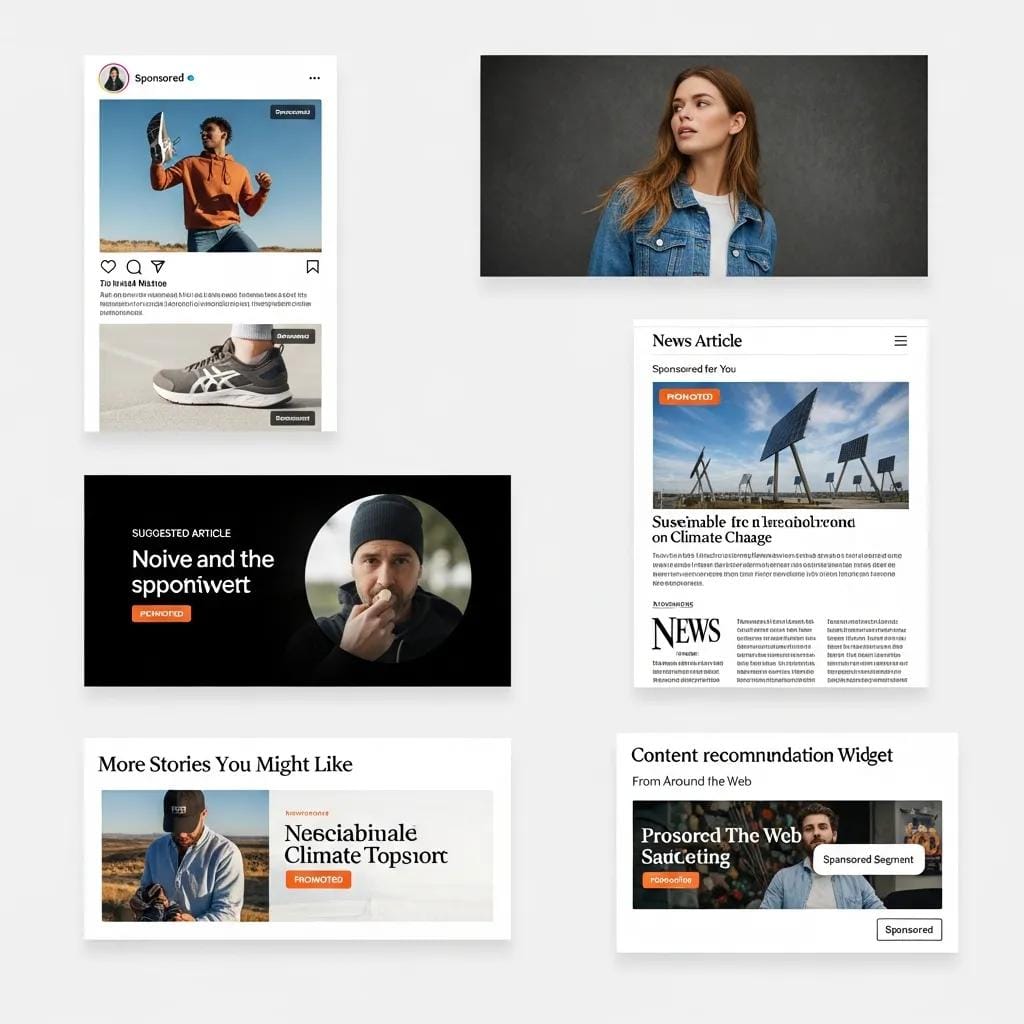
Effective native ads share a few essentials: close contextual fit with surrounding content, a value-first message that genuinely helps the reader, clear sponsorship disclosure, and mobile-responsive creative tailored to the platform. These elements preserve transparency and user experience, which builds trust and improves engagement and conversion metrics. Creative building blocks — concise headlines, benefit-led openings, and contextual imagery — should be A/B tested to validate assumptions about audience resonance. When done right, native looks and feels native without being misleading, which protects long-term publisher relationships and user trust, often leveraging principles of personalized marketing.
Which Types of Native Advertising Best Support Seamless User Experiences?
Native formats differ by placement and campaign objective. Choose formats based on whether you want discovery, engagement, or conversion. In-feed ads blend into social and editorial streams for scalable reach; sponsored content supports long-form storytelling within publisher environments; recommendation widgets aid contextual discovery; and promoted listings increase visibility in commerce contexts. Align the format to the conversion funnel stage so creative, targeting, and measurement preserve the user experience while driving business outcomes.
Native formats commonly used include:
- In-feed Ads: Short posts or cards designed to resemble organic feed content on social or news platforms.
- Sponsored Content: Longer articles or videos hosted in editorial environments to tell a brand story.
- Recommendation Widgets: Related-content units that surface promotional links within editorial pages.
- Promoted Listings: Product placements on marketplace or retail pages that appear native to search or category views.
Format choice affects creative specs, user intent, and expected KPIs. Picking the formats that match audience behavior reduces friction and increases the chance of meaningful interactions.
Intro to a comparison table: The table below compares common native ad types by best use case and typical engagement KPI to help decide which format fits your campaign objective.
This comparison clarifies which native formats work best for awareness, engagement, or direct response — and how KPIs shift by placement.
How Does AI Improve Native Advertising Strategy and Personalization?

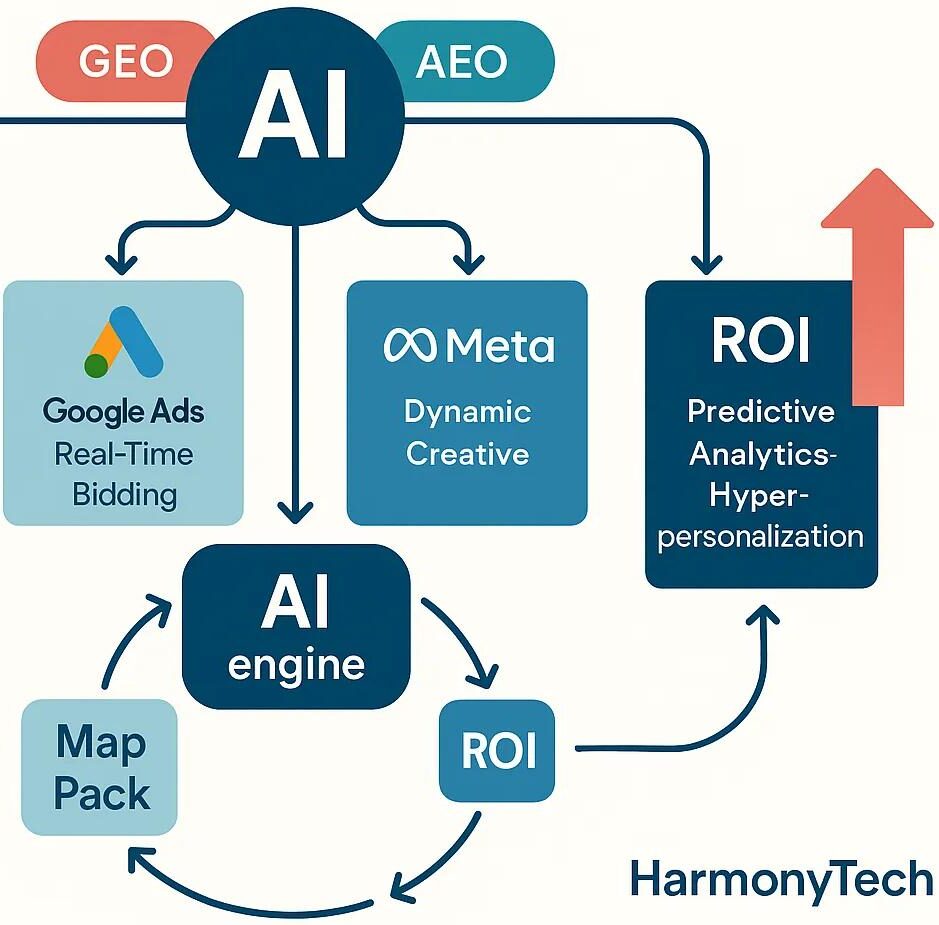
AI raises the ceiling for native advertising by automating audience segmentation, optimizing bids in real time, and assembling creative variations that match user context — all of which increase relevance and efficiency. Leveraging advanced data analytics and machine learning, typical mechanisms include predictive scoring to surface high-value prospects, automated bid adjustments to favor top-performing placements, and dynamic creative optimization (DCO) to tailor copy and visuals per impression. When models are well-trained and governed, these capabilities shorten iteration cycles and scale personalization without diluting brand voice, delivering measurable gains in CTR, conversion rate, and cost-per-lead. This also streamlines marketing automation efforts, leading to more efficient customer acquisition.
Key AI capabilities and examples:
- Real-time bidding optimization: AI shifts bids and reallocates budget across programmatic exchanges to maximize incremental conversions.
- Predictive targeting: Models score users on conversion propensity using behavioral and contextual signals.
- Dynamic creative optimization: Systems compose ad variants on the fly to align messaging with user intent and device context.
In short, AI ties targeting, creative, and bidding into a continuous optimization loop that steers spend toward contexts with the best expected ROI.
Intro to AI capability table: The following table maps AI features to their mechanisms and real-world benefits for native campaigns.
This mapping demonstrates how specific AI features translate into operational advantages that raise relevance and campaign results.
How Does AI Enable Real-Time Optimization and Audience Targeting?
AI enables real-time optimization by ingesting bid, placement, and conversion signals to continuously refine bidding strategies and audience segments so spend shifts to the highest-return contexts. Predictive scoring analyzes historical behavior and contextual targeting cues to identify micro-segments with elevated conversion probability, enabling efficient scale. These systems must balance performance with privacy safeguards and thoughtful signal selection to stay compliant, also contributing to robust ad fraud prevention. Combined with clear attribution models, real-time optimization and predictive targeting form a closed-loop that incrementally improves campaign efficiency and lead quality.
What Are AI-Powered Creative Optimization and Dynamic Content Generation?
AI-powered creative optimization automates the generation and testing of numerous creative permutations — headlines, images, CTAs — then promotes the top performers while respecting brand guardrails. Dynamic content generation personalizes messaging at the impression level to match inferred intent and device context. Ethical guardrails and human review ensure automated creatives preserve brand voice and follow disclosure rules. This approach accelerates experimentation and scales personalization while keeping humans in the loop for quality control.
How Can Local Businesses in South Florida Leverage Native Advertising for Lead Generation?
Local businesses can use native advertising by combining geo-targeting with locally relevant creative, event-based promotions, and conversion-optimized landing pages. Tactical moves — radius targeting around storefronts, neighborhood or DMA segments, and time-of-day scheduling to match peak local behavior — increase relevance and lead propensity. Localized offers and on-site content (regional imagery, references to events or weather) boost trust and click-to-conversion performance. These local tactics pair programmatic reach with community relevance to generate higher-quality leads for South Florida businesses, guiding them effectively through the customer journey.
Local geo-targeting setup checklist:
- Define radius and DMA segments that match trade areas and competitor zones.
- Combine interest, behavioral, and demographic signals to refine audience intent.
- Use time-based scheduling and event triggers to align promotions with local moments.
Applying these steps tightens the match between ad context and local intent, improving lead capture rates and CPL efficiency.
What Geo-Targeting Strategies Enhance Native Ad Relevance Locally?
Effective geo-targeting layers signals — radius targeting, DMA or neighborhood segments, and local interest indicators — to home in on users with proximate intent. Time-based scheduling and event-driven promotions make the most of local footfall and seasonal demand to improve conversion windows. Negative targeting removes irrelevant geographies to conserve budget for high-propensity areas. Pair these tactics with location-specific creative and landing pages to move relevance into conversion and raise lead quality for South Florida businesses.
What Are Successful Case Studies of Native Advertising in South Florida?
Successful local campaigns follow a clear pattern: define a local business challenge, select format-aligned native placements, use AI for targeting and creative testing, and measure lead quality and CPL to iterate. Local case templates commonly show gains like higher CTR, increased session duration, and lower CPL after rounds of AI-driven optimization and localized messaging. The key lessons: test creative variants tied to neighborhood demographics and ensure landing pages deliver on ad promises. While public regional metrics can be scarce, these repeatable steps form a reliable blueprint for lead generation in South Florida.
How Does HarmonyTech Build Trust and Generate Leads with Native Ads?
Harmony Technologies follows a disciplined process — audits, audience modeling, value-first creative, iterative testing, and transparent reporting — that emphasizes trust and measurable lead outcomes for local clients. We combine AI-driven targeting and creative optimization with location-aware messaging and conversion-focused landing experiences to prioritize lead quality alongside volume. Our services showcase practical expertise: we design campaigns that build credibility, drive qualified contacts, and convert interest into real conversations for your business.
What Are Best Practices for Crafting a Seamless Native Advertising Strategy?
A seamless native strategy begins with clear objectives, audience-first creative, and a testing plan that connects engagement metrics to conversion outcomes. Choose platforms that fit your format — social feeds for quick discovery, publisher studios for storytelling, and e-commerce listings for transactional intent — and maintain ethical disclosure to preserve trust. Set an optimization cadence combining automated rules, AI-assisted variant selection, and human review to ensure brand compliance. These practices create respectful user experiences that convert without harming publisher relationships or consumer trust, contributing to overall digital transformation efforts. Effective attribution modeling is also crucial here.
Step-by-step campaign checklist:
- Define Objective and KPI: Align on awareness, engagement, or conversion and pick primary metrics.
- Choose Format and Platform: Match in-feed, sponsored content, or promoted listings to the objective.
- Create Value-First Creative: Lead with helpful content and clear disclosure to protect UX.
- Test and Iterate: Run A/B/n tests with AI-assisted variant selection and human oversight.
- Optimize for Conversions: Refine landing pages and measurement to improve CPL and ROAS.
Following this checklist builds a repeatable foundation for native campaign performance and scalable lead generation.
How Should Businesses Develop a Native Ad Campaign for Maximum Engagement?
Begin with an objectives-first brief that ties outcomes to KPIs and audience definitions, then pick formats and creative that support that goal. Produce a creative brief with headline hypotheses, image and video concepts, and disclosure language; schedule A/B/n tests and clear measurement windows to validate assumptions fast. Optimize assets for mobile-first consumption using device- and platform-specific specs, and run an iteration cadence where winning variants scale and underperformers are retired. Harmony Technologies applies AI-driven optimization and local targeting across this workflow to accelerate learning and improve lead outcomes — turning prospects into contactable opportunities.
Why Is Transparency and Ethical Disclosure Important in Native Advertising?
Transparency and clear disclosure preserve consumer trust and help brands comply with regulatory guidance designed to prevent deceptive advertising. Labels such as “Sponsored” or “Paid Partnership,” placed consistently and visibly, protect brands from regulatory and reputational risk and align with publisher policies. Ethical disclosure also improves long-term effectiveness by setting accurate expectations that produce qualified engagement rather than short-term clicks. Following disclosure best practices balances performance goals with legal and trust considerations that keep native channels healthy.
How Is Native Advertising Performance Measured and Optimized for ROI?
Measuring native advertising means selecting KPIs that match the funnel stage — CTR and engagement for awareness, time-on-content for engagement, and conversion rate or CPL for direct response — while accounting for cross-channel attribution complexity. Optimization combines statistical testing, AI-driven signal analysis, and multi-touch attribution to shift budget toward channels and creative that deliver the best incremental outcomes. Regular reporting and clear dashboards let stakeholders evaluate lead quality, not just volume, and iterate on targeting and creative to improve ROAS over time.
Intro to KPI table: The table below defines core native ad KPIs and how Harmony Technologies measures them or the tools typically used.
This KPI mapping explains practical measurement approaches and the tools we use to translate engagement signals into business outcomes.
What Key Metrics Track Native Advertising Success?
Prioritize metrics that align to your intent: CTR and engagement for discovery, session metrics and brand lift for sponsored content, and conversion rate and CPL for lead-focused campaigns. Benchmarks vary by platform and format, so set baselines during an initial test phase to establish realistic targets. Accurate tracking needs consistent tagging, server-side verification where possible, and CRM alignment to evaluate lead quality and downstream conversions. Focusing on these metrics helps teams optimize native placements toward real ROI instead of vanity numbers.
How Does HarmonyTech Use Analytics to Improve Native Ad Campaigns?
Harmony Technologies embeds analytics into an iterative optimization cycle — test, measure, learn, scale — using AI signals for audience refinement and automated rules for bid and creative adjustments. Reporting highlights which formats and creative combinations drive the highest-quality leads, and we reallocate budget to top-performing segments while keeping clients informed. To explore tailored native advertising strategies and measurable lead-generation outcomes, contact Harmony Technologies in Margate, FL to discuss how AI-driven paid media can support your local market and sales goals.
Frequently Asked Questions
What are the potential challenges of implementing native advertising?
Challenges include keeping brand consistency across platforms, ensuring ethical disclosure, and measuring impact accurately. Native requires careful creative adaptation to different environments without becoming misleading. The digital landscape changes quickly, so continuous testing and optimization are necessary to keep ads relevant and effective. Without a clear strategy and platform-specific knowledge, campaigns may underperform.
How can businesses ensure compliance with advertising regulations in native ads?
Follow regulatory guidance like FTC rules and publisher policies: label sponsored content clearly, use visible language such as “Sponsored” or “Paid Partnership,” and maintain transparency about promotional intent. Regular training for marketing teams and periodic audits of ad creative help reduce the risk of misleading consumers and regulatory issues.
What role does audience segmentation play in native advertising success?
Segmentation lets you tailor content to distinct groups by demographics, interests, and behavior. When ads reflect a segment’s needs and context, they feel more relevant and drive higher engagement and conversions. Effective segmentation increases the likelihood that your creative resonates, improving campaign performance and CPL.
How can businesses measure the effectiveness of their native advertising campaigns?
Use KPIs such as CTR, engagement (time on content, scroll depth), and conversion rate. Analytics tools provide behavior insights, while A/B testing uncovers which creative elements work best. Regular reporting and analysis enable real-time optimization and alignment with business objectives.
What are some best practices for creating compelling native ad content?
Prioritize user value and contextual relevance, keep a consistent brand voice, and use concise, benefit-driven headlines and quality visuals. Include clear CTAs and transparent disclosures. Continuously test creative variations to find what resonates with your audience.
How does local targeting enhance the effectiveness of native advertising?
Local targeting makes messages relevant to specific geographic audiences by using local insights like community events or seasonal patterns. Tailored, place-based creative resonates more deeply, increasing engagement and conversions because the offer feels timely and relevant to the user’s immediate context.
Conclusion
Native advertising can boost engagement and lead generation when it’s integrated thoughtfully into the user experience. By combining AI-driven personalization with local targeting and clear disclosure, businesses can deliver value-first ads that build trust and drive measurable results. If you’re ready to improve lead quality and scale performance, contact Harmony Technologies to explore a tailored native advertising approach for your goals.