Local SEO Services: Google Maps vs Apple Maps Breakdown
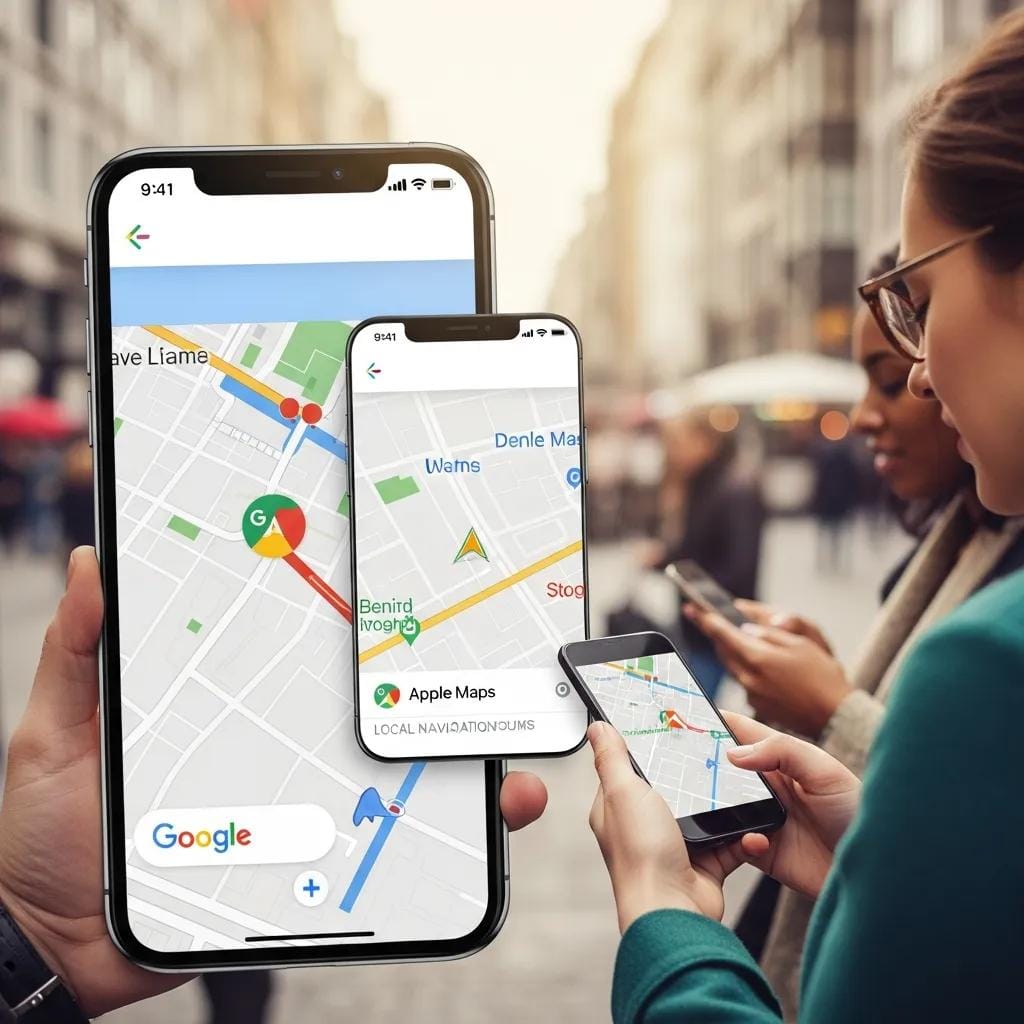
Google Maps vs Apple Maps: Which Map App Drives Local Leads in 2026?
Picking the right map app matters more than ever for local businesses. In this guide we compare Google Maps and Apple Maps — features, accuracy, and local SEO tactics — to help you decide which one fits your goals in 2026. Local customers increasingly start journeys on mapping platforms, so knowing the strengths and limits of each service helps you attract the right visitors. We’ll cover core features, accuracy in our region, optimization tips, and how Harmony Technologies supports businesses like yours.
Key features on Google Maps and Apple Maps that matter for local businesses
Both platforms offer tools that boost visibility and make it easier for customers to find and contact you. Knowing how each one surfaces business data and engagement signals will help you prioritize effort and get measurable results.
How Google Maps improves local visibility

Google Maps drives visibility through the Google Business Profile (GBP). When your GBP is complete and consistent — correct name, address, phone (NAP), accurate categories and services — search signals improve and you show up more often in local searches. Regular updates (photos, posts) and timely review responses increase engagement metrics, which helps local rankings. In short: accurate listings plus active management lead to more impressions and better-quality clicks.
Research supports the idea that active engagement on platforms like Google Maps helps local businesses grow their visibility and customer value.
Google Maps Engagement: Boosting Local Business Value
Digital platforms succeed by enabling transactions between users and businesses. This study examines how engagement on content-and-review platforms — using Google Maps data — affects local business outcomes. It looks at owner and user activity, showing that both too little and too much engagement can be suboptimal. The paper then outlines practical strategies local businesses can use to capture value from platform interactions.
Content-And-Review Platform Engagement of End-Users and Local Businesses–An Explorative Analysis Based on Google Maps Data, LRG Fitz, 2024
Apple Maps: distinct advantages for local marketing
Apple Maps emphasizes precise business data and tight integration with the Apple ecosystem. Accurate listings — correct hours, address, phone — reduce friction for customers and increase trust. Siri and Apple’s native recommendations can surface your business to nearby iPhone users at the right time, so keeping your Apple Maps entry tidy and current can improve click-throughs and conversions.
How accurate are Google Maps and Apple Maps in South Florida?
For local businesses, map accuracy affects whether customers arrive on time and at the right place. Let’s look at how the two platforms compare locally.
Which app is more accurate in St. Lucie and Martin County?
Local feedback and independent checks suggest Google Maps typically offers more consistent routing and faster traffic updates in St. Lucie and Martin County. That said, Apple Maps has narrowed the gap in recent years, improving mapping detail and reliability across many urban and suburban areas. We recommend testing both routes for your specific addresses and monitoring customer reports to spot any recurring issues.
Why map accuracy matters for customer engagement
Accurate map data reduces friction: customers arrive where they expect, contact details work, and hours are correct. That lowers frustration and negative reviews while increasing the chance a search converts to a visit or a call. Put simply — clean location data equals better trust, higher click-through rates, and stronger lead quality.
Local SEO tactics to optimize your business on Google Maps and Apple Maps
To improve visibility on both platforms, focus on data accuracy, completeness, and ongoing maintenance. Below are practical, prioritized actions.
- Claim and verify your Google Business Profile (GBP)
: Claiming and verifying your GBP establishes ownership and unlocks features that influence local search. - Complete every profile field
: Fill categories, services, attributes, hours, and payment options — the more precise, the better. - Maintain accurate NAP information
: Keep Name, Address, Phone consistent across all platforms and directories to avoid conflicting signals. - Upload high-quality photos
: Fresh, professional images attract clicks and give customers a better sense of your business. - Post regularly
: Use GBP posts to share offers, events, and updates that encourage interaction. - Respond to reviews and questions
: Timely, helpful responses boost engagement and show you care about customers. - Monitor GBP insights
: Use analytics to see what drives impressions and clicks, then refine categories and content accordingly. - Use advanced monitoring tools
: Implement tools that detect listing discrepancies and alert you to data drift. - Conduct regular audits
: Schedule checks to ensure listings remain accurate and aligned with your website data. - Establish clear ownership
: Assign a data steward to manage updates and keep a log of changes for accountability.
Following these steps will strengthen your presence on both Google Maps and Apple Maps.
How to optimize your Google Maps listing to generate more leads
Use a repeatable process to keep your GBP complete and active. Below are core steps we recommend for lead-focused optimization.
- Claim and verify your listing
: Verify your Google Business Profile to control how your business appears. - Complete every profile field
: Accurately enter categories, services, attributes, hours, and accepted payments. - Maintain accurate NAP information
: Ensure your Name, Address, and Phone match across web, directories, and your site. - Upload high-quality photos
: Images help potential customers decide to click or visit. - Publish regular posts
: Share offers and events with clear calls to action to drive immediate engagement. - Engage with customers
: Request reviews and answer questions to show responsiveness and build reputation. - Monitor GBP insights
: Use performance data to tweak categories and service descriptions that convert best. - Conduct regular audits
: Review critical fields monthly — phone numbers, addresses, and hours — to prevent errors. - Establish ownership
: Appoint a team member or vendor to manage listings and keep a change log.
Apply these practices consistently and you’ll see better local visibility and higher-quality leads.
Apple Maps optimization: practical techniques for local businesses

Apple Maps responds well to precise, well-maintained data and deliberate monitoring. Try the checklist below to improve discoverability among Apple users.
- Consistent business information
: Keep Name, Address, and Phone identical across all listings and your website. - Apple Maps Connect optimization
: Claim your entry on Apple Maps Connect and make sure categories, hours, and photos are current. - Data integrity tools
: Use aggregators and monitoring services to catch mismatches and propagate fixes. - Regular audits
: Periodically review Apple Maps data against your primary records. - Schema markup
: Validate on-site structured data so it aligns with external listings and feeds. - Dedicated data steward
: Assign responsibility for updates and maintain a change log for accountability. - Monitoring and maintenance
: Automate alerts where possible and prioritize fixes for high-impact fields.
These techniques improve local search visibility, help attract qualified customers, and protect your listings from data drift.
Which map app drives more local leads in South Florida?
Knowing which platform brings more leads helps you focus time and budget. The short answer: both matter — but the balance depends on your audience and device mix.
What case studies show lead growth from Google Maps?
This article does not include specific case studies showing measurable lead growth from Google Maps. If you’d like, we can share relevant client examples and performance summaries tailored to your business — reach out and we’ll provide local case studies.
How local businesses see benefits from Apple Maps marketing
Businesses using Apple Maps have seen benefits from cleaner data and improved local discoverability. Correct hours and accurate descriptions reduce friction for iPhone users and increase the chances they’ll call, click, or visit. Good data hygiene also reduces wasted ad spend and supports higher return on local marketing investments.
2026 trends: map app usage and local search behavior
Map app behavior continues to evolve. Below are the trends that will shape local search and what they mean for your local strategy.
How South Florida consumers use Google Maps and Apple Maps in 2026
In 2026, South Florida users rely on both apps. Google Maps still leads in breadth of listings and features, while Apple Maps is growing among iPhone users who value tight ecosystem integration and privacy controls. For many businesses, that means supporting both platforms is the smart play.
What these trends mean for local SEO
The key takeaway: consistent, accurate business data remains essential. Inconsistent information confuses search engines and customers alike, hurting rankings and trust. To act on these trends, focus on:
- Data consistency
: Keep your Name, Address, and Phone (NAP) uniform across every platform. - Regular audits
: Run frequent checks and fix discrepancies quickly. - Advanced monitoring tools
: Automate alerts for data mismatches and streamline remediation. - Engagement metrics
: Track clicks, calls, and review trends to measure what’s working.
Following these priorities will help you capture more qualified local traffic and improve conversion rates.
How Harmony Technologies helps you choose and optimize the right map app
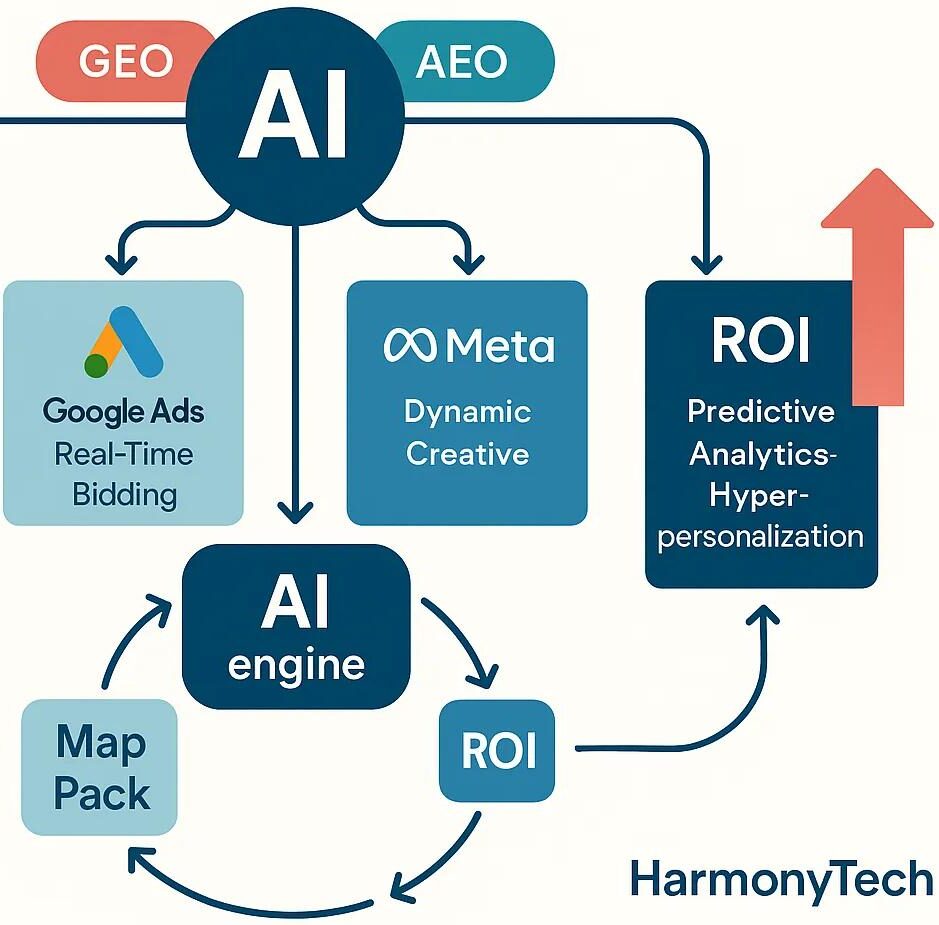
We help businesses pick the right mapping strategy and keep listings accurate across platforms. Our approach combines complete listings, automated monitoring, and clear ownership — so your data stays clean and your local targeting performs. With regular audits, precise categories and service copy, and AI-assisted data pipelines, we connect the right customers to your business.
Local SEO services Harmony Technologies offers for Google and Apple Maps
Harmony Technologies delivers practical, repeatable services to improve your local presence:
- Comprehensive listing completeness
: We ensure your listings are fully filled out and optimized for searchers. - Advanced monitoring tools
: We use tools that alert you to inaccuracies and keep data synchronized. - Clear ownership
: We set up a data steward and escalation paths so changes are tracked and verified. - Regular audits
: Structured audits prevent data drift and keep listings accurate over time. - Optimization strategies
: We refine critical fields, sharpen service descriptions, and publish fresh content to improve engagement.
These services are designed to raise local visibility, generate leads, and improve your marketing ROI.
How to contact Harmony Technologies for custom map marketing solutions
To reach
Harmony Technologies
for tailored map marketing, use the details below:
- Address
: 1700 Banks Road Ste 50-J, Margate, FL 33063 - Phone
: 1-754-946-8078 - Email
:
info@harmonytec.net
Office visits are by appointment, Monday–Friday, 9:00 AM to 7:00 PM. We are closed weekends.
Frequently Asked Questions
What are the main differences in user experience between Google Maps and Apple Maps?
Google Maps offers a wide range of features, extensive user-generated content, and robust traffic insights — which many users find more comprehensive. Apple Maps delivers a cleaner interface and smooth integration with Apple devices, along with privacy-focused options. The best choice depends on your customer base and whether they primarily use Android or iOS.
How can businesses track their performance on Google Maps and Apple Maps?
Use Google Business Profile insights to see how customers find and interact with your listing (views, clicks, directions). For Apple Maps, Apple Maps Connect offers listing management and basic engagement data. Complement both with third-party local SEO tools to track traffic sources, customer interactions, and visibility over time.
What role do customer reviews play in local SEO for mapping apps?
Reviews are a major local ranking and reputation signal. Positive reviews improve credibility and visibility, and timely, professional responses demonstrate customer care. Both platforms favor businesses with higher ratings and active engagement, so encouraging and managing reviews should be part of your local strategy.
Are there any costs associated with optimizing listings on Google Maps and Apple Maps?
Basic listing optimization is free, but professional services and advanced monitoring tools typically carry fees. You can also choose paid advertising (for example, Google Ads) to boost visibility. Investing in data management and targeted marketing often delivers better long-term returns than ad spend alone.
How often should businesses update their information on mapping apps?
Update listings whenever hours, services, or contact details change — and schedule regular audits at least monthly. Frequent updates for promotions or events keep profiles active and can improve engagement. Regular maintenance prevents costly customer misdirection and preserves trust.
What are the privacy considerations when using mapping apps for business?
Protecting customer data and complying with regulations (like GDPR where applicable) is essential. Both Google and Apple provide privacy controls for users; businesses should be transparent about any data they collect, offer opt-outs where required, and follow best practices for storing and handling customer information.
Conclusion
Choosing the right navigation app is a tactical decision that affects visibility, customer experience, and leads. Google Maps and Apple Maps each bring strengths — and both deserve attention depending on your audience. Implement accurate listings, maintain data rigorously, and use monitoring tools to protect your local presence. If you’d like help aligning a maps strategy to your business goals, contact Harmony Technologies — we focus on practical, local-first solutions that move the needle.