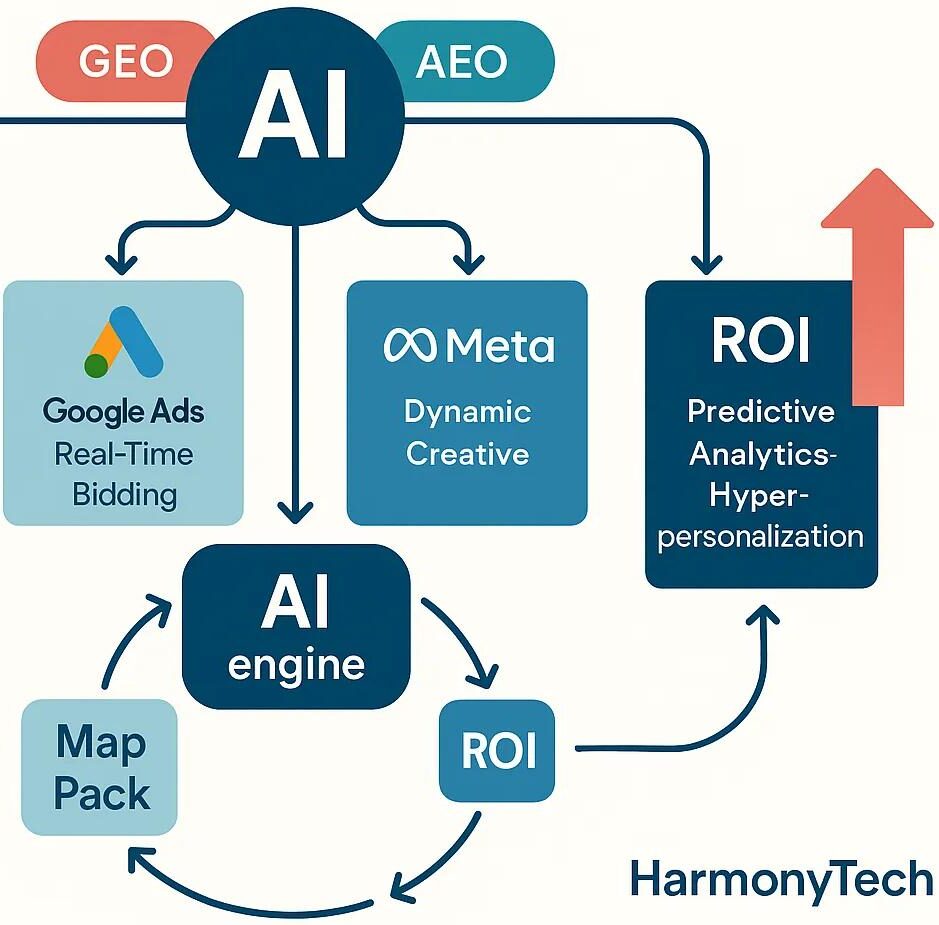
Innovative Advertising Solutions That Drive Results

AI-Driven Digital Advertising Solutions for Business Growth
In the rapidly evolving landscape of marketing, businesses must navigate a myriad of advertising solutions to effectively reach their target audiences. This comprehensive guide delves into the various types of advertising solutions available today, highlighting the significance of both digital and traditional methods. As companies strive for growth, understanding these solutions becomes crucial for optimizing marketing strategies. This article will explore key advertising types, the role of programmatic advertising, the best online platforms for different business goals, the transformative impact of AI in advertising, and effective cross-channel strategies. By the end, readers will gain insights into how to leverage these advertising solutions for enhanced business success.
What Are the Key Types of Advertising Solutions Available Today?
Advertising solutions can be broadly categorized into digital and traditional methods, each offering unique benefits and applications. Understanding these types is essential for businesses aiming to maximize their marketing efforts.
- Digital Advertising: This includes various online platforms such as search engines, social media, and display networks. Digital advertising allows for precise targeting and real-time analytics, making it a powerful tool for businesses.
- Traditional Advertising: This encompasses methods like print, television, and radio. While often seen as less effective in the digital age, traditional advertising still plays a vital role in brand awareness and reaching specific demographics.
- Programmatic Advertising: This automated approach uses technology to buy and sell ad space in real-time, optimizing campaigns based on data-driven insights.
These advertising solutions provide businesses with diverse options to engage their target audiences effectively.
How Do Digital Advertising Platforms Drive Business Success?

Digital advertising platforms, such as Google Ads and Facebook Ads, significantly impact business outcomes by enabling targeted marketing strategies. These platforms utilize sophisticated algorithms to analyze user behavior, allowing businesses to reach potential customers based on their interests and online activities. For instance, Google Ads offers pay-per-click (PPC) advertising, where businesses only pay when users click on their ads, ensuring cost-effective marketing.
Moreover, success metrics such as click-through rates (CTR) and conversion rates provide valuable insights into campaign performance. Case studies have shown that businesses leveraging digital advertising platforms often experience increased brand visibility and higher sales conversions, demonstrating the effectiveness of these tools in driving business success.
What Role Do Traditional Advertising Methods Play in Modern Marketing?
Despite the rise of digital marketing, traditional advertising methods remain relevant in today’s marketing landscape. These methods, including print ads, television commercials, and radio spots, continue to reach audiences effectively, particularly among demographics that may not engage as frequently with digital content.
Traditional advertising offers several benefits, such as broader reach and the ability to create a lasting impression through visual and auditory storytelling. However, it also has limitations, including higher costs and less precise targeting compared to digital methods. Integrating traditional advertising with digital strategies can enhance overall marketing effectiveness, allowing businesses to capitalize on the strengths of both approaches.
How Do Programmatic Advertising Solutions Optimize Campaign Performance?
Programmatic advertising solutions revolutionize how businesses approach ad buying and placement.
By automating the process, these solutions enable real-time bidding and data-driven decision-making, optimizing campaign performance significantly.
What Technologies Power Programmatic Advertising Platforms?
Key technologies that power programmatic advertising include Demand-Side Platforms (DSPs) and Supply-Side Platforms (SSPs). DSPs allow advertisers to purchase ad space across multiple networks, while SSPs enable publishers to sell their inventory efficiently. This technology-driven approach ensures that ads are served to the right audience at the right time, maximizing engagement and conversion rates.
How Does Real-Time Bidding Enhance Audience Targeting?
Real-time bidding (RTB) enhances audience targeting by allowing advertisers to bid on ad impressions in real-time. This process ensures that ads are displayed to users who are most likely to engage with them, based on their online behavior and preferences. The benefits for advertisers include improved ROI and more effective use of advertising budgets, as they can focus their spending on high-potential audiences.
Further research emphasizes the complex algorithmic frameworks required for optimizing real-time bidding in programmatic advertising.
AI-Driven Optimization for Programmatic Advertising
The proposed framework addresses critical challenges in modern programmatic advertising, including budget pacing, conversion optimization, and real-time decision-making. Real-time bidding ecosystems demand sophisticated algorithmic frameworks capable of navigating complex multi-objective optimization landscapes while maintaining computational efficiency.
Multi-Constraint Optimization for Real-Time Bidding: A Reinforcement Learning Approach, H Weng, 2024
Which Online Advertising Platforms Are Best for Different Business Goals?
Choosing the right online advertising platform is crucial for achieving specific business goals. Each platform offers unique features and advantages tailored to different marketing objectives.
How Do Google Ads and Amazon Ads Compare for E-commerce Advertising?
Google Ads and Amazon Ads serve distinct purposes in e-commerce advertising. Google Ads focuses on driving traffic through search queries, making it ideal for businesses looking to capture demand. In contrast, Amazon Ads targets users already in a buying mindset, showcasing products directly on the platform. Both platforms offer unique advantages, and businesses should consider their specific goals when choosing between them.
The importance of effective marketing strategies for increasing sales conversion on e-commerce platforms is further highlighted by recent studies.
Digital Marketing Strategies for E-commerce Growth
In this digital era, technological developments have significantly changed the business paradigm, especially in the e-commerce industry. E-commerce platforms have become one of the main media for many companies to sell their products and services online. However, the increasing number of competitors on e-commerce platforms requires companies to have an effective marketing strategy to increase sales conversion and gain a competitive advantage.
Digital marketing strategy to increase sales conversion on e-commerce platforms, YJ Purnomo, 2023
What Are the Benefits of Social Media Advertising Across Facebook, Instagram, and LinkedIn?
- Facebook: Extensive targeting options and diverse ad formats, including video and carousel ads.
- Instagram: Visually-driven content that appeals to younger demographics, ideal for brand storytelling.
- LinkedIn: Professional networking platform that excels in B2B advertising, allowing for precise targeting based on job titles and industries.
How Are AI Advertising Platforms Transforming Digital Marketing Services?

AI advertising platforms are at the forefront of transforming digital marketing services by leveraging machine learning and data analytics to optimize campaigns. These platforms enhance targeting precision and improve overall campaign performance.
In What Ways Does AI Improve Audience Targeting and Campaign Optimization?
AI improves audience targeting by analyzing vast amounts of data to identify patterns and preferences. This capability allows advertisers to create highly personalized ad experiences that resonate with individual users. Additionally, AI-driven optimization techniques continuously adjust campaigns in real-time, ensuring that ads are served to the most relevant audiences, ultimately leading to higher conversion rates.
What Privacy-First Technologies Are Emerging in AI-Powered Advertising?
As privacy concerns grow, emerging technologies focus on maintaining user privacy while still delivering effective advertising. Solutions such as contextual targeting and privacy-preserving data analytics allow advertisers to reach audiences without compromising personal information. These technologies are essential for building trust with consumers while navigating the evolving landscape of digital advertising.
What Strategies Enable Effective Cross-Channel Advertising Campaigns?
Cross-channel advertising campaigns integrate multiple platforms and methods to create a cohesive marketing strategy.
This approach enhances brand visibility and engagement across various touchpoints.
- Omnichannel Media Planning: This strategy ensures a seamless customer experience by delivering consistent messaging across all channels, from social media to email marketing.
- Data-Driven Insights: Utilizing analytics to understand customer behavior across channels allows businesses to tailor their strategies effectively.
- Integrated Campaigns: Coordinating efforts across digital and traditional platforms maximizes reach and impact.
How Does Omnichannel Media Planning Enhance Brand Awareness?
Omnichannel media planning enhances brand awareness by providing consumers with multiple opportunities to engage with a brand. This strategy ensures that messaging is consistent and reinforces brand identity, leading to increased recognition and loyalty among consumers.
What Metrics Are Essential for Measuring Cross-Channel Campaign Success?
Measuring the success of cross-channel campaigns requires a focus on key metrics, including:
- Reach: The total number of unique users exposed to the campaign.
- Engagement: Interactions such as clicks, shares, and comments across platforms.
- Conversion Rate: The percentage of users who take the desired action, such as making a purchase or signing up for a newsletter.
These metrics provide valuable insights into campaign performance and inform future marketing strategies.
Frequently Asked Questions
What are the advantages of using AI in advertising?
AI in advertising offers numerous advantages, including enhanced targeting precision, real-time optimization, and improved customer insights. By analyzing vast datasets, AI can identify patterns in consumer behavior, allowing businesses to create personalized ad experiences. Additionally, AI-driven tools can automate campaign adjustments based on performance metrics, ensuring that ads reach the most relevant audiences. This leads to higher engagement rates and conversion rates, making AI a powerful asset in modern advertising strategies.
How can businesses measure the effectiveness of their advertising campaigns?
Businesses can measure the effectiveness of their advertising campaigns through various key performance indicators (KPIs). Common metrics include click-through rates (CTR), conversion rates, return on ad spend (ROAS), and customer acquisition costs (CAC). Utilizing analytics tools, companies can track user interactions and assess how well their ads are performing across different platforms. Regularly analyzing these metrics helps businesses refine their strategies and improve overall campaign performance.
What role does content quality play in digital advertising success?
Content quality is crucial for digital advertising success as it directly impacts user engagement and conversion rates. High-quality, relevant content captures the audience’s attention and encourages them to interact with the ad. It also fosters trust and credibility, which are essential for building long-term customer relationships. Businesses should focus on creating compelling visuals, clear messaging, and valuable information to enhance the effectiveness of their advertising efforts.
How can businesses effectively integrate traditional and digital advertising?
Integrating traditional and digital advertising can enhance overall marketing effectiveness. Businesses can achieve this by ensuring consistent messaging across all platforms, utilizing traditional media to drive traffic to digital channels, and leveraging digital analytics to inform traditional strategies. For example, a print ad can include QR codes that lead to online content, while digital campaigns can promote events featured in traditional media. This cohesive approach maximizes reach and reinforces brand identity.
What are the emerging trends in digital advertising for 2024?
Emerging trends in digital advertising for 2024 include increased use of artificial intelligence for personalization, a focus on privacy-first advertising strategies, and the rise of immersive formats like augmented reality (AR) and virtual reality (VR). Additionally, businesses are expected to prioritize sustainability in their advertising practices, appealing to environmentally conscious consumers. Staying ahead of these trends will be essential for businesses looking to maintain a competitive edge in the evolving digital landscape.
How can small businesses leverage online advertising effectively?
Small businesses can leverage online advertising effectively by focusing on targeted campaigns that maximize their budget. Utilizing platforms like Google Ads and social media allows for precise audience targeting based on demographics and interests. Additionally, small businesses should take advantage of local SEO strategies to enhance visibility in their communities. Engaging content and clear calls to action can also drive conversions, making online advertising a powerful tool for growth.
Conclusion
Leveraging a diverse range of advertising solutions is essential for businesses aiming to enhance their market presence and drive growth. By understanding the unique benefits of digital, traditional, and programmatic advertising, companies can optimize their strategies for maximum impact. Embracing these insights will empower you to make informed decisions that align with your business goals. Discover how our tailored advertising solutions can elevate your marketing efforts today.