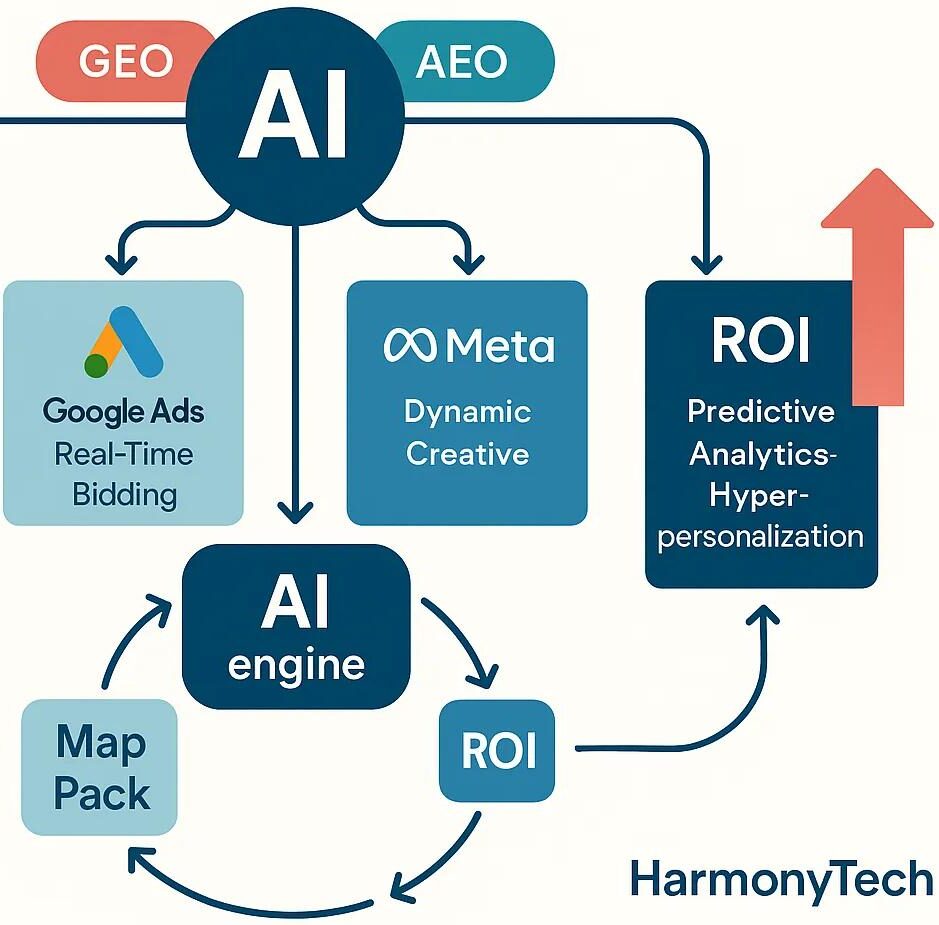
Automated A/B Testing for Ads with AI

AI-powered Automated A/B Testing for Ads — Boost Performance and ROI
Digital marketing moves fast — and AI-driven automated A/B testing helps you keep up. In this guide we break down how AI speeds up creative testing, tightens targeting, and improves return on ad spend. You’ll get a clear definition of automated A/B testing, the concrete benefits, how we implement it at Harmony Technologies, best practices to follow, and real outcomes from South Florida clients.
What Is Automated A/B Testing for Ads with AI?
Automated A/B testing for ads with AI uses machine learning to run and evaluate multiple ad variants automatically. Instead of manually swapping creatives and waiting weeks for results, AI analyzes performance signals in near real time and reallocates budget to the strongest performers. The result is continuous campaign refinement that surfaces the most effective headlines, images, and calls to action faster than traditional testing.
How Does AI-Powered Ad Experimentation Work?
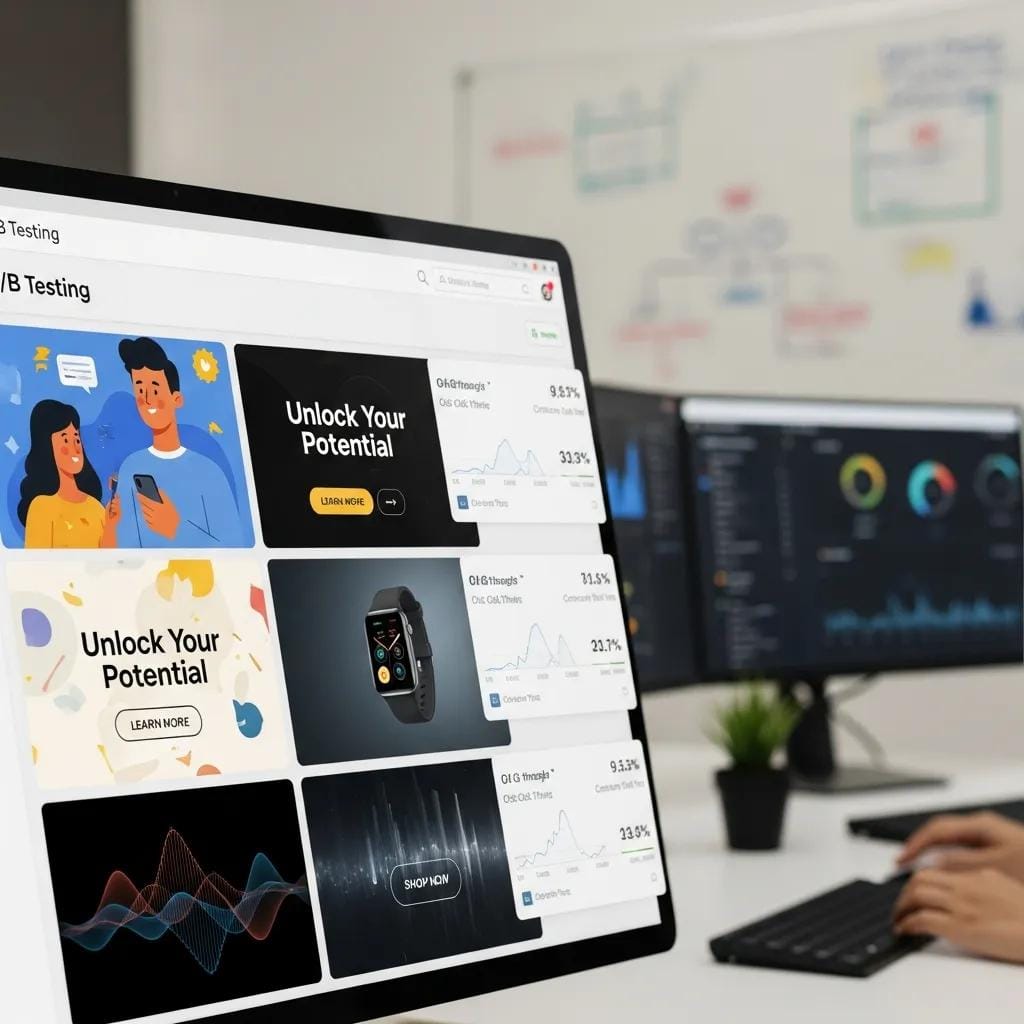
AI-powered experimentation ingests interaction data — clicks, view time, conversions — and looks for patterns across thousands of impressions. Models score creative elements (headline, image, CTA, format) and combine those signals with audience behavior. As results stream in, the system shifts exposure toward better-performing variants so campaigns learn and improve without manual micromanagement.
What Are the Key Concepts Behind AI Ad Creative Testing?
At the core are three ideas: personalization, precise targeting, and iterative learning. Personalization delivers tailored messaging that feels relevant to each user. Targeting places the right creative in front of the right audience segment. Iterative learning means the system keeps refining its choices as more data arrives. Together these principles let marketers find what truly moves their audience.
Personalization is central — tailored ads consistently lift engagement and overall campaign effectiveness.
What Are the Benefits of Using AI for Automated Ad Optimization?
AI-driven optimization delivers faster insights, more relevant creative targeting, and better budget efficiency. By reacting to fresh performance data, AI reduces guesswork and lets teams focus on strategy instead of routine tests. The practical payoff is higher conversions and a clearer path to improved return on ad spend.
How Does Real-Time Optimization Improve Ad Performance?
Real-time optimization keeps campaigns adaptive. If an ad underperforms, AI can tweak creative mix, targeting, or bids immediately — rather than waiting for a manual review. Research indicates campaigns using dynamic optimization can see conversion lifts in the 20–30% range versus static approaches. That agility matters when audience preferences shift quickly.
Additional research highlights how real-time AI systems leverage large datasets to make fast, adaptive decisions.
In What Ways Does AI Enhance Personalization and Targeting?
AI segments audiences by behavioral signals and demographic cues, then maps creative variations to each segment’s preferences. That means ads speak more directly to user needs, increasing the chance of clicks and conversions. In practice, this yields higher engagement and smarter spend because impressions go to users who are likeliest to act.
Academic work reinforces how automation and personalization together can materially improve campaign results.
How Does Harmony Technologies Implement AI-Driven A/B Testing?
Harmony Technologies
uses a repeatable, data-first workflow: gather signals, generate creative variations, run parallel tests, and let the model shift weight to winners. Our focus is on practical experiments that produce actionable lifts — not just interesting charts.
What Is the Process of Data-Driven Creative Generation?
We start with historical campaign data and user interaction logs to identify winning patterns. AI tools then propose multiple creative permutations aligned with those insights. Those variants are tested in near real time, giving us rapid feedback and allowing quick iteration on the highest-potential assets.
How Is Intelligent Audience Segmentation Applied?
Intelligent segmentation combines demographics, behavior, and contextual signals to form high-probability audience clusters. We match creative concepts to each cluster and let the AI evaluate which combinations drive the best outcomes. The result: more relevant impressions and improved conversion efficiency.
What Are the Best Practices for Machine Learning A/B Testing Ads?
To get reliable results, define clear objectives, choose the right KPIs, and test only a few variables per experiment. Keep test windows long enough for statistical confidence and review outcomes regularly so insights feed back into creative and targeting decisions.
How to Conduct Scalable Multivariate Testing with AI?
Scalable multivariate testing uses algorithms to explore combinations of headlines, visuals, CTAs, and formats simultaneously. AI helps prioritize promising blends, letting teams roll out winners quickly across channels while still validating performance at scale.
What Metrics Should Be Monitored for Effective AI Ad Optimization?
Track conversion rate, click-through rate (CTR), and return on ad spend (ROAS) as primary KPIs. Supplement with engagement metrics — landing-page time, bounce rate, and micro-conversions — to understand quality and user intent beyond raw clicks.
South Florida Success: AI-Powered A/B Testing Boosts Ad Results

South Florida companies that adopted AI-driven A/B testing report measurable improvements: cleaner spend, higher conversion rates, and faster insight cycles. These local examples show how a data-first approach translates to concrete business gains.
What Case Studies Demonstrate ROI Improvement?
For example, a regional retail client saw a 25% bump in conversions in the first month after deploying automated creative tests. A service business reduced customer acquisition costs by about 35–40% after switching to AI-led optimization — real results that justify the investment.
How Does Localized AI Ad Testing Benefit Regional Markets?
Localized testing lets businesses tailor messaging to community preferences and seasonal patterns. By analyzing local signals, advertisers create campaigns that feel familiar to the audience — which improves relevance, builds trust, and increases repeat engagement.
What Are Common Questions About AI Automated A/B Testing for Ads?
As teams evaluate AI A/B testing, a few practical questions come up repeatedly. Below we address timing, what to test, integrations, and common implementation hurdles so you can plan with confidence.
How Long Should AI-Driven A/B Tests Run?
Aim for one to two weeks as a baseline to collect reliable data, but adjust by traffic volume and campaign goals. Higher-traffic campaigns can reach confidence faster; low-volume tests may need longer windows to be meaningful.
Which Ad Elements Are Most Effective to Test with AI?
Start with headlines, hero images, calls to action, and audience targeting parameters. Also test format — short video versus static creative — to see which formats resonate with your audience and drive the best downstream actions.
Frequently Asked Questions
What types of businesses can benefit from AI-driven A/B testing?
Any business that runs paid digital campaigns can benefit — from e-commerce and local retailers to B2B services and agencies. AI helps scale experimentation, improve targeting, and optimize spend for organizations at different sizes and budgets.
How does AI handle data privacy in ad testing?
Responsible AI setups follow privacy regulations and use aggregated or anonymized signals. Compliance with laws like GDPR and CCPA is essential; we also emphasize transparency and consent so insights come from ethical, lawful data practices.
Can AI-driven A/B testing be integrated with existing marketing tools?
Yes — most AI testing solutions plug into common ad platforms and analytics stacks. Integration preserves your current workflows while adding automated experimentation and smarter decisioning across channels.
What challenges might businesses face when implementing AI A/B testing?
Typical hurdles include data quality gaps, integration complexity, and the need for team training. Address these by auditing data sources, planning integrations incrementally, and building internal expertise to interpret AI-driven recommendations.
How can businesses measure the success of AI-driven A/B testing?
Measure success by comparing KPIs like conversion rate, CTR, and ROAS before and after optimization. Look at engagement metrics and cost-per-acquisition for a fuller view — and track longer-term customer value to capture sustained impact.
What future trends can we expect in AI-driven ad testing?
Expect deeper personalization, better predictive analytics, and broader use of natural language processing to refine messaging. As models improve, testing will become faster and more granular, enabling highly tailored creative at scale.
Conclusion
Automated A/B testing with AI delivers faster learning, smarter targeting, and measurable ROI improvements. When applied with a disciplined measurement plan and strong data hygiene, AI becomes a practical tool for scaling ad performance. To see how AI-driven testing can elevate your strategy, explore our resources or get in touch with our team today.