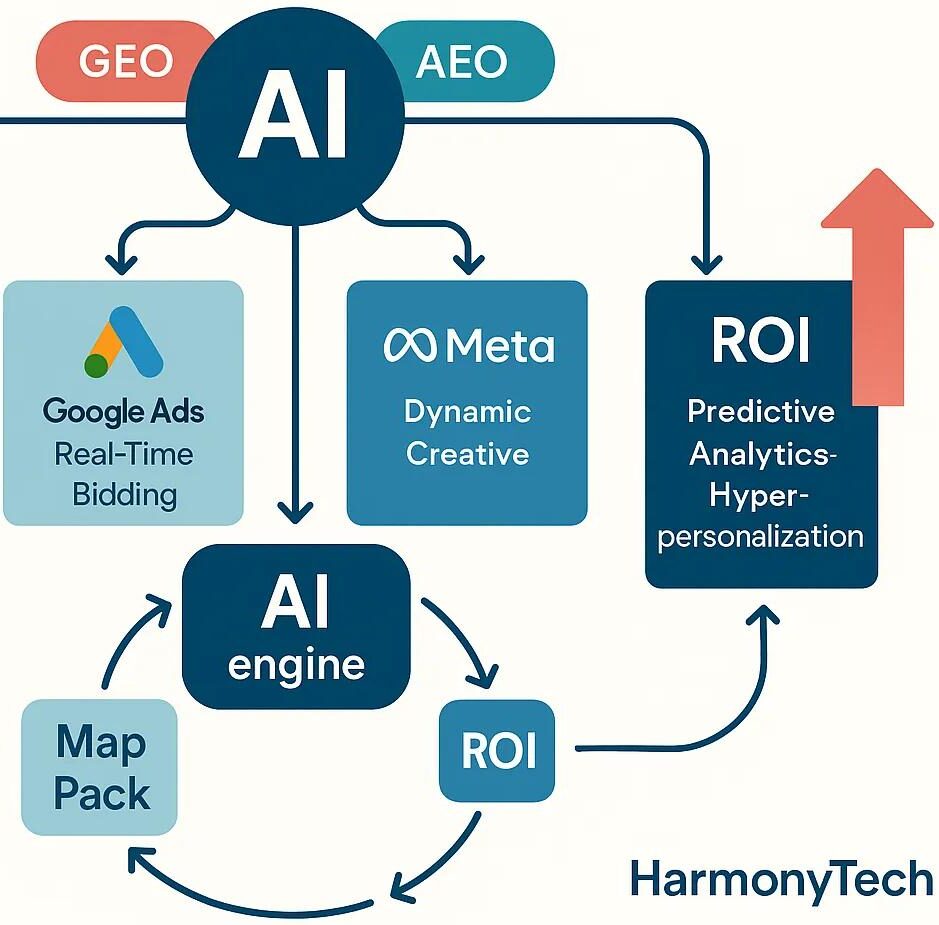
AI Strategies for Maximizing Advertising Spend Efficiency

AI Strategies for Maximizing Advertising Spend Efficiency with Programmatic and Machine Learning Tools
In the rapidly evolving landscape of digital marketing, small and medium-sized businesses (SMBs) face the challenge of maximizing their advertising spend efficiency. This article explores effective AI strategies that leverage programmatic and machine learning tools to enhance advertising outcomes. Readers will learn how to implement these strategies to optimize their campaigns, improve targeting precision, and ultimately achieve better return on investment (ROI). The focus will be on practical applications, including regular monitoring, AI-driven creative optimization, and data hygiene. By understanding these strategies, SMBs can navigate the complexities of digital advertising and make informed decisions that lead to improved performance.
How Does AI Improve Advertising Spend Efficiency?
AI improves advertising spend efficiency by optimizing campaigns through data-driven insights and automation. It can handle daily optimizations, allowing for quick adjustments to performance shifts and market changes. AI also assists in ad copy and creative design by testing various combinations to identify the most effective ones, speeding up creative iteration and reducing guesswork. Additionally, AI enhances targeting precision, which helps reduce wasted impressions and improve conversion rates, ultimately leading to a more efficient allocation of advertising budgets.
Understanding AI Budget Allocation and Its Impact on ROI
To measure success with AI-driven campaigns, SMBs should focus on key performance indicators (KPIs) such as Return on Investment (ROI), conversion rate, and cost per acquisition (CPA). For e-commerce, Average Order Value (AOV) and Return On Ad Spend (ROAS) are important. For lead generation, lead quality and conversion rate from lead to customer should be monitored. Regular, data-driven adjustments based on these metrics are essential to ensure the AI strategy meets targets.
What Are the Best AI Budget Allocation Techniques?

Effective budget allocation techniques are crucial for maximizing the impact of advertising spend. SMBs should focus on data integrity, set clear objectives, and regularly review campaign performance. Accurate conversion tracking and first-party data collection are essential for effective AI-driven strategies. Monthly reviews are recommended, with more frequent checks during significant updates. Key performance indicators (KPIs) like ROI, conversion rate, and CPA should guide success measurement. Embracing experimentation and adapting quickly to AI insights will enhance budget optimization.
Programmatic Ad Buying for Real-Time Budget Optimization
To optimize budgets in programmatic ad buying, SMBs should focus on data integrity, set clear objectives, and regularly review campaign performance. Accurate conversion tracking and first-party data collection are essential for effective AI-driven strategies. Monthly reviews are recommended, with more frequent checks during significant updates. Key performance indicators (KPIs) like ROI, conversion rate, and CPA should guide success measurement. Embracing experimentation and adapting quickly to AI insights will enhance budget optimization.
How Does Machine Learning Enhance Automated Ad Campaign Management?

Machine learning enhances automated ad campaign management by enabling AI to optimize campaigns through accurate data analysis and audience segmentation. It allows for the testing of numerous ad variations to identify the most effective combinations for different audiences, speeding up creative iteration and reducing guesswork. Additionally, AI can assist in refining ad copy and visual assets, ensuring that campaigns are more relevant and engaging. Regular monitoring and data hygiene are crucial, as they provide the necessary insights for AI to make informed optimizations, ultimately improving campaign performance and ROI.
Further research highlights how machine learning has fundamentally reshaped advertising by automating campaign management and personalizing ad delivery.
Machine Learning for Ad Campaign Optimization & Personalization
machine learning has significantly transformed the landscape of advertising and ad campaign personalization, and automate various aspects of campaign management.
” Optimizing Ad Campaigns with Machine Learning: Data-Driven Approaches in Modern Media”., 2024
Predictive Analytics Forecasting Ad Spend Efficiency
To predict ad spend efficiency using predictive analytics, businesses should focus on maintaining impeccable data hygiene, setting clear objectives and KPIs, and continuously monitoring and adapting their strategies. Accurate data allows for better audience segmentation and targeting, which can lead to reduced cost-per-acquisition (CPA) and improved return on investment (ROI). Regular audits and integration of data sources are essential to ensure that AI models can optimize ad spend effectively. Additionally, businesses should embrace experimentation and monitor key performance indicators (KPIs) to assess the impact of their campaigns.
The increasing volume of advertising data necessitates robust machine learning infrastructure to maintain performance and predictive accuracy, enabling more precise insights and intelligent resource allocation.
Machine Learning Infrastructure Optimization in Advertising Systems
The explosive growth of advertising data has increasingly challenged the performance and predictive accuracy of traditional advertising platforms. Optimizing and upgrading machine learning infrastructure has emerged as a critical solution to address these challenges. This optimization encompasses the enhancement of computing hardware, the development of scalable and efficient distributed processing architectures, and the refinement of model training, tuning, and deployment strategies. Such improvements enable advertising platforms to handle massive volumes of data more efficiently while delivering more precise insights. This article explores the practical applications of machine learning infrastructure optimization in advertising systems, including personalized ad targeting, accurate estimation of advertising effectiveness, proactive fraud detection and risk management, and intelligent allocation of advertising resources.
Application and Practice of Machine Learning Infrastructure Optimization in Advertising Systems, Y Jiang, 2025
Performance-Based Ad Spending Models Using AI Algorithms
Performance-based ad spending models utilize AI algorithms to allocate budgets based on real-time performance metrics. These models allow businesses to adjust their spending dynamically, ensuring that funds are directed towards the most effective campaigns. By leveraging machine learning, businesses can analyze historical data to predict future performance, optimizing their ad spend for maximum ROI. This approach not only enhances efficiency but also fosters a more agile marketing strategy that can quickly adapt to changing market conditions.
Which Digital Marketing Budget Tools Maximize Ad Spend Efficiency?
Identifying the right digital marketing budget tools is essential for maximizing ad spend efficiency. Various AI-powered software applications can assist in optimizing advertising budgets, providing insights and automation that enhance campaign performance.
These tools offer unique features that can significantly enhance the efficiency of advertising spend, allowing SMBs to make informed decisions based on real-time data.
Comparing AI-Powered Software Applications for Ad Spend Optimization
When comparing AI-powered software applications for ad spend optimization, it is crucial to evaluate their features, ease of use, and effectiveness. Each tool offers distinct advantages that can cater to different business needs. For instance, some tools focus on automating ad placements, while others emphasize data analysis and reporting. Understanding these differences can help businesses select the right tools to maximize their advertising efficiency.
Features of Cost-Effective Advertising Models for Small to Medium Businesses
Cost-effective advertising models for small to medium businesses (SMBs) include:
- Embrace Experimentation: Test new AI features and strategies to find what works best.
- Monitor and Analyze: Regularly review campaign performance and insights to optimize efforts.
- Stay Informed: Keep up with the latest developments in AI and advertising platforms.
- Adapt Quickly: Be ready to adjust strategies based on AI learnings and market changes.
- Strategic Partnerships: Collaborate with experienced agencies for expertise, resources, and time savings.
- Data Hygiene and Integration: Ensure accurate conversion tracking, collect first-party data, and integrate data sources for better optimization.
- Clear Objectives and KPIs: Define specific business goals and measurable KPIs to guide AI optimization.
- Continuous Learning: Foster a culture of learning to keep up with the evolving AI landscape.
These features help SMBs leverage AI effectively, reduce costs, and improve campaign performance.
What Case Studies Demonstrate ROI Improvements from AI Strategies?
The provided context does not include specific case studies demonstrating ROI improvements from AI strategies. Therefore, I don’t have enough information to answer your question.
2023-2024 Industry Data on AI Adoption and Cost Savings
Recent industry data indicates a significant increase in AI adoption among businesses, leading to substantial cost savings. Companies that have integrated AI into their advertising strategies report improved efficiency and higher ROI. This trend highlights the growing importance of AI in the digital marketing landscape, as businesses seek to optimize their advertising spend and enhance overall performance.
Success Stories of AI-Driven Advertising Efficiency in South Florida
AI-powered Google Ads have proven to be highly effective for South Florida small and medium-sized businesses (SMBs) by automating routine tasks, enhancing targeting precision, and optimizing creative relevance. This integration of AI with human oversight allows for campaigns that align closely with specific business goals and the local market’s nuances. By focusing on data integrity, setting clear objectives, and fostering a culture of continuous learning, businesses can maximize their advertising efficiency and achieve superior marketing results. Harmony Technologies offers guidance in leveraging AI to increase conversions and optimize ad spend in the competitive South Florida landscape.
Deep learning models offer tailored strategies and automated support, proving particularly effective for optimizing Google Ads campaigns and maximizing their impact.
Deep Learning for Google Ads Campaign Optimization
we can provide these organizations with tailored strategies and automated support to optimize their Google Ads campaigns. This approach will enable non-profits to maximize their
A deep learning-based optimization model for advertisement campaign, N Ramadevi, 2024
How to Implement and Monitor AI Strategies for Advertising Spend?
To implement and monitor AI strategies for advertising spend, SMBs should follow these steps:
- Data Hygiene and Integration:Ensure accurate conversion tracking and first-party data collection.Integrate various data sources for a unified view of customer interactions.Conduct regular audits of data sources for accuracy and consistency.
- Set Clear Objectives and KPIs:Define specific business goals (e.g., leads, sales, brand awareness).Establish measurable KPIs (e.g., Target CPA, Target ROAS).Set realistic expectations for AI performance, understanding it requires a learning phase.
- Regular Monitoring and Reviews:Conduct monthly reviews to assess performance and make adjustments.Increase the frequency of checks (weekly or daily) during major campaign updates or promotional periods.Analyze AI-driven campaign performance and adapt strategies based on insights.
- Embrace Continuous Learning and Adaptation:Stay informed about the latest developments in AI and advertising.Be willing to experiment with new AI features and strategies.Adjust strategies quickly based on AI learnings and market changes.
- Consider Strategic Partnerships:Partner with experienced agencies for expertise, resources, and strategic guidance.Leverage their knowledge to navigate complexities and ensure ethical AI usage.
By focusing on these areas, SMBs can effectively implement and monitor their AI-driven advertising strategies.
Using Structured Data and Semantic SEO to Enhance Campaign Performance
Using structured data and semantic SEO can significantly enhance campaign performance by ensuring accurate business information, which is crucial for local SEO. Accurate data improves discoverability and conversions, as it helps search engines and potential customers connect effectively with your offerings. Implementing structured data allows for precise audience targeting and enhances the relevance of ad creatives, leading to lower costs per acquisition and improved lead quality.
Key benefits include:
- Enhanced audience matching through accurate data.
- Increased click-through rates from more relevant ads.
- Improved lead quality due to precise service alignment.
- Better micro-targeting capabilities, especially in diverse markets like South Florida.
To maintain effectiveness, continuous monitoring and maintenance of business information are essential. This includes regular audits, establishing a single source of truth, and tracking key performance indicators (KPIs) such as conversion rates and engagement metrics. By following these practices, businesses can optimize their local SEO efforts and drive measurable improvements in campaign performance.
Key Performance Indicators and Tools for Tracking AI Ad Spend Efficiency
To track AI ad spend efficiency, SMBs should focus on the following Key Performance Indicators (KPIs):
- Return on Investment (ROI): Measures the profitability of the ad spend.
- Conversion Rate: Indicates the percentage of users who take the desired action after clicking the ad.
- Cost per Acquisition (CPA): The cost associated with acquiring a new customer.
- Average Order Value (AOV): Important for e-commerce to assess the average revenue per transaction.
- Return On Ad Spend (ROAS): Measures the revenue generated for every dollar spent on advertising.
- Lead Quality: For lead generation campaigns, assessing the quality of leads generated.
- Click-Through Rate (CTR): Indicates how often people click on the ad after seeing it.
Regular monitoring of these metrics, along with Google Ads reporting, allows SMBs to make data-driven adjustments to their campaigns, ensuring alignment with business objectives.
Frequently Asked Questions
What are the key benefits of using AI in advertising for small businesses?
AI offers numerous benefits for small businesses in advertising, including enhanced targeting precision, improved campaign efficiency, and reduced costs. By analyzing vast amounts of data, AI can identify the most effective audience segments and optimize ad placements in real-time. This leads to better engagement rates and higher conversion rates. Additionally, AI tools can automate routine tasks, allowing marketers to focus on strategy and creative development, ultimately maximizing the return on investment (ROI) for advertising spend.
How can small businesses ensure data hygiene for effective AI strategies?
Data hygiene is crucial for the success of AI-driven advertising strategies. Small businesses can ensure data hygiene by regularly auditing their data sources for accuracy and consistency, implementing robust data collection processes, and integrating first-party data. This includes maintaining clean customer databases, removing duplicates, and ensuring that all data is up-to-date. By prioritizing data hygiene, businesses can enhance the effectiveness of their AI tools, leading to more accurate insights and better campaign performance.
What role does continuous learning play in AI advertising strategies?
Continuous learning is vital in AI advertising strategies as it allows businesses to adapt to changing market conditions and consumer behaviors. By staying informed about the latest AI developments and advertising trends, marketers can experiment with new features and strategies. This iterative process helps refine campaigns based on real-time data and insights, ensuring that advertising efforts remain relevant and effective. Embracing a culture of learning fosters innovation and can lead to significant improvements in advertising efficiency and ROI.
How can small businesses measure the success of their AI-driven advertising campaigns?
To measure the success of AI-driven advertising campaigns, small businesses should focus on key performance indicators (KPIs) such as Return on Investment (ROI), conversion rates, and cost per acquisition (CPA). Regularly tracking these metrics allows businesses to assess the effectiveness of their campaigns and make data-driven adjustments. Additionally, monitoring metrics like click-through rates (CTR) and lead quality can provide deeper insights into campaign performance, helping businesses optimize their strategies for better results.
What are some common challenges small businesses face when implementing AI in advertising?
Small businesses often face several challenges when implementing AI in advertising, including limited budgets, lack of technical expertise, and data management issues. Many SMBs may struggle to integrate AI tools effectively due to insufficient data quality or inadequate infrastructure. Additionally, understanding how to interpret AI-generated insights can be daunting for those without a strong analytical background. Overcoming these challenges requires a commitment to learning, investing in the right tools, and possibly seeking partnerships with experienced agencies.
How can predictive analytics improve ad spend efficiency?
Predictive analytics enhances ad spend efficiency by using historical data to forecast future performance and optimize budget allocation. By analyzing patterns and trends, businesses can identify which campaigns are likely to yield the best results and adjust their spending accordingly. This proactive approach helps reduce wasted ad spend and improves overall ROI. Regularly updating predictive models with fresh data ensures that businesses can adapt to market changes and maintain effective advertising strategies.
Conclusion
Implementing AI strategies in advertising empowers small and medium-sized businesses to maximize their ad spend efficiency through enhanced targeting and real-time optimization. By leveraging data-driven insights and automation, businesses can achieve improved ROI and campaign performance. Embracing these innovative tools not only streamlines operations but also fosters a culture of continuous learning and adaptation. Start exploring the right AI solutions today to elevate your advertising efforts and drive measurable results.