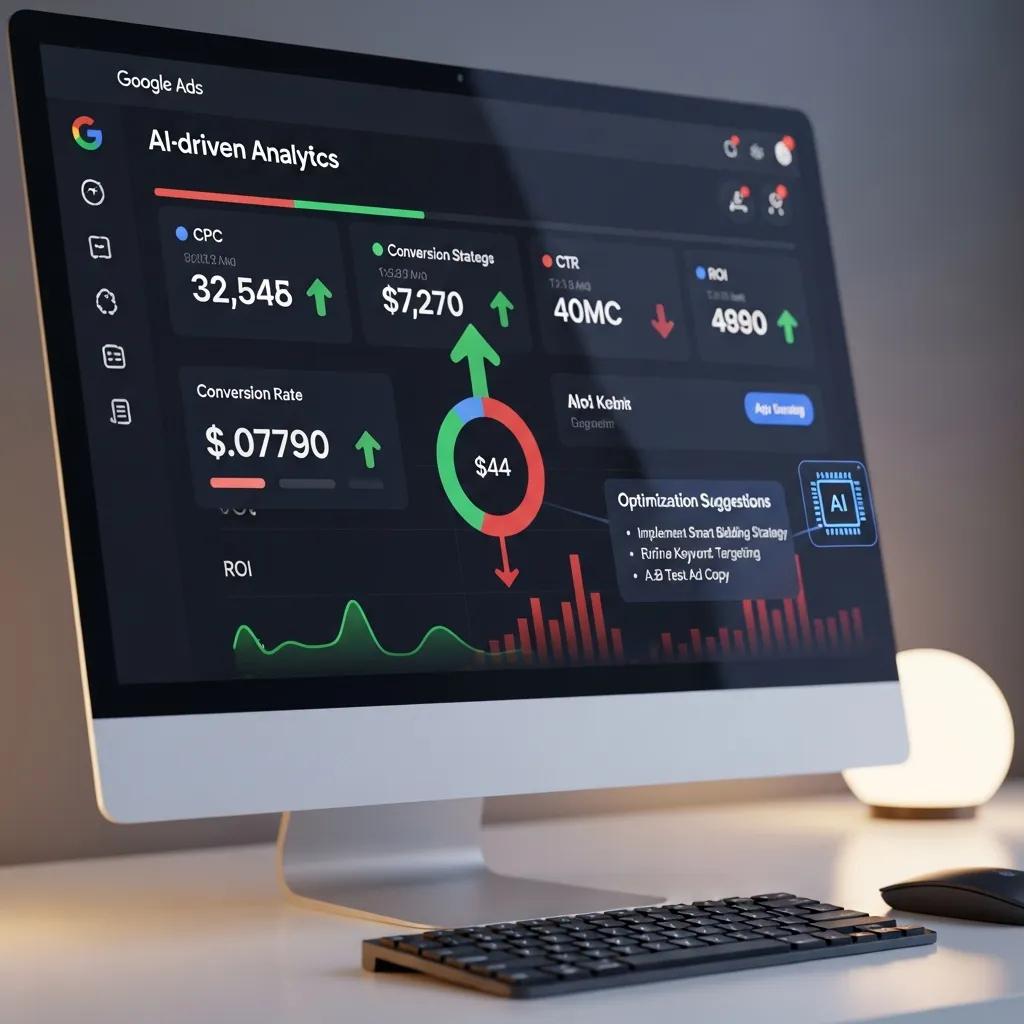
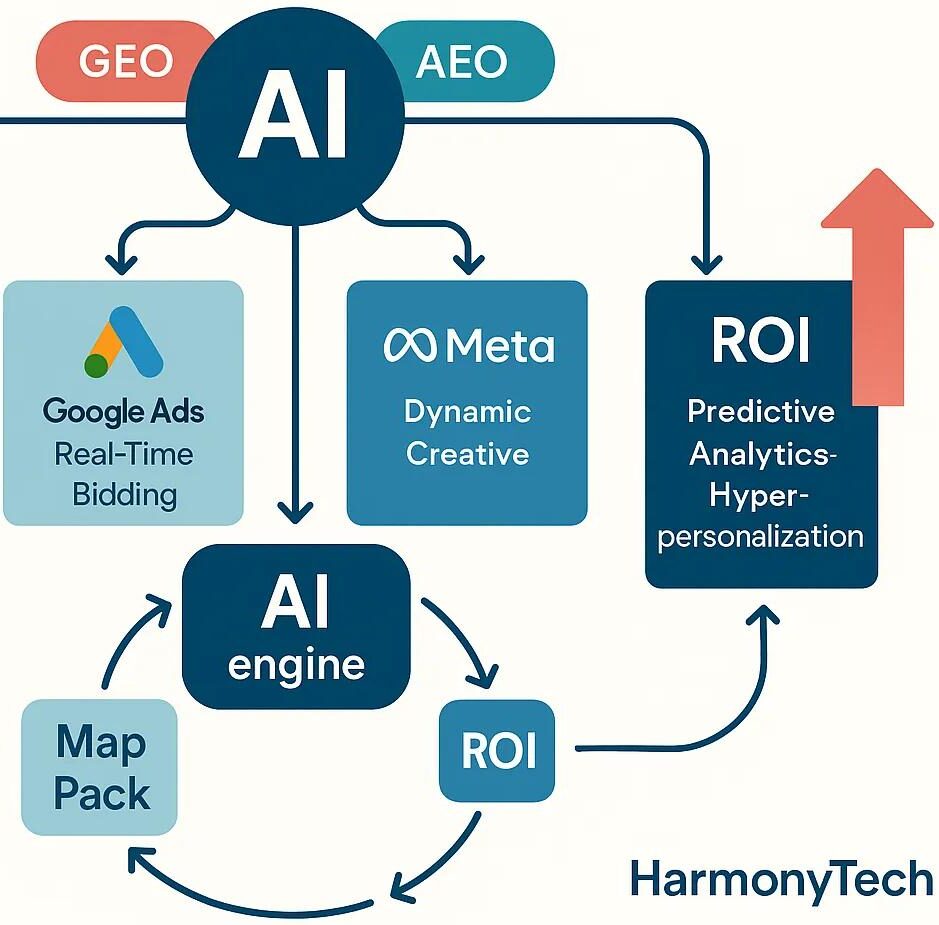
AI-Powered Google Ads Optimization Strategies: Maximize ROI with Automated PPC Management
To maximize ROI with automated PPC management using AI-powered Google Ads, businesses should focus on the following strategies:
Embrace Experimentation: Test new AI features and strategies to find what works best.
Monitor and Analyze: Regularly review campaign performance and insights provided by AI.
Stay Informed: Keep up with the latest developments in AI and Google Ads.
Adapt Quickly: Be ready to adjust strategies based on AI learnings and market changes.
Data Hygiene and Integration: Ensure accurate conversion tracking, collect first-party data, and integrate various data sources for better optimization.
Set Clear Objectives and KPIs: Define specific business goals and measurable KPIs to guide AI optimization.
Continuous Learning: Foster a culture of learning to adapt to the evolving AI landscape.
Strategic Partnerships: Consider partnering with experienced agencies for expertise, resources, and risk mitigation.
By implementing these strategies, businesses can effectively leverage AI to enhance their PPC management and achieve superior marketing results.
How Does AI Enhance Google Ads Performance?
AI enhances Google Ads performance by automating routine tasks, improving targeting precision, and dynamically optimizing creative relevance. It allows businesses to operate with greater efficiency and effectiveness, leveraging features like Smart Bidding
and Performance Max to optimize campaigns without adding heavy management overhead. Additionally, AI assists in ad copy and creative design by testing variations and suggesting improvements, which helps deliver more relevant ads. Regular
monitoring and analysis of AI-driven campaigns ensure alignment with business goals and facilitate quick adjustments based on performance insights. Research further emphasizes the sophisticated algorithms employed by platforms like
Google Ads for optimizing ad strategies and predicting user engagement.
AI-Powered Google Ads Strategy Optimization & Click Prediction Furthermore, several online advertising systems, such as Google Ads and Facebook Ads, utilize sophisticated algorithms to determine which advertisement
is being shown [3]. This paper focuses on AI-Powered Advertising Strategy Optimization and Click Prediction for Improved Digital Marketing.AI-Powered Advertising Strategy Optimization and Click Prediction for Improved Digital Marketing, A. Kumar, 2023
What Role Does Machine Learning Play in PPC Campaigns?
Machine learning plays a crucial role in PPC campaigns by enabling AI-driven optimizations and enhancing targeting precision. It helps in analyzing customer behavior and preferences, leading to more relevant ad placements
and impactful messaging. Machine learning algorithms can test various ad copy and creative designs to identify the most effective combinations for different audiences. Additionally, it relies on high-quality data to construct accurate
audience segments and optimize bidding strategies, ultimately improving conversion rates and reducing wasted ad spend. Regular monitoring and human oversight ensure that AI optimizations align with long-term business objectives.
How Do Smart Bidding Strategies Reduce Cost Per Acquisition?
Smart Bidding strategies reduce Cost Per Acquisition (CPA) by optimizing ad placements and bids based on real-time data and performance metrics. These strategies leverage AI to improve targeting and scale without requiring extensive management, allowing
businesses to focus on key performance indicators (KPIs) like CPA. By utilizing accurate conversion tracking and first-party data, Smart Bidding can effectively allocate budgets to the most successful campaigns, ultimately leading
to a reduction in CPA. Regular data-driven adjustments based on performance metrics further enhance the effectiveness of these strategies.
What Are the Best Automated PPC Management Tools for Google Ads?
Automated PPC management tools are essential for optimizing Google Ads campaigns efficiently. These tools leverage AI to streamline various aspects of campaign management, from bid adjustments to performance
analytics. By utilizing these tools, businesses can enhance their advertising strategies and achieve better results with less manual effort. Indeed, specialized AI-powered platforms are specifically designed to automate and optimize
ad deployment across various advertising channels, including Google Ads.
AdGenius: AI-Powered Google Ads Automation & Optimization AI-powered engine designed to automate and optimize the ad deployment and distribution across various platforms, including the Facebook Ad Library, Google
Ads, and various programmatic advertising channels.AdGenius: An AI-Powered Platform for Ad Deployment and Distribution, P Tambe, 2025
Which AI Ad Performance Tools Offer Real-Time Bid Adjustments?
Several AI ad performance tools provide real-time bid adjustments, allowing businesses to optimize their ad spend dynamically. These tools analyze performance data and adjust bids automatically to maximize conversions and minimize costs. By implementing
such tools, advertisers can ensure that their campaigns remain competitive and effective in real-time.
How Do AI Marketing Platforms Improve Campaign Analytics?
AI marketing platforms improve campaign analytics by enabling superior audience segmentation and precise targeting through high-quality data. Accurate data allows AI models to analyze customer behavior and preferences effectively, leading to more relevant
ad placements and impactful messaging. Regular monitoring of key performance indicators (KPIs) helps identify trends and performance shifts, allowing for quick adjustments. Additionally, AI can assist in testing various ad copy and
creative designs to optimize engagement and conversion rates. Overall, the integration of clean data and continuous analysis enhances the effectiveness and ROI of marketing campaigns. The transformative impact of AI on marketing analytics
is further detailed in academic literature, highlighting its role in reshaping campaign strategies through various advanced techniques.
AI-Driven Marketing Analytics for Campaign Optimization Artificial intelligence (AI) has emerged as a transformative force in retail marketing, fundamentally reshaping how organizations design, implement, and optimize
campaign strategies. The reviewed literature spans a wide array of AI techniques—including supervised learning, unsupervised learning, deep learning, reinforcement learning, and natural language processing (NLP)—and their respective
roles in improving campaign forecasting, real-time adaptability, customer segmentation, personalization, sentiment analysis, and attribution modeling.AI-driven marketing analytics for retail strategy: a systematic review of data-backed campaign optimization, TA Rainy, 2025
How Can Ad Campaign Automation Improve Small to Medium Business Results?
Ad campaign automation can improve small to medium business results by enhancing targeting precision, dynamically optimizing creative relevance, and automating routine tasks. This allows businesses to operate with greater efficiency and effectiveness.
AI-powered features like Smart Bidding and Performance Max help optimize visibility and sales without adding heavy management overhead. Additionally, the integration of AI with expert human oversight ensures campaigns align with specific
business goals and local market nuances, ultimately leading to increased conversions and better ad spend management.
What Are the Benefits of AI-Driven Campaign Insights for South Florida Businesses?
The benefits of AI-driven campaign insights for South Florida businesses include:
Enhanced Targeting Precision: AI improves audience matching, leading to more relevant ad creatives and higher click-through rates.
Cost Efficiency: Accurate data reduces cost-per-acquisition (CPA) and optimizes ad spend allocation, resulting in a higher return on investment (ROI).
Dynamic Optimization: AI can dynamically optimize campaigns based on real-time data, improving performance and relevance for local markets.
Micro-Targeting: Businesses can achieve precise targeting by neighborhood and time-of-day, catering to diverse bilingual audiences and seasonal demand.
Improved Lead Quality: Enhanced service alignment leads to better quality leads and conversion rates.
Automation of Routine Tasks: AI automates routine marketing tasks, allowing businesses to operate more efficiently.
Expert Oversight: The integration of AI with human expertise ensures campaigns align with specific business goals and local market nuances.
Overall, AI empowers South Florida businesses to increase conversions, maximize ad spend, and build lasting customer relationships.
How Does Automation Reduce Manual Effort in Google Ads Management?
Automation in Google Ads management reduces manual effort by intelligently automating routine tasks, enhancing targeting precision, and dynamically optimizing creative relevance. This allows businesses to operate with greater efficiency and effectiveness,
as AI features like Smart Bidding and Performance Max improve targeting and scale without requiring extensive management overhead. Additionally, strategic partnerships with agencies can provide expertise and resources, further alleviating
the manual workload involved in campaign management.
What Are Effective Smart Bidding Techniques in AI-Powered Google Ads?
Effective smart bidding techniques in AI-powered Google Ads include:
Accurate Conversion Tracking: Ensure meticulous setup of conversion tracking to report all desired actions accurately.
First-Party Data Collection: Actively collect and organize customer data to create powerful audience signals for AI.
Data Integration: Integrate various data sources for a unified view of customer interactions, enhancing AI optimization.
Clear Objectives and KPIs: Define specific business goals and measurable KPIs to guide AI optimization effectively.
Embrace Experimentation: Test new AI features and strategies to find what works best for your campaigns.
Regular Monitoring and Analysis: Review campaign performance regularly to understand insights and make necessary adjustments.
Adapt Quickly: Be prepared to adjust strategies based on AI learnings and market changes.
These techniques help businesses leverage AI for improved targeting and campaign performance.
How Do Machine Learning Algorithms Optimize Bid Management Efficiency?
Machine learning algorithms optimize bid management efficiency by leveraging accurate and comprehensive data to enhance audience targeting and bidding strategies. Key factors include:
Data Integrity: High-quality data ensures that AI models can effectively analyze customer behavior and preferences, leading to more relevant ad placements and improved conversion rates.
Smart Bidding: Features like Smart Bidding utilize machine learning to adjust bids in real-time based on predicted performance, optimizing for specific goals such as cost per acquisition (CPA) or return on ad spend
(ROAS).
Audience Segmentation: AI can create sophisticated audience segments by analyzing various data inputs, allowing for precise targeting that reduces wasted ad spend and increases lead quality.
Continuous Learning: Machine learning algorithms adapt over time, learning from campaign performance to refine bidding strategies and improve overall efficiency.
Integration of Data Sources: By integrating data from multiple sources, AI can gain a unified view of customer interactions, enhancing its ability to optimize bids based on comprehensive insights.
Overall, the combination of accurate data, advanced algorithms, and continuous adaptation enables machine learning to significantly enhance bid management efficiency.
What Are Common Smart Bidding Strategies to Maximize Conversion Rates?
Common smart bidding strategies to maximize conversion rates include:
Target CPA (Cost Per Acquisition): Setting a target cost for acquiring a customer.
Target ROAS (Return On Ad Spend): Aiming for a specific return on the money spent on ads.
Maximize Conversions: Automatically setting bids to get the most conversions within a budget.
Maximize Conversion Value: Focusing on maximizing the total conversion value rather than just the number of conversions.
These strategies rely on accurate conversion tracking, first-party data collection, and clear business objectives to optimize effectively.
Where Can You Find Case Studies Demonstrating AI PPC Optimization Success?
Finding case studies that demonstrate the success of AI in PPC optimization can provide valuable insights into effective strategies and outcomes. These case studies often highlight the tangible benefits of implementing
AI-driven solutions in advertising campaigns.
What Recent Data Shows Conversion Improvements from AI Google Ads?
Recent data indicates that businesses utilizing AI-driven Google Ads strategies have seen significant improvements in conversion rates. By leveraging advanced targeting and optimization techniques, these businesses
have achieved higher engagement and lower cost per acquisition, showcasing the effectiveness of AI in enhancing advertising performance.
How Do Success Stories Illustrate ROI Growth with AI Ad Automation?
Success stories illustrate ROI growth with AI ad automation by demonstrating how businesses that effectively implement AI strategies can achieve significant improvements in key performance indicators (KPIs) such as Return on Investment (ROI), conversion
rates, and cost per acquisition (CPA). By embracing experimentation, monitoring campaign performance, and adapting strategies based on AI insights, businesses can optimize their advertising efforts. Additionally, leveraging expert
partnerships can enhance the effectiveness of AI tools, leading to better targeting and increased sales or leads, ultimately showcasing the tangible benefits of AI-driven marketing.
How to Implement and Monitor AI-Powered Google Ads Optimization Effectively?
To implement and monitor AI-powered Google Ads optimization effectively, follow these steps:
Data Hygiene and Integration:Ensure accurate conversion tracking is set up.Collect and organize first-party data (CRM, email lists, website analytics).Integrate various data sources for a unified view of customer
interactions.Conduct regular audits of data sources for accuracy and completeness.
Clear Objectives and KPIs:Define specific business goals (e.g., leads, sales, brand awareness).Establish measurable KPIs (e.g., Target CPA, Target ROAS).Set realistic expectations for AI performance during its learning
phase.
Continuous Learning and Adaptation:Embrace experimentation with new AI features and strategies.Regularly monitor and analyze campaign performance.Stay informed about the latest developments in AI and Google Ads.Be
prepared to adjust strategies based on insights and market changes.
Strategic Partnership with Experts:Consider partnering with an experienced agency for expertise and resources.Leverage their knowledge of Google Ads AI features and best practices.Utilize their tools and platforms
for effective management and guidance.
Regular Monitoring:Conduct monthly reviews to assess performance and make adjustments.Increase review frequency during major updates or promotional periods.Ensure human oversight to align AI optimizations with long-term
objectives.
By focusing on these areas, businesses can effectively harness AI for Google Ads optimization.
Which KPIs Track Organic Traffic and Conversion Rates for AI PPC?
The KPIs that track organic traffic and conversion rates for AI PPC include:
Conversion volume
Click-through rate (CTR)
Referral call volume
Google Business Profile (GBP) actions
NAP (Name, Address, Phone) consistency percentage
Listing completeness
These metrics provide insights into the effectiveness of data management efforts and overall marketing strategies.
What Tools Support Semantic SEO and Entity Monitoring for Google Ads?
The tools that support semantic SEO and entity monitoring for Google Ads include:
Aggregator Monitoring Services – These provide automated alerts for discrepancies in business data across various platforms.
Google Business Profile Management Tools – These simplify the process of posting updates and responding to customer inquiries.
Schema Validation Tools – These ensure that your website’s structured data aligns with external listings.
Combining these tools with a rigorous manual audit process helps maintain accurate business information and optimize performance.
Frequently Asked Questions
What are the key advantages of using AI in Google Ads for small businesses?
AI in Google Ads offers several advantages for small businesses, including enhanced targeting precision, cost efficiency, and automation of routine tasks. By leveraging AI-driven features like Smart Bidding, small businesses can optimize their ad spend
and improve conversion rates without extensive management overhead. Additionally, AI helps in analyzing customer behavior, allowing for more relevant ad placements. This results in better engagement and higher returns on investment,
making it easier for small businesses to compete in the digital advertising landscape.
How can businesses ensure data quality for AI-driven Google Ads?
Ensuring data quality for AI-driven Google Ads involves several best practices. First, businesses should implement accurate conversion tracking to capture all relevant actions. Regular audits of data sources are essential to maintain accuracy and completeness.
Additionally, collecting first-party data, such as customer interactions and preferences, can enhance audience segmentation. Integrating various data sources provides a unified view of customer behavior, which is crucial for effective
AI optimization. By prioritizing data hygiene, businesses can significantly improve their advertising outcomes.
What role does human oversight play in AI-driven Google Ads management?
Human oversight is critical in AI-driven Google Ads management to ensure that automated strategies align with long-term business objectives. While AI can optimize campaigns based on real-time data, human expertise is necessary to interpret insights and
make strategic decisions. Regular monitoring by marketing professionals allows for adjustments based on market changes and performance trends. This combination of AI efficiency and human judgment helps businesses navigate complexities
and maximize the effectiveness of their advertising efforts.
How can businesses measure the success of their AI-powered Google Ads campaigns?
Measuring the success of AI-powered Google Ads campaigns involves tracking key performance indicators (KPIs) such as conversion rates, click-through rates (CTR), and return on ad spend (ROAS). Businesses should also monitor metrics like cost per acquisition
(CPA) and overall engagement levels. Regular analysis of these KPIs helps identify trends and areas for improvement. Additionally, comparing performance against predefined objectives and benchmarks can provide insights into the effectiveness
of AI strategies and inform future campaign adjustments.
What are the potential challenges of implementing AI in Google Ads?
Implementing AI in Google Ads can present several challenges, including data quality issues, the need for continuous learning, and the complexity of AI algorithms. Businesses may struggle with integrating various data sources or ensuring accurate conversion
tracking, which can hinder AI performance. Additionally, the rapid evolution of AI technology requires marketers to stay informed and adapt strategies accordingly. Overcoming these challenges often necessitates a commitment to ongoing
education and possibly partnering with experienced agencies for guidance and support.
How does AI impact the creative aspects of Google Ads campaigns?
AI significantly impacts the creative aspects of Google Ads campaigns by automating the testing of ad copy and creative designs. AI algorithms can analyze performance data to identify the most effective combinations of visuals and messaging for different
audience segments. This dynamic optimization ensures that ads remain relevant and engaging. Furthermore, AI can suggest improvements based on real-time feedback, allowing marketers to refine their creative strategies continuously.
This leads to higher engagement rates and improved overall campaign performance.
Conclusion
Leveraging AI-powered Google Ads optimization strategies can significantly enhance your PPC management, leading to improved targeting precision and cost efficiency. By embracing automation and continuous learning, businesses can achieve better results
with less manual effort, ultimately maximizing their return on investment. Explore our expert resources and tools to stay ahead in the competitive digital advertising landscape. Start optimizing your campaigns today for a brighter
marketing future.
Learn More! It will only take a minute.
Explore The Abundant Business Opportunities A.I. Digital Marketing Offers For You Today!