
A.I. Enhanced Local Digital Marketing
Local Digital Marketing brings together search optimization, maps presence, paid media, earned media, and social channels to drive in-market customers to local businesses. In South Florida’s competitive cities, local digital marketing must also account for diverse demographics, bilingual search behavior, and seasonal tourism that shift demand patterns throughout the year. This guide explains what local digital marketing is, why it matters for Miami, Fort Lauderdale, and Margate, and how AI and structured data accelerate visibility and lead generation for local enterprises and public-sector buyers. You will learn hands-on steps for Google Business Profile optimization, AI-driven paid and social campaigns, earned-media amplification, and practical local SEO tasks each mapped to measurable outcomes like Google Maps ranking, local pack visibility, and qualified leads. Examples, structured tables, and checklists are included so technical buyers and marketing managers can implement or evaluate strategies quickly.

What Is Local Digital Marketing and Why Is It Essential for South Florida Businesses?
Local digital marketing is the set of strategies that make a business discoverable and compelling for location-based queries, with emphasis on Google Business Profile, local SEO, paid local ads, and targeted social campaigns. It works by aligning on-page signals, structured data, local citations, and behavioral signals (clicks, calls, directions) to increase relevance and proximity signals for the local pack and Google Maps. The specific benefit is improved visibility for nearby customers and higher-quality leads; local intent searches convert at substantially higher rates than non-local queries. Understanding this foundation makes it easier to choose the right mix of GBP tuning, paid reach, and content syndication for a given South Florida audience.
How Does Local SEO Improve Visibility for South Florida Businesses?
Local SEO improves visibility by matching local intent queries to optimized landing pages, correct schema markup, geographic relevance in content, and authoritative local citations that corroborate a business’s NAP and services. Mechanically, search engines combine relevance (keywords and content), proximity (distance from searcher), and prominence (links, reviews, citations) to rank results in the local pack, so tactical work on each signal raises a business’s probability of inclusion. For example, tailoring page titles and service descriptions to Google Maps ranking Miami or local SEO Miami helps capture city-modified searches. These optimizations feed directly into higher visibility for nearby searchers and create a steady stream of local traffic that converts to calls or visits.
What Role Does Google Business Profile Optimization Play in Local Marketing?
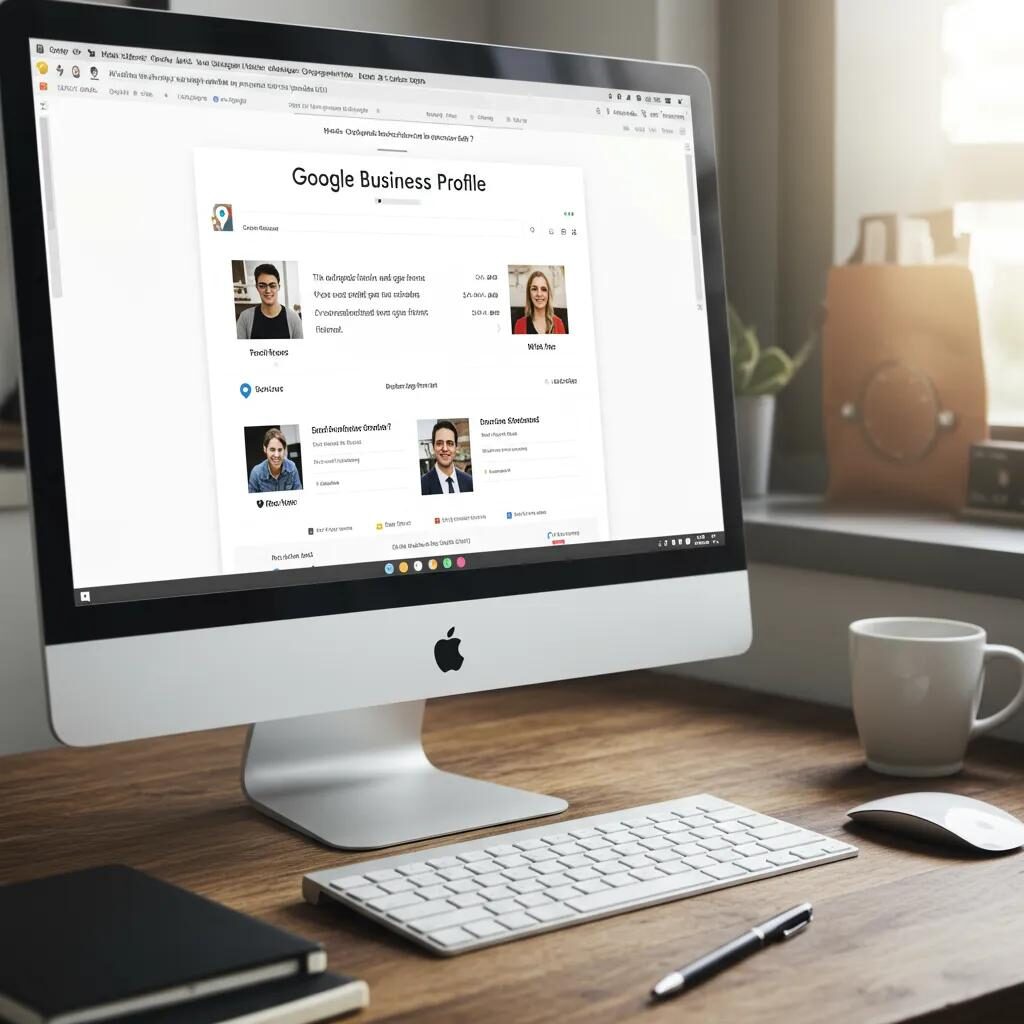
Google Business Profile (GBP) serves as the central conversion hub for local queries by presenting contact actions, reviews, photos, posts, and service details inline in search and maps results. Optimizing GBP increases phone calls, direction clicks, and website visits by ensuring accuracy, relevant categories, complete services, and timely posts that match searcher intent. GBP signals like review count, review sentiment, and post engagement are strong local pack ranking factors, so operational focus on these elements yields measurable ranking and conversion improvements. Proper GBP optimization also supports other channels: a complete GBP improves ad extensions and local ad relevance, which drives lower CPA and better local ROAS.
For organizations evaluating provider options, HarmonyTech offers AI-powered local digital marketing that combines real-time optimization and predictive audience behavior analysis with a three-pillar approach across paid, earned, and social channels. HarmonyTech’s emphasis is on lead generation and transparent processes that map actions to measurable outcomes, while tailoring tactics to South Florida’s local nuances and procurement requirements. This capability provides a practical bridge from strategy to execution for commercial enterprises and technical buyers seeking measurable local growth.
How Can You Optimize Your Google Business Profile for South Florida Success?
A focused GBP optimization plan includes verification, category selection, service list accuracy, photo optimization, regular posts, and review management tuned to local search patterns. These actions function together: completeness signals relevance, quality photos increase engagement, and active posts signal recency each improving local pack odds. The operational benefit is more discovery and higher conversion rates from people who see your business directly in search and maps.
Below is a practical checklist you can follow to capture low-hanging visibility gains in South Florida markets.
- Verify the profile and confirm ownership to enable full feature access and protect listing integrity.
- Choose the most accurate primary category, add relevant secondary categories, and list services with geo-tagged descriptions.
- Publish regular GBP posts tied to local events, promotions, or service updates and include updated photos every month.
This checklist captures the immediate actions; next we’ll compare core GBP elements and their impact on rankings so you can prioritize tasks by expected ROI.
What Are the Best Practices for Google Business Profile Setup and Verification?
A complete GBP setup starts with accurate business name, service list, and category selection, plus verified ownership that allows you to use attributes and messaging features. Verification ensures the listing is eligible for full features and protects it from unauthorized changes; multi-location brands should align NAP consistency across each location to prevent signal dilution. Avoid common pitfalls such as keyword-stuffed names or inconsistent address formatting, which can trigger quality flags or reduce trust. Ensuring accuracy in setup lays the groundwork for effective review management and local pack eligibility.
How Do Review Management and Local Pack Ranking Factors Affect Your GBP?
Reviews affect both user trust and algorithmic signals: quantity, recency, and sentiment shape local ranking and click-through behavior, so a structured review program is essential. Operationally, monitor review velocity and prioritize timely responses for negative feedback to mitigate impact and surface improvement opportunities. Templated response frameworks help maintain tone and speed, while escalation rules ensure complex issues reach human review quickly. Measuring review-driven metrics, average rating, response rate, and sentiment trends provides clear KPIs for local pack performance.
How Can AI Enhance Google Business Profile Posts and Updates?
AI can recommend post topics based on local search trends, generate location-specific copy variations, and schedule updates at optimal times when local engagement is historically highest. These AI-driven capabilities short-circuit guesswork and increase the likelihood that posts generate actions like clicks and direction requests. AI can also A/B test post variations and surface winners based on engagement signals, improving post quality over time. Using AI in GBP workflows enables consistent activity that search engines reward with better local visibility.
What Are the Benefits of AI Sentiment Analysis for Customer Reviews?
AI sentiment analysis detects themes, prioritizes responses, and surfaces systemic product or service issues by aggregating review content over time. This capability allows teams to route negative sentiment for urgent attention and to flag recurring service topics that can inform operational fixes or product updates. Sentiment signals also feed into content and ad strategies by highlighting customer language that resonates in messaging. Rapid detection and prioritization shorten the feedback loop between customer voice and business response, improving both reputation and ranking odds.

What Are the Most Effective AI-Driven Paid Media Strategies in Miami and Fort Lauderdale?
AI-driven paid media for local markets focuses on automated bidding, audience prediction, dynamic creative, and geo-aware attribution to maximize conversion efficiency at the city and neighborhood level. These systems optimize bids in real time using signals like device, query intent, and local event data to reduce CPA and improve ROAS. The specific benefit is delivering more qualified traffic from high-intent local queries and social audiences while preserving budget through automated allocation. Below is a practical comparison of channels and AI features to guide channel selection.
- Google Search & Performance Max for high-intent local queries and discovery across search, maps, and inventory.
- Facebook/Instagram for local consumer reach with creative personalization and store-visit measurement.
- LinkedIn for targeting IT decision-makers and commercial procurement stakeholders in South Florida.
The channel mix should reflect audience intent and procurement timelines: use search for immediate intent, social for awareness and lead capture, and programmatic for scaled local presence.
Reach out and contact us today to get your business to a better place.